Whole-Home Air Purifiers
Media filter cabinets and electronic air cleaners built into your HVAC system, sized so they clean the air without choking airflow.
Learn moreCooling
AC RepairAC InstallationAC ReplacementAC Tune-Up & MaintenanceRefrigerant Leak RepairAC Compressor ReplacementEvaporator Coil ReplacementAC Water Leak & Drain Line RepairHeating
Furnace RepairFurnace InstallationFurnace ReplacementFurnace Tune-Up & MaintenanceWall Furnace RepairFloor Furnace ReplacementBoiler & Radiant Heat RepairHeat Pumps & Ductless
Heat Pump RepairHeat Pump InstallationHeat Pump MaintenanceGas Furnace to Heat Pump ConversionDuctless Mini-Split InstallationDuctless Mini-Split RepairADU Heating & CoolingDucts & Attic
Duct RepairDuctwork ReplacementAir Duct CleaningDuct Sealing & Leak TestingWhole House Fan InstallationAttic InsulationIndoor Air
Indoor Air Quality TestingWhole-Home Air PurifiersUV Air SanitizersWhole-Home HumidifiersSystems & Commercial
Smart Thermostat InstallationHVAC Zoning SystemsFull HVAC System ReplacementHVAC InspectionHVAC Maintenance Plans24/7 Emergency HVAC RepairCommercial HVAC RepairCommercial HVAC MaintenanceRooftop & Package Unit RepairPasadena
Pasadena (all of the city)Bungalow HeavenMadison HeightsSan RafaelLinda VistaHastings RanchOak KnollAnnandaleProspect ParkHistoric HighlandsGarfield HeightsLamanda ParkSouth ArroyoChapman WoodsNearby cities
AltadenaSouth PasadenaSan MarinoArcadiaSierra MadreMonroviaDuarteGlendaleLa Canada FlintridgeLa CrescentaBurbankAlhambraSan GabrielTemple CityMonterey ParkRosemeadEl MonteAzusaGlendoraCovinaWest CovinaLos AngelesMontroseTujungaBaldwin ParkSouth El MonteMontebelloWhittierHacienda HeightsRowland HeightsLa PuenteWalnutDiamond BarSan DimasLa VerneClaremontPomonaUplandRancho CucamongaOntarioMontclairChino HillsBreaFullertonCounties
Los Angeles CountySan Bernardino CountyOrange CountyBlog
By Odell Rankin, Comfort Blog EditorJuly 14, 20267 min read
Smoke days are part of life in the San Gabriel Valley. A simple plan for filters, fresh air intakes, recirculation and duct cleaning helps keep indoor air cleaner when the sky turns orange.
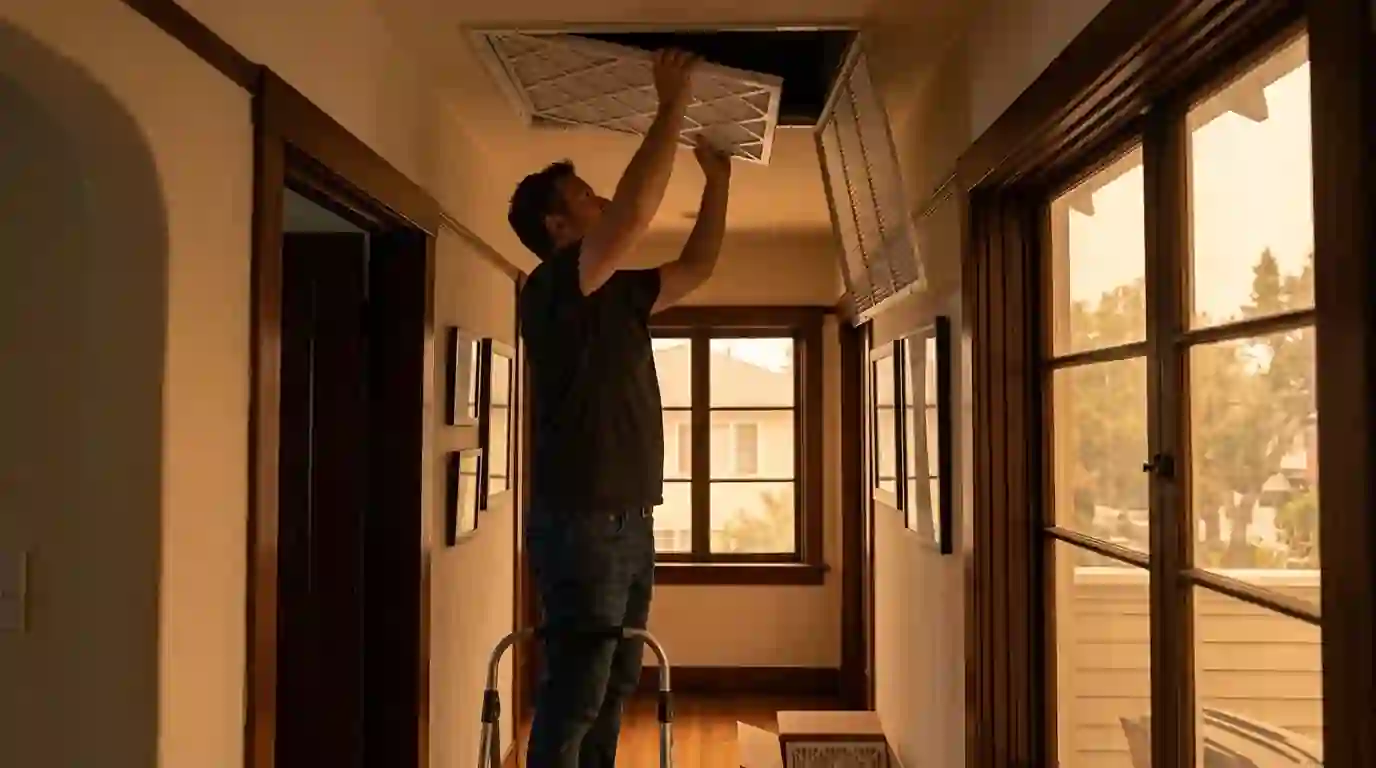
Anyone who lived in Pasadena, Altadena or Sierra Madre in January 2025 remembers the smoke from the Eaton Fire, and many families are still rebuilding. Even fires far away can send smoke across the San Gabriel Valley for days. Smoke is made of very fine particles that drift through small gaps, and the HVAC system can either help keep them out of the house or pull them in, depending on how it is set up.
The time to make a plan is before the next fire, not during it, when filters sell out and every technician is busy. This post walks through what to set up now, what to do on a smoke day, and what to check once the air clears. None of it is complicated, and most of it costs little. It applies to central systems, ductless mini-splits and older homes heated by a wall furnace alike.
Most central systems in older Pasadena homes simply recirculate indoor air. They do not pull in outdoor air on purpose, but they can pull it in through leaks in the return ducts and the cabinet. Some newer homes and ADUs have a fresh air intake, an economizer or a ventilation fan that brings in outside air on a schedule. Ductless mini-splits recirculate room air and generally do not bring in outside air.
Find out which type you have. If there is a fresh air damper or a ventilation fan, learn where its control is and how to close it or switch it off. If you have a whole house fan, it should never run on a smoke day, since its whole job is to pull outdoor air through the house. A technician can show you these controls during a routine maintenance visit.
Standard thin filters stop larger dust but let much of the fine smoke particle range pass through. A higher efficiency filter, often rated around MERV 13, catches a much larger share of those fine particles. The catch is airflow: a dense filter in a small slot can restrict the blower. A deep media filter cabinet gives more surface area, which allows better filtration without starving the system.
Before smoke season, have a technician confirm what your system can handle. Measuring static pressure with the upgraded filter in place takes a few minutes and tells you whether the blower is comfortable. If it is not, options include a larger filter cabinet, an added return, or a whole-home air purifier designed for your air handler. Buy two or three spare filters early, because they get hard to find once a fire starts.
A filter only cleans the air that passes through it. Smoke that leaks in through the return duct, the attic or gaps around the air handler cabinet skips the filter entirely. Attic return leaks are especially common in postwar ranch homes and older bungalows with ducts added decades ago. Sealing return joints, the return plenum and the cabinet seams keeps the system from drawing in attic and outdoor air.
Around the house, simple fixes help too. Close the fireplace damper, check weatherstripping on exterior doors, and seal obvious gaps where pipes and line sets pass through walls. None of this makes a house airtight, but it shifts more of the air the system moves toward the filter instead of around it. A duct leakage test shows how much the ducts are leaking before and after sealing.
When smoke arrives, close windows and doors, shut any fresh air damper, and turn off kitchen and bath exhaust fans except when you need them, since they pull outdoor air in through other gaps. Set the thermostat fan to On rather than Auto so the blower keeps air moving through the filter even when the system is not heating or cooling. That steady circulation is what lets the filter keep pulling particles out of the indoor air.
Check the filter more often than usual. During heavy smoke, a filter can darken in a few days. Replace it when it looks gray or brown across the surface. If the smoke comes with a heat wave, keep the AC running; a closed house with filtered air is usually more comfortable and cleaner than an open one. If you have a wall furnace or floor furnace with no ducts, a portable HEPA cleaner in the room you use most is the practical answer.
Once the air is clean again, replace the filter even if it still looks usable, because it has caught fine particles that can release odor. Look at the outdoor unit for a layer of ash on the coil and rinse it gently with a hose if you see one. Run the system and notice whether a smoky smell returns. A lingering smell after a new filter can mean ash settled in ducts or on the indoor coil.
For homes close to a burn area, ash in the attic and ducts is a bigger concern. Duct cleaning, a coil cleaning and a check of the air handler cabinet remove what settled during the fire. For families rebuilding after the Eaton Fire, a new system is a chance to design in a proper filter cabinet, sealed ducts and good return paths from the start. We handle the permit where the city requires one.
If you are replacing equipment or building an ADU, a few design choices make smoke days easier. Ask for a filter cabinet sized for a deep media filter, return ducts sized so the blower is not strained, and duct runs inside conditioned space or well sealed in the attic. If the home has a ventilation system, make sure it has a simple way to shut it off or a filter on the intake.
Our technicians can walk through your home, check what you have now and explain which changes give the most benefit for the cost. Often the best first step is modest, such as a better filter cabinet or sealing the return, rather than new equipment. We quote the price before we start the work, and we answer at (626) 879-0711 around the clock, including on smoke days when an older system is struggling.
Related services
Media filter cabinets and electronic air cleaners built into your HVAC system, sized so they clean the air without choking airflow.
Learn moreCamera inspection first, then negative-pressure HEPA cleaning of supply, return, blower and coil when your ducts actually need it.
Learn moreWe measure duct leakage with a calibrated fan, seal joints with mastic, and test again so you see the actual improvement.
Learn moreQuestions
Usually yes, as long as the system recirculates indoor air and any fresh air damper is closed. Running the AC with a good filter keeps the house closed up and cleans the air as it passes through. Set the fan to On so filtration continues between cooling cycles. Turn off a whole house fan completely. If smoke smell gets stronger when the system runs, the return ducts may be leaking and need a technician to check them.
A MERV 13 filter is widely recommended for smoke because it catches a large share of fine particles. Whether your system can use one depends on the blower and the filter slot. A thin MERV 13 filter in a small ceiling grille can choke airflow, while a deep media filter of the same rating in a proper cabinet usually works well. A technician can measure static pressure and tell you what is safe for your equipment.
Not always. If the system was off or closed up and you replaced the filter afterward, the ducts may be fine. If ash settled in the attic, the system ran during heavy smoke with leaky returns, or a smoky smell lingers after a new filter, duct cleaning and an indoor coil cleaning make sense. Homes near the Eaton Fire burn area are more likely to need it, along with an attic and cabinet inspection.
Keep reading
Craftsman bungalows were built for breezes, not air conditioning. Here is how to add real cooling to a 1910s home while keeping the woodwork, plaster and porch looking the way they should.
On the hottest San Gabriel Valley afternoons, even a healthy AC can creep a few degrees behind. Here is why it happens, what is normal, and which problems turn a hot day into a breakdown.
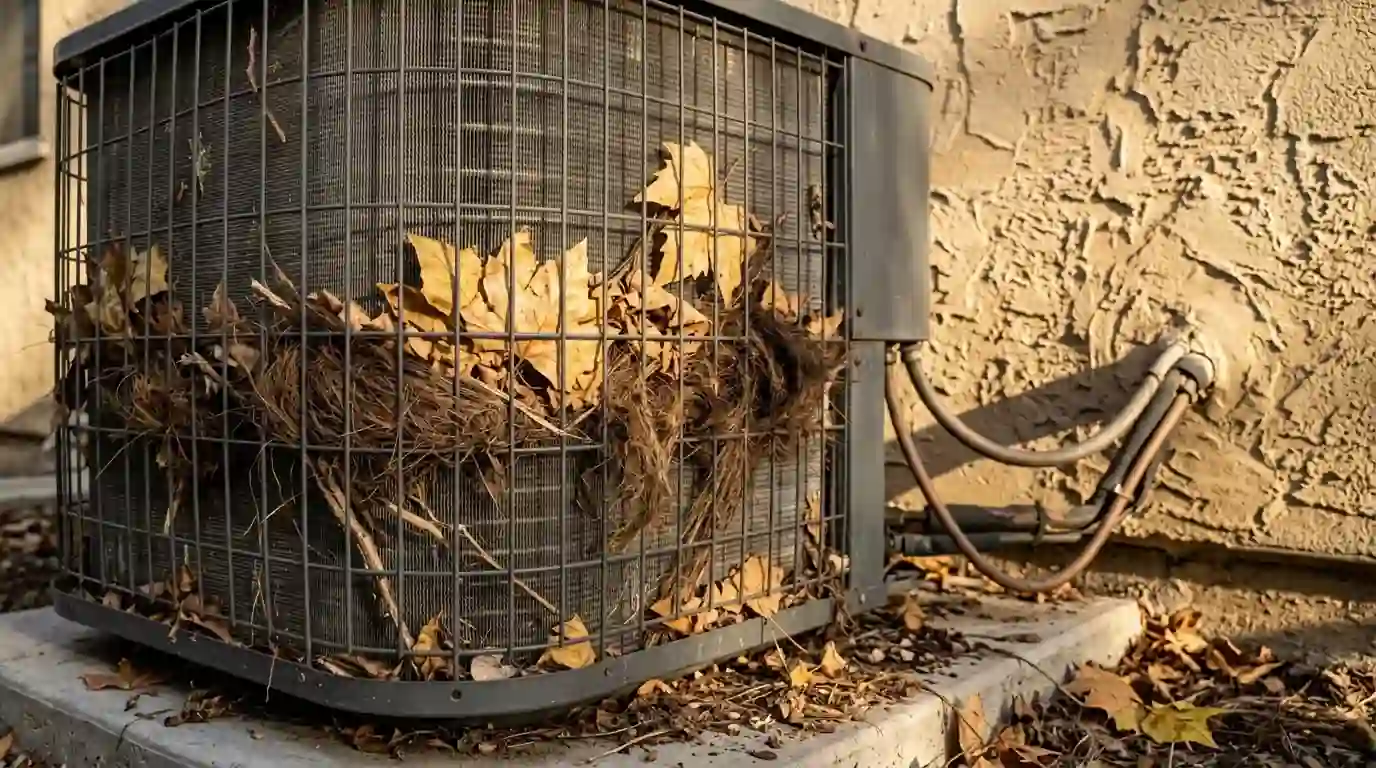
Hot, dry Santa Ana winds push dust, leaves and grit into every gap. Here is what that does to filters, condenser coils and attic ducts, and a simple after-wind checklist for San Gabriel Valley homes.
Call our Pasadena line any hour. A person answers, asks a few questions about the system, and gives you an arrival window.