Floor Furnace Replacement
Old floor grate heaters removed and replaced with a new floor furnace, a wall furnace, a ducted system or a ductless heat pump.
Learn moreCooling
AC RepairAC InstallationAC ReplacementAC Tune-Up & MaintenanceRefrigerant Leak RepairAC Compressor ReplacementEvaporator Coil ReplacementAC Water Leak & Drain Line RepairHeating
Furnace RepairFurnace InstallationFurnace ReplacementFurnace Tune-Up & MaintenanceWall Furnace RepairFloor Furnace ReplacementBoiler & Radiant Heat RepairHeat Pumps & Ductless
Heat Pump RepairHeat Pump InstallationHeat Pump MaintenanceGas Furnace to Heat Pump ConversionDuctless Mini-Split InstallationDuctless Mini-Split RepairADU Heating & CoolingDucts & Attic
Duct RepairDuctwork ReplacementAir Duct CleaningDuct Sealing & Leak TestingWhole House Fan InstallationAttic InsulationIndoor Air
Indoor Air Quality TestingWhole-Home Air PurifiersUV Air SanitizersWhole-Home HumidifiersSystems & Commercial
Smart Thermostat InstallationHVAC Zoning SystemsFull HVAC System ReplacementHVAC InspectionHVAC Maintenance Plans24/7 Emergency HVAC RepairCommercial HVAC RepairCommercial HVAC MaintenanceRooftop & Package Unit RepairPasadena
Pasadena (all of the city)Bungalow HeavenMadison HeightsSan RafaelLinda VistaHastings RanchOak KnollAnnandaleProspect ParkHistoric HighlandsGarfield HeightsLamanda ParkSouth ArroyoChapman WoodsNearby cities
AltadenaSouth PasadenaSan MarinoArcadiaSierra MadreMonroviaDuarteGlendaleLa Canada FlintridgeLa CrescentaBurbankAlhambraSan GabrielTemple CityMonterey ParkRosemeadEl MonteAzusaGlendoraCovinaWest CovinaLos AngelesMontroseTujungaBaldwin ParkSouth El MonteMontebelloWhittierHacienda HeightsRowland HeightsLa PuenteWalnutDiamond BarSan DimasLa VerneClaremontPomonaUplandRancho CucamongaOntarioMontclairChino HillsBreaFullertonCounties
Los Angeles CountySan Bernardino CountyOrange CountyHeating in Pasadena, CA
Pilot lights, thermocouples, gas valves and fans on gravity and fan-type wall furnaces, with a venting and CO check every visit.
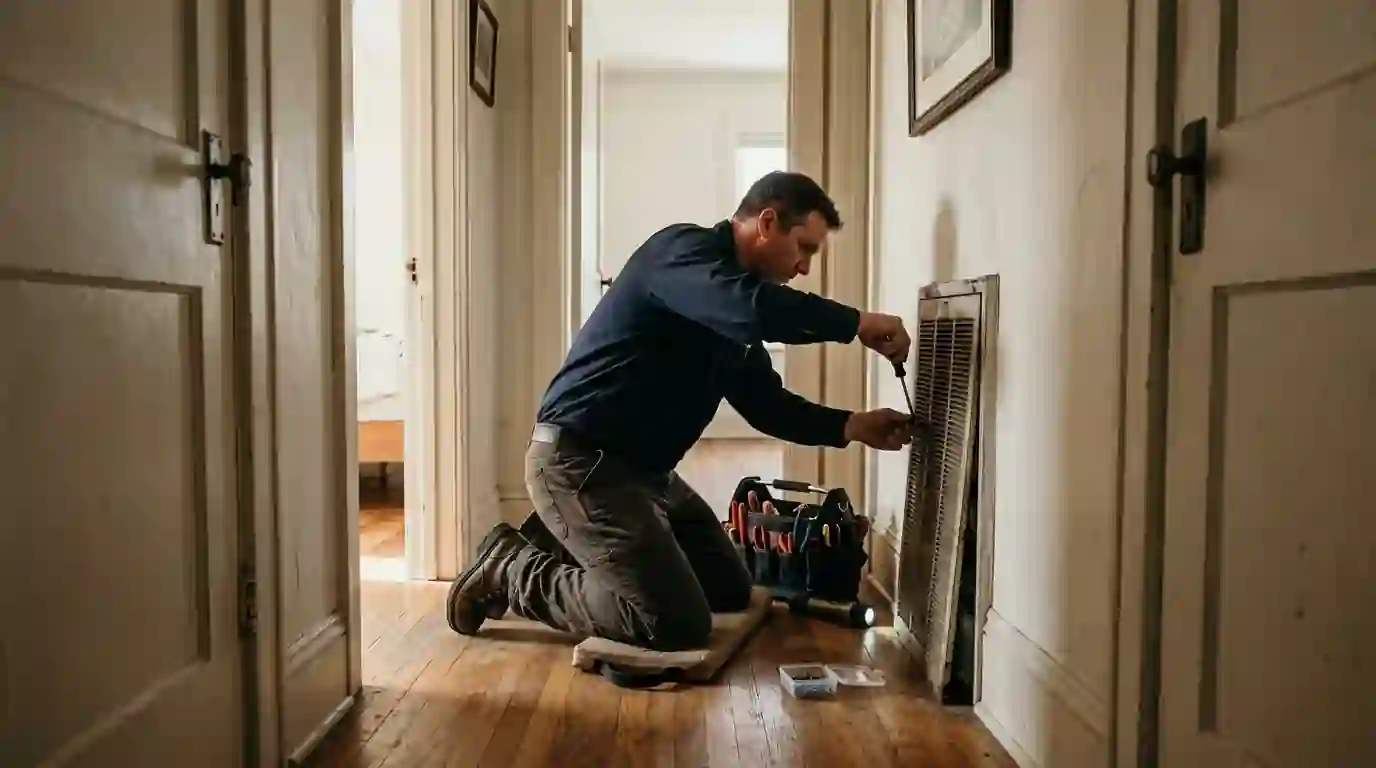
Most wall furnace problems in Pasadena are a pilot that will not stay lit, a worn thermocouple, a sticking gas valve, a noisy fan or a blocked vent. Marco's technicians repair both gravity and fan-type wall furnaces, test the vent and check for carbon monoxide on every visit, and tell you plainly when an old unit is better replaced.
Wall Furnace Repair
Wall furnaces heat a lot of Pasadena. You find them in Craftsman bungalows, small Spanish Revival homes, postwar houses and the bungalow courts tucked along many side streets. They sit in a hallway wall, often between two bedrooms, and push heat out of a metal grille. They are simple machines, and that simplicity is why so many from the 1960s, 1970s and 1980s still run. It is also why a single failed part, often a thermocouple, can leave a whole house cold on a winter night.
Wall furnace repair is a specialty of its own. Many technicians are trained mostly on central furnaces and are quick to recommend replacement on any old wall unit. We repair what can be safely repaired. We also take the venting seriously, because wall furnaces vent through a narrow pipe inside the wall cavity, and a vent problem can push exhaust into the room. Every visit ends with a carbon monoxide check.
Warning signs
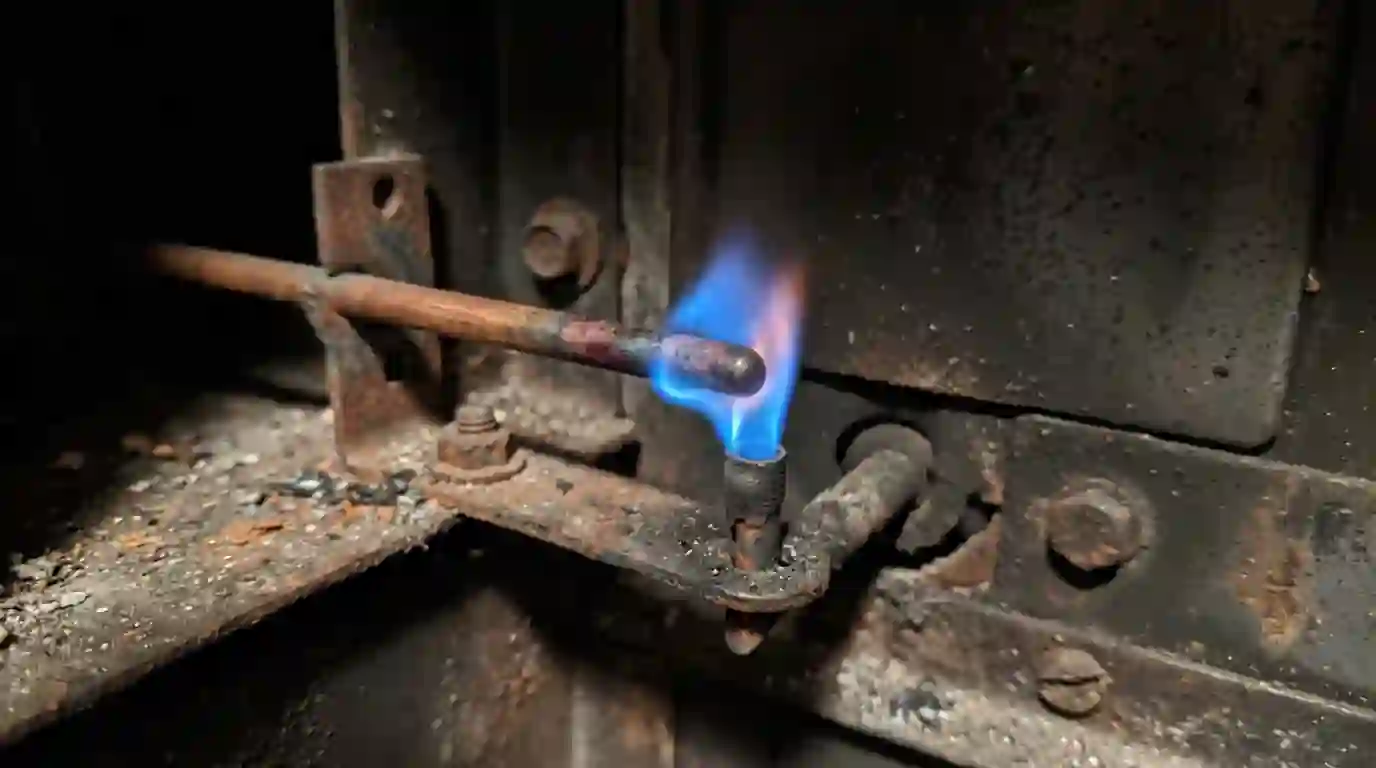
You light the pilot, hold the knob, release it and the flame dies. The thermocouple or thermopile is usually worn, or the pilot flame is too weak to heat it.
The pilot burns but the main burner does not light when the thermostat calls. The thermostat, its wiring or the millivolt gas valve is the usual suspect.
Fan-type wall furnaces use a small motor to push air across the heat exchanger. Dry bearings and dusty blades cause noise, and a seized motor can let the unit overheat.
Dark streaks on the wall or grille mean incomplete combustion or escaping exhaust. Turn the unit off and have the burner and vent checked before using it again.
A faint whiff at lighting is normal. A steady gas smell is not. Leave the house, avoid switches and call SoCalGas from outside, then call us for the repair.
The wall around a furnace should be warm, not too hot to touch. Excess heat suggests overfiring, a stalled fan or furniture sitting too close to the grille.
A gravity wall furnace has no fan. Hot air rises out of the top grille and cooler room air enters at the bottom, so it can work with no electricity at all. Many run on a millivolt system, where the pilot heats a thermopile that makes just enough power to open the gas valve. Fan-type units add a small blower that spreads heat faster and farther, and they need an outlet or a hardwired circuit. Most older models of both types use a standing pilot. Dual-wall units heat two rooms, with a grille on each side of the wall.
The pilot assembly is where most wall furnace repairs happen. A thermocouple is a small metal rod that sits in the pilot flame and tells the gas valve a flame is present. When it wears out, the valve closes and the pilot goes out. A thermopile does a similar job and also powers the valve. A dirty pilot orifice makes a weak flame that cannot heat either one. We clean the pilot, measure the millivolt output and replace parts that read low.
Gas valves on older wall furnaces can stick or leak internally. If the valve fails, we install a compatible replacement when one exists. If the model is so old that no safe valve fits, we tell you directly, because a mismatched part on a gas appliance is not a repair we will make.
Wall furnaces vent through an oval or round B-vent pipe that runs up inside the wall to the roof. Over decades, that pipe can separate, rust, get crushed during a remodel, or end up under a roof that was replaced without the cap being raised. Birds and debris can block it. A blocked vent sends exhaust back into the room, and that exhaust carries carbon monoxide. We check draft at the furnace, look at the cap from the ground or the roof when needed, and test the air around the unit.
Keep at least three feet clear in front of the grille, and never hang laundry or set furniture against it. Every home with a wall furnace should have a working CO alarm in the hallway near the bedrooms.
Step by step
Before lighting anything, we look at the grille, the wall around it and the vent path for soot, heat marks and signs of blocked exhaust.
We light the pilot and burner and watch the flame color, height and steadiness, which tells us a great deal about the burner and its air supply.
Thermocouple or thermopile output is measured in millivolts and compared to what the valve needs. Low readings point straight at the failing part.
We replace the thermocouple, pilot assembly, valve or fan motor with parts that suit the furnace, and leak test every gas joint we touched.
We measure carbon monoxide at the grille and in the room, confirm the draft, and explain clearances and alarm placement before we leave.
Typical prices
Wall furnace repairs usually cost less than central furnace repairs because the parts are simpler. Price depends on the part, whether it is still made and the age of the unit. These are typical 2026 ranges for Pasadena homes, and the technician gives you the final price after seeing the furnace, before any work starts.
| Job | Typical range | What is included |
|---|---|---|
| Service visit and safety check | $119 to $189 | Covers lighting, flame check, draft test and a CO reading |
| Thermocouple or thermopile replacement | $167 to $284 | The most common wall furnace repair we make |
| Pilot assembly cleaning or replacement | $226 to $412 | Includes orifice cleaning and pilot flame adjustment |
| Gas valve replacement | $389 to $718 | Depends on valve type and whether a compatible valve exists |
| Complete wall furnace replacement | $2,180 to $3,870 | New unit sized to the space, vent connection and the permit |
Hard-to-find parts, vent repairs inside the wall, roof cap work and dual-wall models move the price. If a repair approaches half the cost of a new wall furnace, we show you both numbers side by side. Compare other jobs in our Pasadena HVAC price guide.
In Bungalow Heaven, Madison Heights and Historic Highlands, wall furnaces were often added when original floor furnaces were retired. Many sit in a central hallway, which works for a small bungalow but leaves the back rooms cooler. In postwar homes and the courtyard bungalow courts found across the city, a wall furnace was often the original heat. Some of those are still running on a standing pilot decades later, and many can keep going with the right parts and a clean vent.
Pasadena's winters suit wall furnaces well. Days are mild, so the heater mostly runs in the evening and overnight. Some homeowners leave the pilot burning all year, while others turn it off in spring and relight it in November. A pilot that has been off for months often lights badly at first because of dust and spider webs in the orifice. If you relight it yourself, follow the instructions on the unit, and call us if it will not stay lit after two tries.
Related work
Old floor grate heaters removed and replaced with a new floor furnace, a wall furnace, a ducted system or a ductless heat pump.
Learn moreNew gas furnace installs sized by load calculation, with gas piping, venting, ducts and the city permit handled by our crew.
Learn moreDuctless heat pumps for Craftsman bungalows, additions, converted garages and hot upstairs rooms, with head styles chosen room by room.
Learn moreNight, weekend and holiday repairs for a dead AC in a heat wave or a furnace that quits on a cold night, any hour.
Learn moreOur technicians handle this work all over Pasadena and the surrounding San Gabriel Valley. A few of the places we cover:
Questions
Many Pasadena homeowners do, since the furnace sits unused from spring into November and the pilot burns a small amount of gas. It is safe to turn it off with the gas knob. The tradeoff is that a cold pilot assembly can collect dust and insects, making it harder to relight in the fall. If it will not stay lit after relighting, the thermocouple is usually worn.
Often, yes. Thermocouples, thermopiles, pilot assemblies and many gas valves are common across older wall furnaces, and fan motors can usually be matched. Some brands no longer exist, and their burners or heat exchangers cannot be replaced. We tell you which parts are available on the first visit, so you are not paying for a repair that stalls halfway.
No. Soot means the flame is burning poorly or exhaust is escaping into the room, and both can produce carbon monoxide. Turn the furnace off at the gas knob and do not use it until a technician checks the burner, air supply and vent. The fix is often a cleaning or a vent repair, but it needs to be confirmed first.
Keep beds, sofas, curtains and anything that can burn at least three feet from the front grille, and check the clearances printed on the furnace label, which can be stricter. Small bungalow hallways make this tricky, but it matters. Wall furnace surfaces get hot enough to scorch fabric, and a blocked grille also makes the furnace overheat and cycle on its limit.
Replace when the heat exchanger is cracked or rusted through, when a safe gas valve is not available, or when repairs keep coming every winter on a unit past thirty years. A new wall furnace is more efficient, may use electronic ignition instead of a standing pilot, and comes with a manufacturer warranty. We price repair and replacement together so you can decide.
Call our Pasadena line any hour. A person answers, asks a few questions about the system, and gives you an arrival window.