AC Tune-Up & Maintenance
A spring tune-up that cleans the coils, tests the capacitor and contactor, clears the drain and checks the charge before summer hits.
Learn moreCooling
AC RepairAC InstallationAC ReplacementAC Tune-Up & MaintenanceRefrigerant Leak RepairAC Compressor ReplacementEvaporator Coil ReplacementAC Water Leak & Drain Line RepairHeating
Furnace RepairFurnace InstallationFurnace ReplacementFurnace Tune-Up & MaintenanceWall Furnace RepairFloor Furnace ReplacementBoiler & Radiant Heat RepairHeat Pumps & Ductless
Heat Pump RepairHeat Pump InstallationHeat Pump MaintenanceGas Furnace to Heat Pump ConversionDuctless Mini-Split InstallationDuctless Mini-Split RepairADU Heating & CoolingDucts & Attic
Duct RepairDuctwork ReplacementAir Duct CleaningDuct Sealing & Leak TestingWhole House Fan InstallationAttic InsulationIndoor Air
Indoor Air Quality TestingWhole-Home Air PurifiersUV Air SanitizersWhole-Home HumidifiersSystems & Commercial
Smart Thermostat InstallationHVAC Zoning SystemsFull HVAC System ReplacementHVAC InspectionHVAC Maintenance Plans24/7 Emergency HVAC RepairCommercial HVAC RepairCommercial HVAC MaintenanceRooftop & Package Unit RepairPasadena
Pasadena (all of the city)Bungalow HeavenMadison HeightsSan RafaelLinda VistaHastings RanchOak KnollAnnandaleProspect ParkHistoric HighlandsGarfield HeightsLamanda ParkSouth ArroyoChapman WoodsNearby cities
AltadenaSouth PasadenaSan MarinoArcadiaSierra MadreMonroviaDuarteGlendaleLa Canada FlintridgeLa CrescentaBurbankAlhambraSan GabrielTemple CityMonterey ParkRosemeadEl MonteAzusaGlendoraCovinaWest CovinaLos AngelesMontroseTujungaBaldwin ParkSouth El MonteMontebelloWhittierHacienda HeightsRowland HeightsLa PuenteWalnutDiamond BarSan DimasLa VerneClaremontPomonaUplandRancho CucamongaOntarioMontclairChino HillsBreaFullertonCounties
Los Angeles CountySan Bernardino CountyOrange CountyCooling in Pasadena, CA
Water around the furnace or a stain on the ceiling: we clear the drain, fix the trap, replace pans and install float switches.
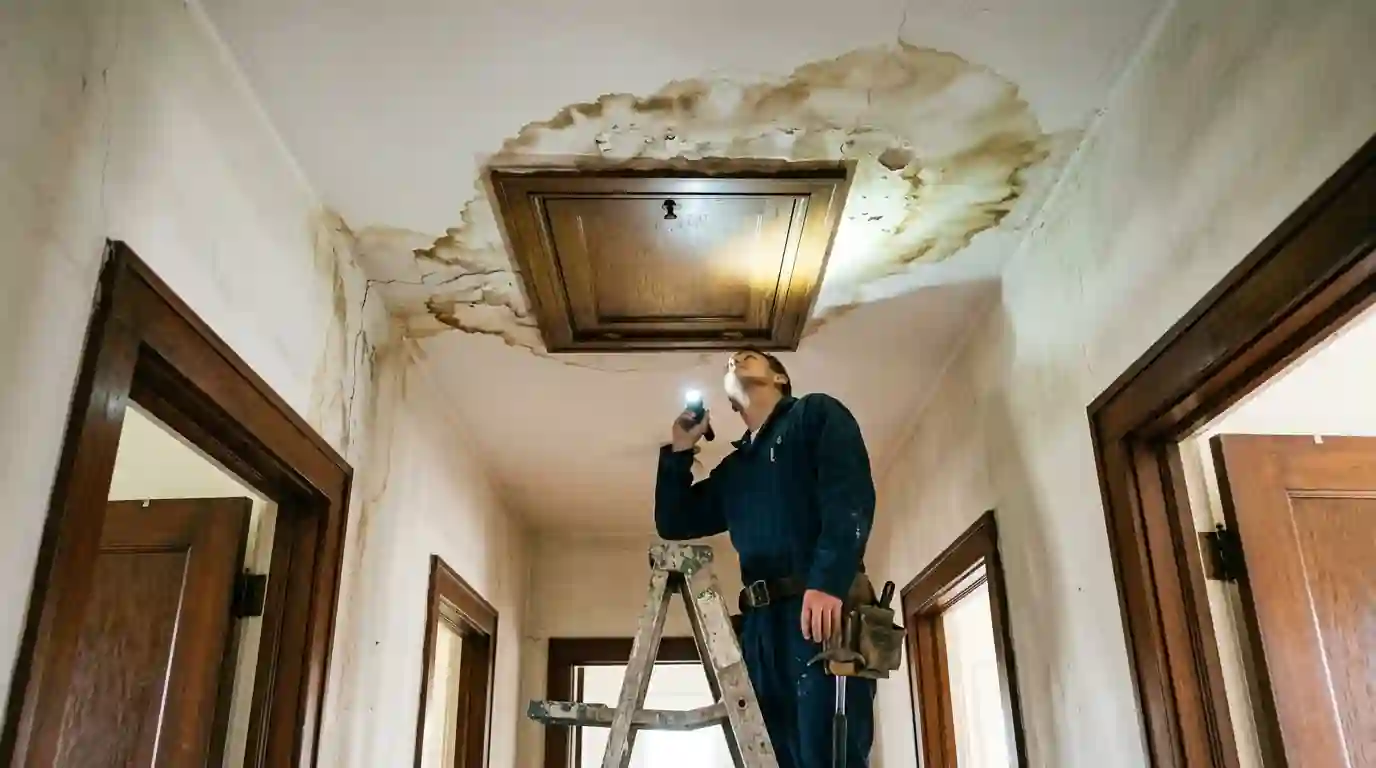
Water leaking from an AC in Pasadena almost always comes from the condensate system: a clogged drain line, a missing or dried-out trap, a cracked or rusted drain pan, a failed condensate pump, or a frozen coil melting faster than the drain can carry. Marco's finds the source, clears or rebuilds the drain, replaces damaged pans, and makes sure a working float switch shuts the system off before water reaches your ceiling.
AC Water Leak & Drain Line Repair
An air conditioner makes water. As warm air passes over the cold evaporator coil, moisture condenses on the fins and drips into a pan below. From there it runs through a PVC drain line to the outside, a sink, a standpipe or a condensate pump. On a muggy late summer day, that can add up to several gallons. When any part of that path fails, the water goes somewhere it should not.
If your AC sits in an attic, a leak can soak drywall and insulation long before you notice a stain. If it sits in a closet or garage, water can rust the furnace and puddle on the floor. Marco's AC water leak service traces the problem and fixes it so the drainage works every day, not just right after a clog is blown out.
Warning signs
A brown ring or bubbling paint below an attic air handler means water has been overflowing the pan. Shut the AC off to stop more water until the drain is fixed.
Puddles at the base of a closet or garage furnace usually trace to a clogged drain line, a disconnected fitting or a cracked coil pan just above the burners.
If the system runs a while then stops and the thermostat stays blank or idle, a float switch may be tripping because water is backing up in the pan.
Gurgling at the air handler or steady dripping inside a wall or ceiling can mean a drain with no trap, a sagging line, or water running outside the pipe.
A pump that hums nonstop, clicks without draining, or overflows its reservoir is failing or blocked. These small pumps often wear out after several years.
On a warm day with the AC running, there should be a steady drip at the drain outlet outside. A dry outlet means water is collecting or leaking somewhere else.
The drain line is the usual suspect. Dust that slips past the filter mixes with condensate and feeds algae and bacteria, which form a slimy plug in the trap or the first few feet of pipe. Lines installed with no slope, or with a sag in the middle, hold standing water that grows sludge faster.
The trap matters too. The air handler blower creates negative pressure in the coil box, which can hold water in the pan instead of letting it drain. A properly sized trap breaks that suction. Missing traps, traps that dried out over winter, and traps installed backward all cause water to spit or overflow.
When an air handler sits in an attic or above a finished ceiling, a secondary drain pan under the unit catches overflow. Many homes also have a secondary drain line that runs to a visible spot, often above a window, so a drip there warns you that the primary drain is blocked.
A float switch adds an active safeguard. It sits in the pan or the drain line and breaks the thermostat's cooling signal when water rises, shutting the AC off before overflow. We test existing switches, replace corroded ones, and add switches where none exist. A tripped float switch is annoying on a hot day, but far better than a wet ceiling.
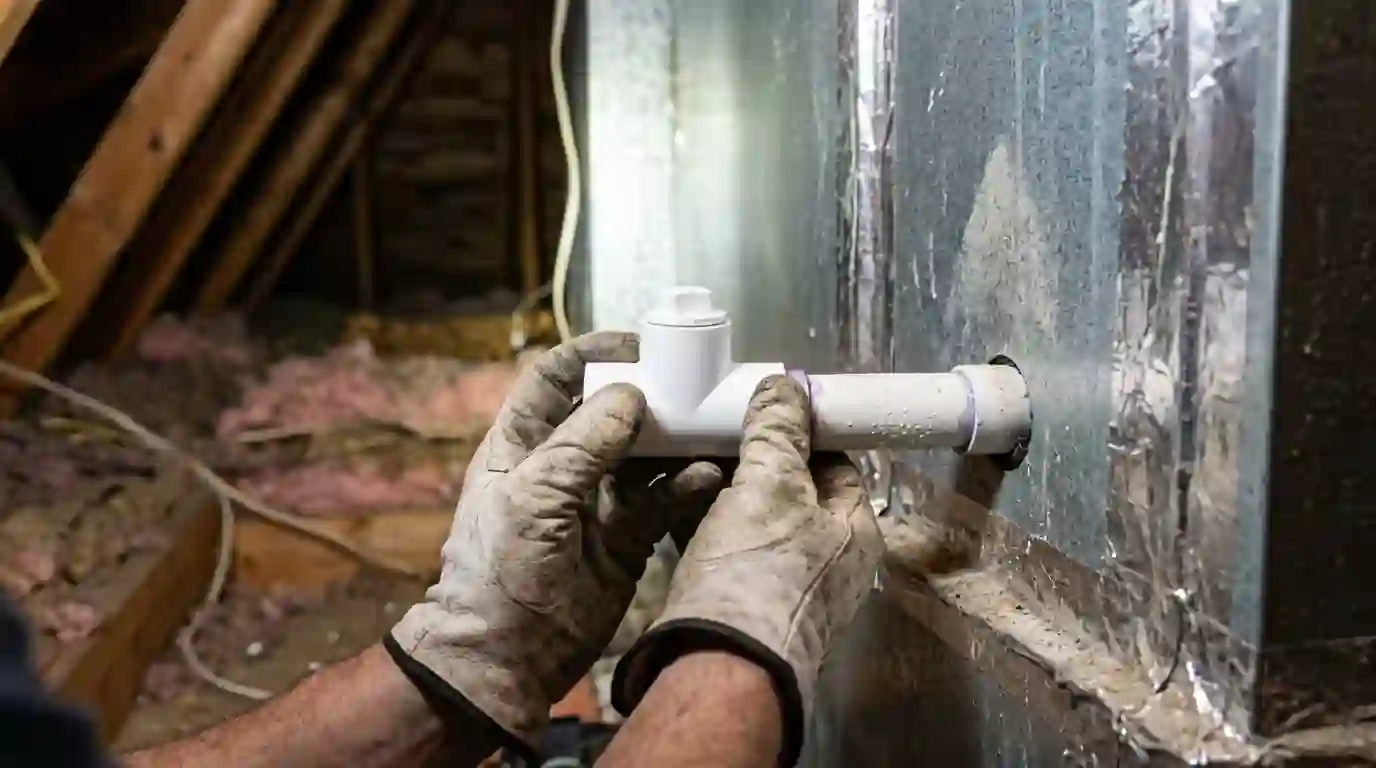
Blowing out a clogged line with compressed air clears it quickly, but it often just pushes the plug further down where it settles again. We vacuum the line from the outside outlet to pull the clog out, flush with water, and clean the trap. Where the trap is clear plastic or has a cleanout, we show you where it is.
We can install a drain line cleanout tee near the air handler so future flushing is easy. Pan tablets designed for condensate pans slow algae growth between visits, and we recommend changing the filter on schedule, since dust is the food that grows the clog.
Step by step
If water is actively leaking, we shut off the cooling, check for wet insulation or drywall, and help you protect belongings before we start diagnosing.
We follow the condensate route from the coil pan through the trap and line to its outlet, checking slope, connections and the condensate pump if one is installed.
The line is vacuumed and flushed, the trap cleaned, and the primary and secondary pans checked for cracks, rust or holes.
We fix slope and sags, rebuild a missing or failed trap, replace a cracked pan or failed pump, and add a float switch where none exists, after you approve.
The system runs while we pour water into the pan to confirm flow, lift the float switch to verify shutoff, and check the coil for any sign of freezing.
Typical prices
Most AC water leaks are moderately priced to fix once the source is found. These are typical 2026 ranges for drain and condensate repairs in Pasadena and nearby San Gabriel Valley homes. Attic access and pan replacement drive the bigger numbers. We quote before the work begins.
| Job | Typical range | What is included |
|---|---|---|
| Drain line clearing and trap cleaning | $137 to $289 | Vacuum and flush, trap cleaned, outlet and slope checked |
| Float switch installation or replacement | $168 to $337 | Pan or inline switch wired into the cooling circuit and tested |
| Condensate pump replacement | $247 to $512 | New pump, check valve and discharge tubing, with safety switch wiring |
| Secondary drain pan replacement | $389 to $918 | Attic pans under horizontal units, includes drain connection |
| Drain line reroute or rebuild | $296 to $784 | New PVC with proper slope, trap and cleanout tee |
Price moves with access, line length, the number of components replaced and whether water damage needs drywall or insulation work. If the leak comes from a frozen coil, we may need to fix airflow or refrigerant charge too. Compare other jobs in our Pasadena HVAC price guide.
Many Pasadena homes had central air added to attics decades after construction. The drain lines in those installs were sometimes run quickly, with long flat runs across ceiling joists, few or no traps, and outlets that end in a flower bed. In bungalows and Spanish Revival homes, an overflow can stain original plaster ceilings, so working float switches are especially important in these houses.
Our dry climate also catches people off guard. Traps can dry out over a winter without cooling, letting air pull through and spit water when the AC starts in spring. Late summer humidity spikes, monsoon flow and wildfire smoke seasons all increase drain loads or clogging. A spring tune-up that flushes the line and tests the float switch prevents most of the calls we get in August.
Related work
A spring tune-up that cleans the coils, tests the capacitor and contactor, clears the drain and checks the charge before summer hits.
Learn moreReplace a corroded or leaking indoor AC coil with a matched one, a fresh drain pan and a proper vacuum and recharge.
Learn moreWarm air, a humming outdoor unit or a tripped breaker: we find the failed part and fix most AC problems in one visit.
Learn moreA detailed check of the furnace, AC, ducts and venting with a plain written report, useful before buying an older Pasadena home.
Learn moreOur technicians handle this work all over Pasadena and the surrounding San Gabriel Valley. A few of the places we cover:
Questions
Most indoor leaks come from the condensate drain system: a clogged line, a dried-out or missing trap, a cracked pan, or a failed condensate pump. A frozen coil can also overflow when it melts. Turn off the cooling, place towels down, and call. We trace the drain path and fix the actual cause.
If your outside drain outlet is easy to reach, a wet vacuum held over the outlet for a minute can pull a clog out. Never use bleach in large amounts or pour chemicals into the furnace cabinet. If water keeps returning, or the unit is in a tight attic, call a technician to clean the trap and check the pans.
Yes, we strongly recommend one for any attic or above-ceiling installation. A float switch shuts the AC off when water rises in the pan, before it overflows into insulation and drywall. Many local codes call for overflow protection on new installs, and it is inexpensive compared to repairing a water-stained ceiling.
On hot, humid days the AC removes more moisture, so the drain carries more water. A partly clogged line may handle light flow but back up under heavy flow. Long run times on very hot days can also cause a coil with low airflow to freeze, then melt quickly when it shuts off.
Yes. Low refrigerant can make the evaporator coil run so cold that moisture freezes on it. When the system cycles off, the ice melts all at once and can overflow the pan. If we find a frozen coil during a water leak call, we check the refrigerant charge and airflow too.
Call our Pasadena line any hour. A person answers, asks a few questions about the system, and gives you an arrival window.