Duct Repair
We find crushed, torn and disconnected attic ducts, fix them with mastic and new flex, and check airflow before we leave.
Learn moreCooling
AC RepairAC InstallationAC ReplacementAC Tune-Up & MaintenanceRefrigerant Leak RepairAC Compressor ReplacementEvaporator Coil ReplacementAC Water Leak & Drain Line RepairHeating
Furnace RepairFurnace InstallationFurnace ReplacementFurnace Tune-Up & MaintenanceWall Furnace RepairFloor Furnace ReplacementBoiler & Radiant Heat RepairHeat Pumps & Ductless
Heat Pump RepairHeat Pump InstallationHeat Pump MaintenanceGas Furnace to Heat Pump ConversionDuctless Mini-Split InstallationDuctless Mini-Split RepairADU Heating & CoolingDucts & Attic
Duct RepairDuctwork ReplacementAir Duct CleaningDuct Sealing & Leak TestingWhole House Fan InstallationAttic InsulationIndoor Air
Indoor Air Quality TestingWhole-Home Air PurifiersUV Air SanitizersWhole-Home HumidifiersSystems & Commercial
Smart Thermostat InstallationHVAC Zoning SystemsFull HVAC System ReplacementHVAC InspectionHVAC Maintenance Plans24/7 Emergency HVAC RepairCommercial HVAC RepairCommercial HVAC MaintenanceRooftop & Package Unit RepairPasadena
Pasadena (all of the city)Bungalow HeavenMadison HeightsSan RafaelLinda VistaHastings RanchOak KnollAnnandaleProspect ParkHistoric HighlandsGarfield HeightsLamanda ParkSouth ArroyoChapman WoodsNearby cities
AltadenaSouth PasadenaSan MarinoArcadiaSierra MadreMonroviaDuarteGlendaleLa Canada FlintridgeLa CrescentaBurbankAlhambraSan GabrielTemple CityMonterey ParkRosemeadEl MonteAzusaGlendoraCovinaWest CovinaLos AngelesMontroseTujungaBaldwin ParkSouth El MonteMontebelloWhittierHacienda HeightsRowland HeightsLa PuenteWalnutDiamond BarSan DimasLa VerneClaremontPomonaUplandRancho CucamongaOntarioMontclairChino HillsBreaFullertonCounties
Los Angeles CountySan Bernardino CountyOrange CountyDucts & Attic in Pasadena, CA
New attic ductwork sized for your rooms and equipment, sealed with mastic and leak tested before we call the job done.
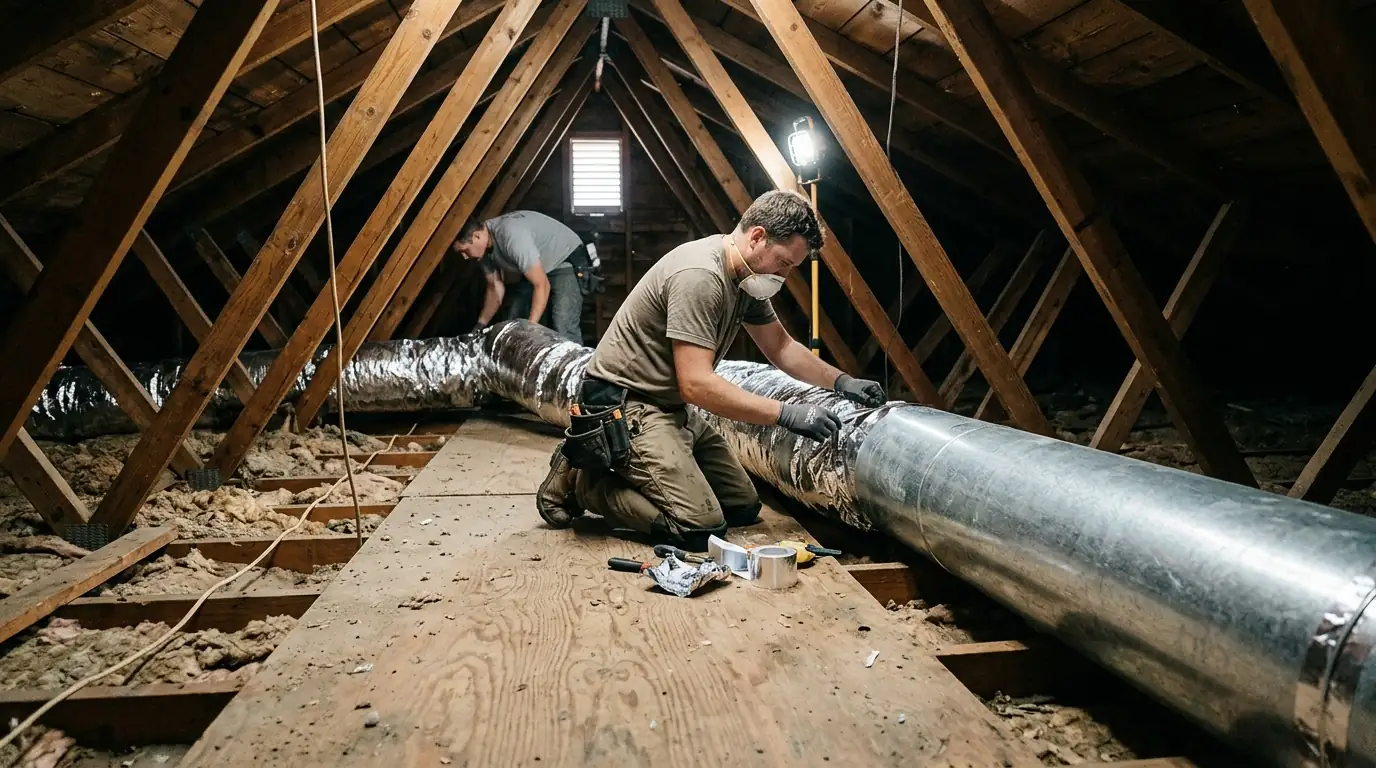
Replacing ductwork in a Pasadena home means removing old attic or crawlspace runs and installing a new layout sized for each room and for the equipment's airflow. New ducts use R-8 insulated flex or wrapped sheet metal, every joint is sealed with mastic, and the system is leak tested. Most single-story homes take one to two working days.
Ductwork Replacement
Ductwork usually outlives the first AC or furnace it was installed with, but not forever. Many Pasadena homes still run on flex duct put in during the 1980s or 1990s, with thin insulation and an outer jacket that has turned brittle after decades of attic heat. Other homes have older metal ducts sized for a furnace that moved far less air than a modern AC or heat pump needs. When the ducts are undersized, leaky and poorly insulated, a new high efficiency system cannot deliver what it promises.
Marco's replaces ductwork as a planned project, not a rush job. We measure the rooms, calculate how much air each one needs, and size the trunks and branches so the blower can move that air without straining. Then our crew removes the old runs, installs new insulated duct and registers, seals every joint, and tests the system for leakage. If you are replacing the AC, furnace or heat pump too, doing both together saves labor and a second trip into the attic.
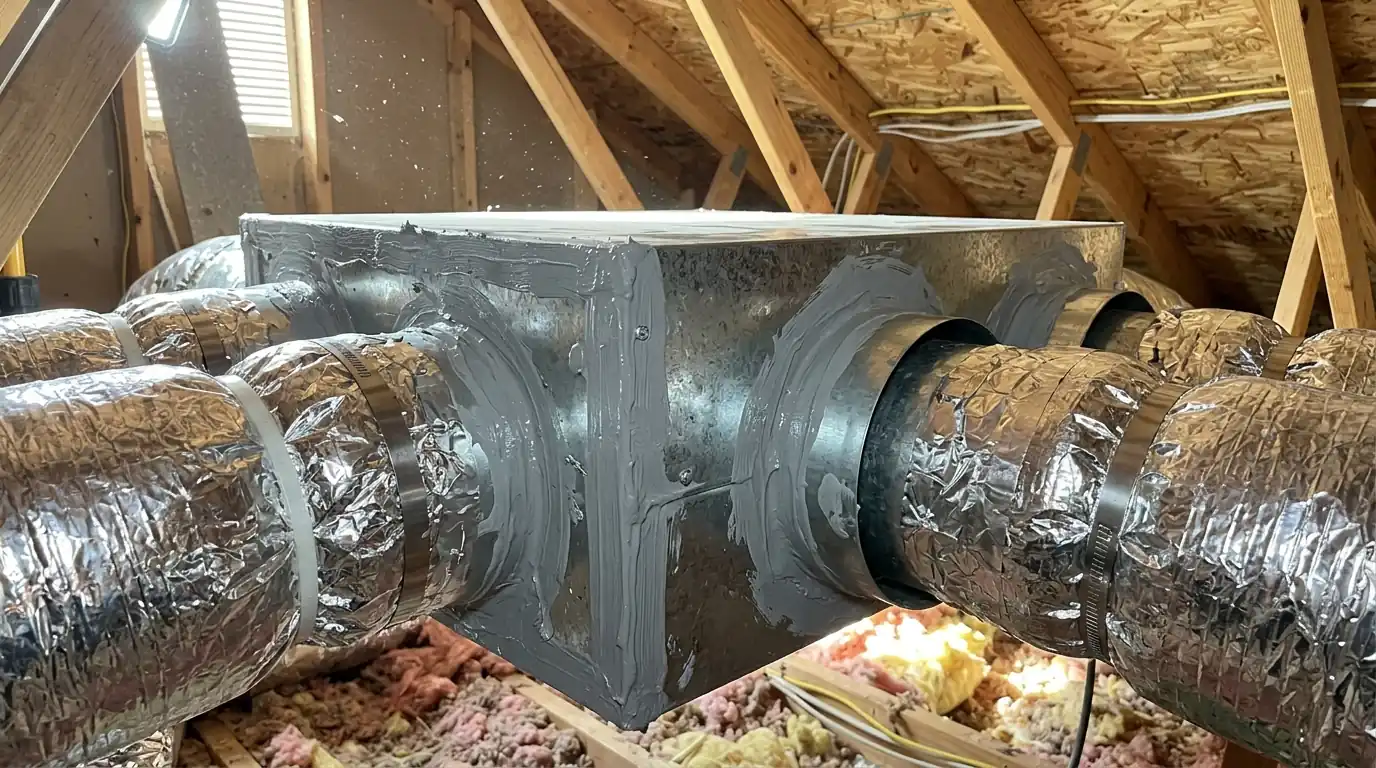
Warning signs
If the outer plastic sleeve on your flex ducts flakes apart when touched, the insulation underneath is exposed and compressing, and the inner liner is usually close behind.
Homes with additions or converted garages often had a run or two tacked on. If those rooms never feel right, the whole layout may need rethinking rather than patching.
A new heat pump or larger AC often needs more airflow than the old ducts can carry. Undersized returns are the most common bottleneck we find in Pasadena homes.
When every service visit turns up another loose or crushed run, the money spent on repairs starts to approach the cost of a new, properly built system.
Loud rushing air at registers and a blower that sounds strained point to ducts too small for the system, which also shortens the blower motor's life.
Pre-1980 metal ducts wrapped in paper or sealed with fibrous joint tape may contain asbestos. They need testing before removal, and often replacement once that is handled properly.
A proper duct design starts with a room-by-room load calculation that looks at window area, insulation, ceiling height and which way each room faces. That tells us how many cubic feet per minute each room needs in summer and winter. From there we size the supply trunk, each branch and, just as important, the return side. Many older Pasadena homes have one small central return in a hallway, which starves the blower. Adding a second return or enlarging the grille often fixes noise and comfort at the same time.
We also plan the route. Shorter, straighter runs move more air with less resistance. Flex duct is stretched fully and supported, not left with slack coiled in the attic. Where a long trunk is needed, rigid sheet metal with insulation wrap is often the better choice. Registers are placed to throw air across the room, not straight at the bed or the couch.
California's energy code, Title 24, generally calls for duct sealing and a duct leakage test when ductwork is replaced, and often when an AC or furnace is changed out on an existing duct system. The test is verified by a third-party HERS rater who visits after the work is done. We handle the permit where the city requires one, schedule the inspection and the rater, and build the ducts to pass the first time rather than needing a return trip.
Pasadena issues its own building permits, while Altadena falls under Los Angeles County and cities like Arcadia and South Pasadena run their own offices and timelines. We tell you up front what the permit and verification steps look like for your address.
Homes built before 1980 sometimes have metal ductwork wrapped in a thin gray or white paper, or joints sealed with a fibrous tape. In some houses the ducting from an old floor furnace still runs through the crawlspace. These materials may contain asbestos. We do not tear them out on a guess. We recommend lab testing of a small sample, and if it comes back positive, the material is removed by an abatement contractor before our crew starts.
Once the old material is out or confirmed safe, we remove the rest of the old runs and haul them away, so the attic is not left full of abandoned duct. We also check the attic insulation while the space is open, since adding or topping off insulation right after duct work is easier than doing it later.
Step by step
We measure each room, note windows and insulation, inspect the current ducts and equipment, and run the load and airflow numbers that size the new system.
You see the planned layout, the materials and the full price before anything is scheduled. If old material needs testing, we plan the timeline around it.
We handle the permit where the city requires one, protect floors and furniture under the attic hatch, and lay boards for safe footing in the attic.
The crew removes old ducts, installs new plenums, trunks, branches, boots and registers, and seals and straps every joint. Most homes take one to two days.
We run a duct leakage test, check airflow and temperature at each register, then coordinate the HERS rater visit and final inspection where required.
Typical prices
Ductwork replacement is priced by the number of runs, the size of the home, attic access and whether returns need to be added. A small bungalow is a very different job from a two-story Spanish Revival house with ducts in two attics. These are typical 2026 ranges, and the final price comes after the technician sees the system.
| Job | Typical range | What is included |
|---|---|---|
| Partial replacement, several runs | $2,385 to $5,940 | Replacing the worst runs and adding a return on an otherwise sound system |
| Full replacement, single-story home | $6,480 to $11,870 | New supply, return, plenums, boots and registers, sealed and leak tested |
| Full replacement, two-story or two-attic home | $10,940 to $18,630 | More runs, longer trunks and harder access in larger homes |
| Added return and grille | $687 to $1,465 | Common fix for strained blowers and noisy airflow in older homes |
Price moves with home size, attic height and clearance, the number of rooms and returns, sheet metal versus flex, HERS testing and permit fees, and any testing or abatement of old material before removal. Compare other jobs in our Pasadena HVAC price guide.
Pasadena's housing stock makes duct design interesting. A 1910s Craftsman in Bungalow Heaven may have a shallow, hot attic with only a narrow strip of headroom down the middle. A 1920s Spanish Revival home in San Rafael or the Historic Highlands may have a low-slope roof with very little attic at all, which pushes ducts into soffits, closets or a crawlspace. Postwar ranch homes in Hastings Ranch and Chapman Woods usually have the easiest attics, but often carry their third generation of flex.
Heat is the other constant. Attics here bake through long summers that regularly reach the high 90s and push past 100 F, so duct insulation and sealing matter more than in a coastal home. Houses near the foothills also deal with fine dust on Santa Ana wind days, and a tight duct system keeps that dust out. For homes being repaired or rebuilt after the Eaton Fire in Altadena and nearby areas, we design the ducts as part of the full HVAC plan.
Related work
We find crushed, torn and disconnected attic ducts, fix them with mastic and new flex, and check airflow before we leave.
Learn moreWe measure duct leakage with a calibrated fan, seal joints with mastic, and test again so you see the actual improvement.
Learn moreFurnace, coil and condenser or a heat pump replaced together as a matched system, with duct testing and the city permit handled.
Learn moreNew ducted and inverter heat pumps sized to your Pasadena home, with permits, line sets, electrical and duct checks included in the quote.
Learn moreOur technicians handle this work all over Pasadena and the surrounding San Gabriel Valley. A few of the places we cover:
Questions
In most cases, yes. Replacing ductwork, or replacing an AC or furnace connected to existing ducts, typically brings in California Title 24 requirements, which include a duct leakage test verified by a third-party HERS rater. We handle the permit where the city requires one, build the system to meet the leakage target, and coordinate the rater visit and final inspection so you do not have to.
If the ducts are old, leaky or undersized, doing both together is usually the smart move. A new heat pump on tired ducts loses much of its efficiency in the attic, and the code test may fail anyway. One project means one permit, one round of attic work and one HERS visit, which saves labor compared with doing the ducts later.
Most single-story homes take one to two working days for removal and installation. A two-story home, a home with ducts in two attics, or a job that adds new returns can take two to three days. The HERS verification and permit inspection happen afterward on a separate visit. In most cases you can use heat or AC each evening while the work is underway.
Both work when installed well. Insulated flex is quicker to route and fine for branch runs if it is stretched tight and supported every few feet. Rigid sheet metal moves air with less friction and holds up longer, so it is often the better choice for main trunks and plenums. Many of our replacements use metal trunks with insulated flex branches.
We do not remove suspected asbestos material ourselves. If your pre-1980 ducts have paper wrap or fibrous joint tape, we recommend lab testing first. If it is positive, an abatement contractor removes those sections under proper controls. After that our crew removes the remaining old ducts and installs the new system, so the schedule accounts for both steps.
Call our Pasadena line any hour. A person answers, asks a few questions about the system, and gives you an arrival window.