HVAC Maintenance Plans
Two visits a year, cooling in spring and heating in fall, so small problems get caught before a heat wave or a cold night.
Learn moreCooling
AC RepairAC InstallationAC ReplacementAC Tune-Up & MaintenanceRefrigerant Leak RepairAC Compressor ReplacementEvaporator Coil ReplacementAC Water Leak & Drain Line RepairHeating
Furnace RepairFurnace InstallationFurnace ReplacementFurnace Tune-Up & MaintenanceWall Furnace RepairFloor Furnace ReplacementBoiler & Radiant Heat RepairHeat Pumps & Ductless
Heat Pump RepairHeat Pump InstallationHeat Pump MaintenanceGas Furnace to Heat Pump ConversionDuctless Mini-Split InstallationDuctless Mini-Split RepairADU Heating & CoolingDucts & Attic
Duct RepairDuctwork ReplacementAir Duct CleaningDuct Sealing & Leak TestingWhole House Fan InstallationAttic InsulationIndoor Air
Indoor Air Quality TestingWhole-Home Air PurifiersUV Air SanitizersWhole-Home HumidifiersSystems & Commercial
Smart Thermostat InstallationHVAC Zoning SystemsFull HVAC System ReplacementHVAC InspectionHVAC Maintenance Plans24/7 Emergency HVAC RepairCommercial HVAC RepairCommercial HVAC MaintenanceRooftop & Package Unit RepairPasadena
Pasadena (all of the city)Bungalow HeavenMadison HeightsSan RafaelLinda VistaHastings RanchOak KnollAnnandaleProspect ParkHistoric HighlandsGarfield HeightsLamanda ParkSouth ArroyoChapman WoodsNearby cities
AltadenaSouth PasadenaSan MarinoArcadiaSierra MadreMonroviaDuarteGlendaleLa Canada FlintridgeLa CrescentaBurbankAlhambraSan GabrielTemple CityMonterey ParkRosemeadEl MonteAzusaGlendoraCovinaWest CovinaLos AngelesMontroseTujungaBaldwin ParkSouth El MonteMontebelloWhittierHacienda HeightsRowland HeightsLa PuenteWalnutDiamond BarSan DimasLa VerneClaremontPomonaUplandRancho CucamongaOntarioMontclairChino HillsBreaFullertonCounties
Los Angeles CountySan Bernardino CountyOrange CountySystems & Commercial in Pasadena, CA
A detailed check of the furnace, AC, ducts and venting with a plain written report, useful before buying an older Pasadena home.
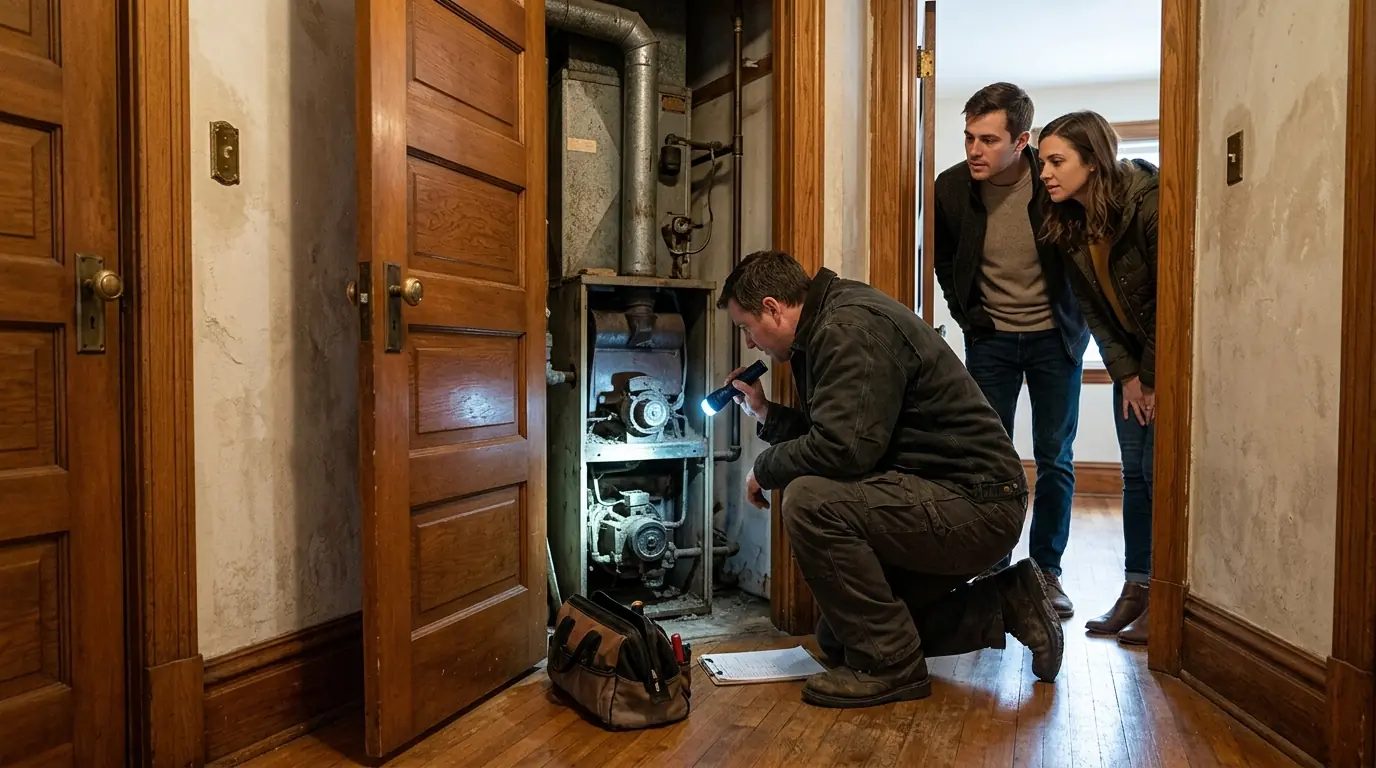
An HVAC inspection is a detailed check of the heating, cooling, ducts, gas venting and controls, with a written report on condition, safety concerns and likely costs. In Pasadena, buyers often order one during escrow because older homes can hide wall furnaces, aging attic ducts or mismatched equipment. A typical inspection runs $187 to $389 depending on the number of systems. Call (626) 879-0711.
HVAC Inspection
A general home inspector looks at the HVAC system for a few minutes. They turn it on, note the age, and often recommend a specialist. That is where Marco's comes in. Our technician spends real time on the equipment: opening panels, checking the heat exchanger with a camera, measuring temperature split and static pressure, testing for carbon monoxide, and following the ducts through the attic or crawlspace. You get a report that says what works, what is worn, and what needs attention now.
Pasadena's older housing is the main reason buyers ask for this. A 1915 bungalow may have a floor furnace under the hallway, a 1950s ranch may have a furnace original to the house, and many homes have attic ducts patched by several owners. Knowing that before your contingency period ends gives you facts for negotiation. Owners who are not buying or selling also order inspections before a remodel, after a nearby fire, or to plan a replacement budget.
Warning signs
The inspection contingency window is short. A specialist report on the furnace, AC and ducts gives you specific findings and cost ranges to use in repair requests or price talks.
Labels fade and records get lost. We read serial numbers to date the equipment and look for signs of past refrigerant leaks, replaced parts or missing components.
Older gravity wall and floor furnaces can have cracked heat exchangers, weak pilot assemblies or poor venting. They need a close look with combustion testing, not a quick glance.
After the Eaton Fire, many homes near the burn area pulled smoke and ash into ducts and returns. An inspection checks whether the ducts, coil and blower need cleaning or replacement.
Adding square footage or a backyard unit changes the load. An inspection tells you whether the existing system can handle it or whether the plan needs separate equipment.
Sellers sometimes order an inspection before listing, fix the small items first, and hand buyers a clear report. That can reduce last-minute repair requests during escrow.
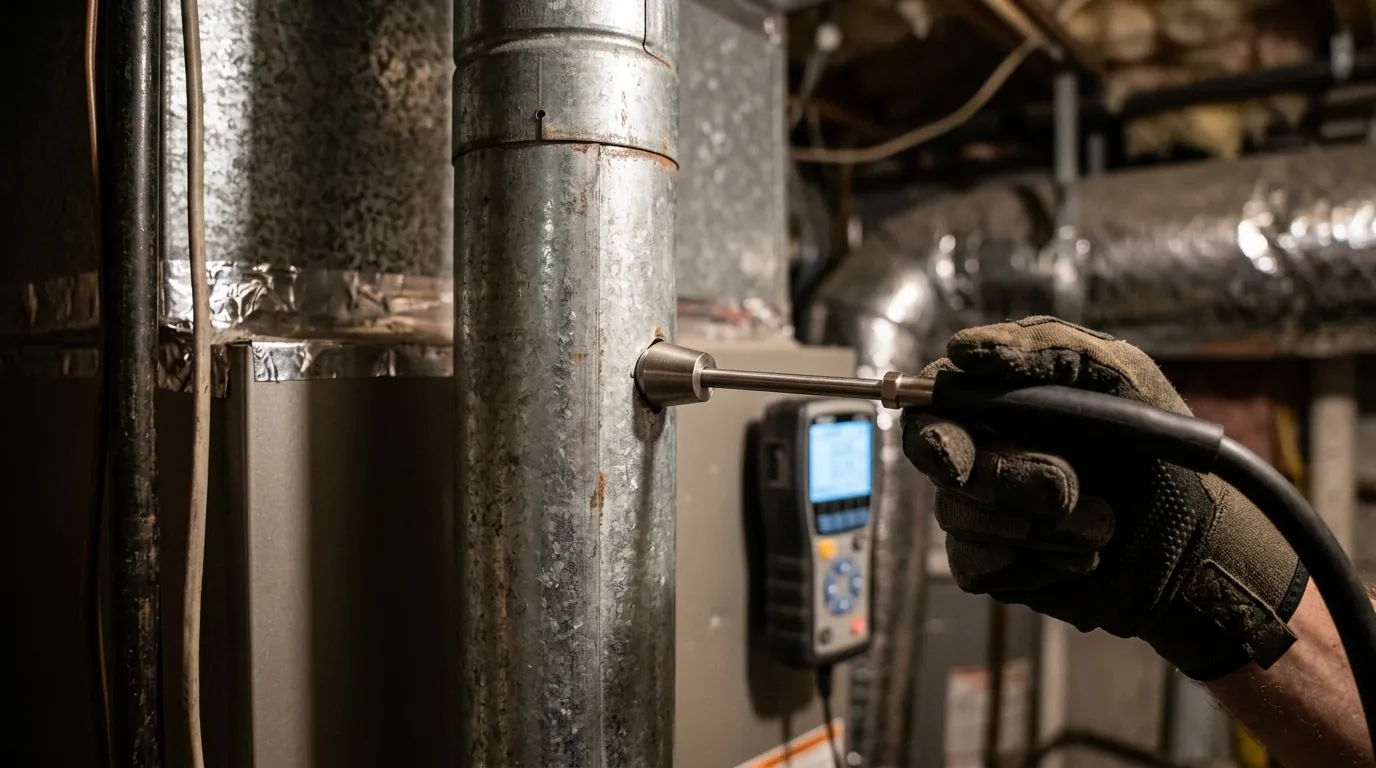
The inspection follows the system from the thermostat to the outdoor unit. On the heating side, we check burner flame, ignition, the flame sensor, inducer motor, gas pressure where it can be reached, the flue and its draft, and the heat exchanger with a camera where the design allows it. A combustion analyzer measures carbon monoxide in the flue gas, and we check the living space for CO around the appliance. On the cooling side, we measure the temperature split across the coil, check refrigerant line temperatures and pressures, and look at the condenser coil, contactor and capacitor.
Then we look at what carries the air. Ducts get traced where they can be reached, checking for disconnected runs, crushed flex duct, rodent damage, missing insulation and old duct wrap that may contain asbestos, which we note for testing rather than disturb. Static pressure and filter condition show whether the blower is fighting the duct system.
Buyers in Bungalow Heaven, Madison Heights and the Historic Highlands see the same patterns. Original wall furnaces in Craftsman homes, sometimes still working and sometimes not safe to run. Central systems added in the 1970s or 1980s with ducts routed through tiny attics. Condensers on R-22, which is expensive to recharge. Floor furnaces in older homes with grates that get hot enough to burn bare feet. Each of these affects your budget in the first few years, and some affect safety right away.
Our report sorts findings into clear groups: safety concerns that need attention before use, repairs that should happen soon, and normal wear to plan for. Where replacement is likely, we give a typical price range so you have a number to work with. We do not inflate findings to sell work. If the system is in good shape, the report says so.
You receive a written report with photos, readings and plain explanations, usually the same day or the next morning. Agents and sellers can read it without a technical background. When a finding needs a second look, such as a suspected cracked heat exchanger, we explain how we tested it and what we saw, because that is the kind of item sellers question. If you buy the home, the report also becomes a baseline for maintenance and for planning the next replacement.
Step by step
Call (626) 879-0711 with the address and your contingency deadline. We arrange access with your agent and plan enough time for every system, including ADUs or second units.
We start at the condenser or heat pump, checking the coil, refrigerant lines, electrical disconnect, pad and clearances, and note the refrigerant type and equipment age.
Panels come off the furnace or air handler. We test ignition, burners, the heat exchanger, the blower, safety switches, venting and carbon monoxide levels.
We trace ducts in the attic or crawlspace, check connections and insulation, measure static pressure, and look for smoke residue, rodent damage or crushed runs.
You get a written report with photos, readings, a priority list and typical price ranges, and we answer questions from you or your agent by phone.
Typical prices
Inspection pricing depends on the number of systems and how much of the house has to be reached. A bungalow with one furnace costs less than a two-story home with two systems and an ADU. These are typical 2026 ranges in the Pasadena area, and we quote the price before we start the work.
| Job | Typical range | What is included |
|---|---|---|
| Single system inspection with report | $187 to $289 | One furnace and AC or one heat pump, with ducts checked where accessible |
| Two systems or main house plus ADU | $297 to $389 | Separate findings for each system, combined into one written report |
| Wall or floor furnace safety inspection | $139 to $217 | Combustion and venting checks on gravity wall or floor heaters |
| Duct camera add-on | $129 to $243 | Camera inside the ducts to check smoke residue, debris or hidden damage |
Hillside homes with tight crawlspaces, very large attics, several units or an inspection needed within a day or two can change the price. Any repairs found are quoted separately, and you are never obligated to use us for them. Compare other jobs in our Pasadena HVAC price guide.
Pasadena's housing spans more than a century, and the HVAC tells that story. Bungalows from the 1900s and 1910s often started with a gravity floor furnace. Spanish Revival homes from the 1920s may have a basement furnace with old ducts. Postwar ranch homes in Hastings Ranch and Chapman Woods usually have a forced-air furnace in the garage or a hall closet. Homes in the hills may have two systems, one per level. A useful inspection accounts for all of that, and the report reflects how the house actually heats and cools.
Fire recovery adds another layer. Homes near the Eaton Fire burn area in Altadena, Sierra Madre and the edges of Pasadena may have smoke odor in ducts, ash in returns or a filter that clogged in the first days. Buyers there should ask for a duct camera check, not just a test run. Gas service comes from SoCalGas, and if we find a gas leak or a carbon monoxide hazard, we shut off the appliance and explain the next steps before leaving.
Related work
Two visits a year, cooling in spring and heating in fall, so small problems get caught before a heat wave or a cold night.
Learn moreNo heat on a cold night? We trace the ignition sequence, find the failed part and fix most furnaces in a single visit.
Learn moreCamera inspection first, then negative-pressure HEPA cleaning of supply, return, blower and coil when your ducts actually need it.
Learn morePilot lights, thermocouples, gas valves and fans on gravity and fan-type wall furnaces, with a venting and CO check every visit.
Learn moreOur technicians handle this work all over Pasadena and the surrounding San Gabriel Valley. A few of the places we cover:
Questions
A general home inspector covers the whole house in a few hours and spends a short time on heating and cooling, often noting age and whether it turns on. An HVAC inspection focuses only on the system: combustion testing, heat exchanger checks, refrigerant readings, static pressure and duct tracing. Many general inspectors recommend a specialist when they see older equipment, and our report answers those open items.
Often, yes. We use a camera where the furnace design allows access, look for rust, soot and flame disturbance when the blower starts, and measure carbon monoxide in the flue and the room. Some heat exchangers cannot be fully seen without removing parts, and the report says when that is the case. If we find a crack, the furnace should not run until it is replaced.
We usually schedule within a few days, and sooner when your contingency deadline is close. Call (626) 879-0711 with the address, the deadline and how to arrange access. The report normally arrives the same day or the next morning, so you and your agent have time to use it in repair requests before the deadline.
Yes. Many Pasadena properties have a backyard unit, a converted garage or a guest house with its own mini-split, wall heater or small furnace. We inspect each system separately and include it in the report. If an ADU was built recently, we also note whether the equipment looks properly installed, such as condensate drains, line set protection and electrical disconnects.
It will tell you the age, condition and likely trouble spots, and we give a realistic window for replacement planning. No one can predict an exact failure date. A 22-year-old furnace in good condition may run several more winters, while a 10-year-old AC with a leaking coil may need major work within a season. The report gives you the facts behind our estimate.
Call our Pasadena line any hour. A person answers, asks a few questions about the system, and gives you an arrival window.