Furnace Repair
No heat on a cold night? We trace the ignition sequence, find the failed part and fix most furnaces in a single visit.
Learn moreCooling
AC RepairAC InstallationAC ReplacementAC Tune-Up & MaintenanceRefrigerant Leak RepairAC Compressor ReplacementEvaporator Coil ReplacementAC Water Leak & Drain Line RepairHeating
Furnace RepairFurnace InstallationFurnace ReplacementFurnace Tune-Up & MaintenanceWall Furnace RepairFloor Furnace ReplacementBoiler & Radiant Heat RepairHeat Pumps & Ductless
Heat Pump RepairHeat Pump InstallationHeat Pump MaintenanceGas Furnace to Heat Pump ConversionDuctless Mini-Split InstallationDuctless Mini-Split RepairADU Heating & CoolingDucts & Attic
Duct RepairDuctwork ReplacementAir Duct CleaningDuct Sealing & Leak TestingWhole House Fan InstallationAttic InsulationIndoor Air
Indoor Air Quality TestingWhole-Home Air PurifiersUV Air SanitizersWhole-Home HumidifiersSystems & Commercial
Smart Thermostat InstallationHVAC Zoning SystemsFull HVAC System ReplacementHVAC InspectionHVAC Maintenance Plans24/7 Emergency HVAC RepairCommercial HVAC RepairCommercial HVAC MaintenanceRooftop & Package Unit RepairPasadena
Pasadena (all of the city)Bungalow HeavenMadison HeightsSan RafaelLinda VistaHastings RanchOak KnollAnnandaleProspect ParkHistoric HighlandsGarfield HeightsLamanda ParkSouth ArroyoChapman WoodsNearby cities
AltadenaSouth PasadenaSan MarinoArcadiaSierra MadreMonroviaDuarteGlendaleLa Canada FlintridgeLa CrescentaBurbankAlhambraSan GabrielTemple CityMonterey ParkRosemeadEl MonteAzusaGlendoraCovinaWest CovinaLos AngelesMontroseTujungaBaldwin ParkSouth El MonteMontebelloWhittierHacienda HeightsRowland HeightsLa PuenteWalnutDiamond BarSan DimasLa VerneClaremontPomonaUplandRancho CucamongaOntarioMontclairChino HillsBreaFullertonCounties
Los Angeles CountySan Bernardino CountyOrange CountyHeating in Pasadena, CA
Hot water boilers, radiators and radiant floors repaired, from circulator pumps and zone valves to pressure and air problems.
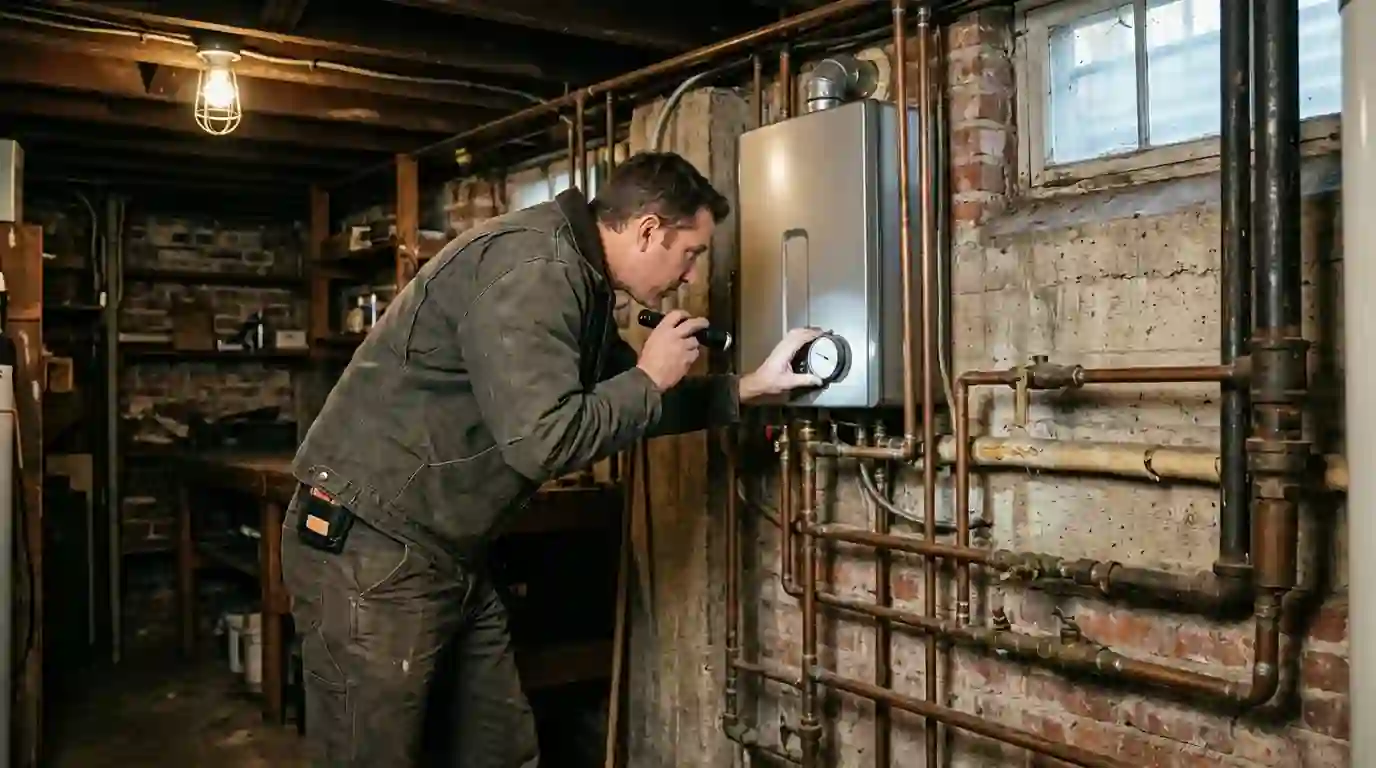
Boiler and radiant heat problems in Pasadena usually trace to a failed circulator pump, air trapped in the loops, low system pressure, a waterlogged expansion tank, a stuck zone valve or an ignition fault in the boiler. Marco's technicians repair hot water boilers, cast iron radiators and in-floor tubing systems, and they quote the work before starting.
Boiler & Radiant Heat Repair
Hydronic heat is less common in Southern California than forced air, but Pasadena has its share. Some large 1910s and 1920s homes in neighborhoods like Oak Knoll and San Rafael were built with cast iron radiators and a boiler in a basement or service room. A number of mid-century homes have radiant tubing set in a concrete slab or under wood floors. These systems heat quietly and evenly without blowing dust around, and owners who have them usually want to keep them.
Hot water heating works on different principles from a furnace. A boiler heats water, a circulator pump moves it through pipes, and the heat leaves through radiators, baseboard or floor tubing before cooler water returns. Pressure, air and flow all have to be right. When something is off, rooms go cold one at a time, pipes bang or the boiler cycles constantly. We diagnose the whole loop, not only the boiler cabinet.
Warning signs
If one area never warms while others do, a zone valve may be stuck, its actuator may have failed, or air is trapped in that loop and blocking flow.
Most residential hot water systems sit around twelve to twenty pounds of pressure when cold. A falling reading points to a leak, a bad fill valve or a weeping relief valve.
Gurgling means air in the lines. Banging can come from steam pockets in an overheated boiler or from pipes rubbing against framing as they expand.
Drips under the relief valve, around pump flanges or at fittings are early warnings. A relief valve that opens often usually means the expansion tank has failed.
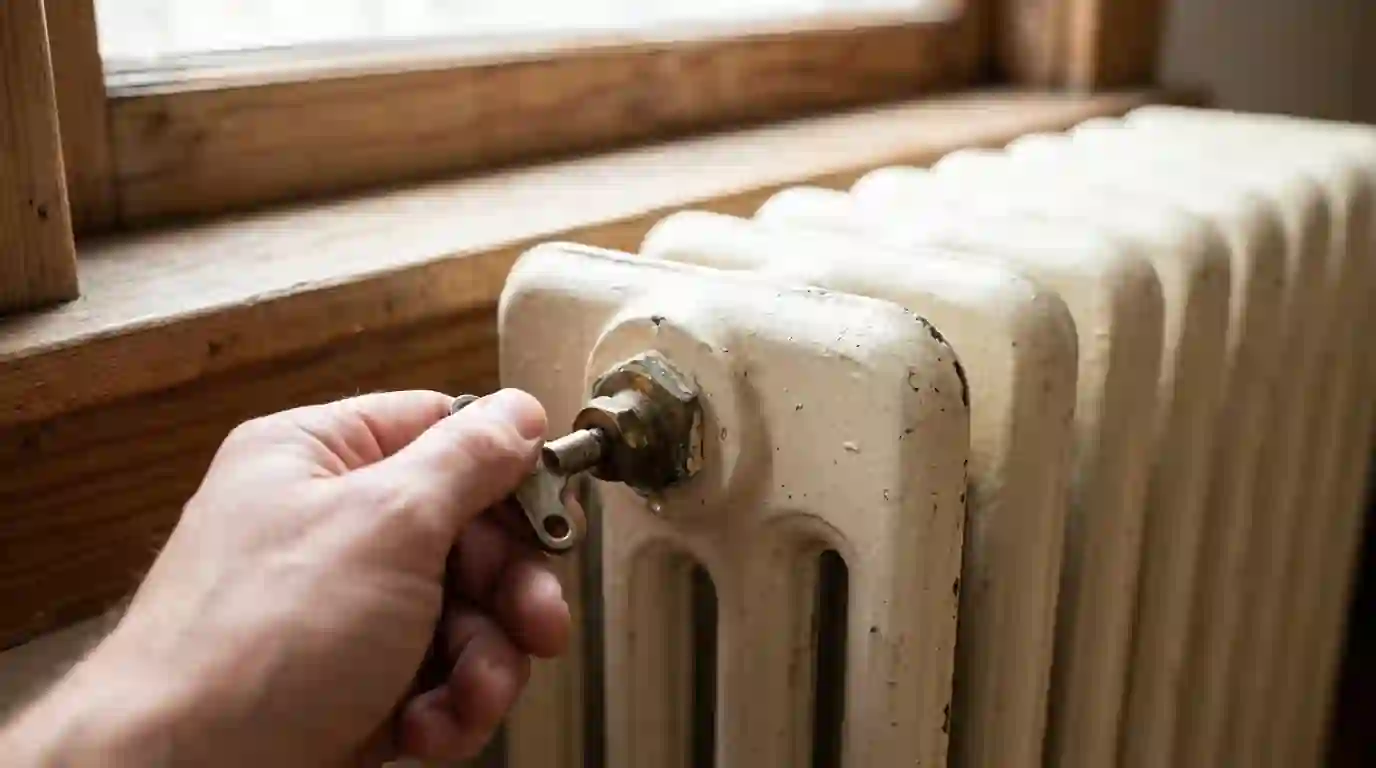
Cast iron radiators that are warm at the bottom and cold at the top are holding trapped air. Bleeding helps, but repeated air means something is letting it in.
Short cycling wastes gas and wears the burner. It often comes from a poor aquastat setting, an oversized boiler or a flow problem in the loops.
The boiler is only one part. Cooler return water enters, gets heated by the burner, and leaves for the radiators or floor loops. The circulator pump, a small motor and impeller mounted on the pipe, keeps that water moving. The expansion tank gives heated water room to grow so pressure does not spike. A pressure relief valve opens if pressure climbs too high. A fill valve tops up water when the system loses a little. Zone valves or separate pumps let parts of the house heat on their own schedules.
Many radiant floors installed in the 1950s and early 1960s used copper or steel tubing poured directly into the slab. These systems can run for decades, but the metal can corrode where it meets the concrete, and a leak under the floor shows up as falling pressure, a warm damp spot or a fill valve that never stops adding water. Locating the leak takes thermal imaging and pressure testing of each loop. Some loops can be isolated and capped while the rest keep working.
Newer radiant systems use PEX tubing, which does not corrode, under wood floors or in thin slabs. Problems there are more often with the mixing valve, the manifold or the pump. We work on both and explain which repairs make sense for the age of your system.
Older boilers use a standing pilot and thermocouple, much like an old wall furnace. Newer ones use electronic ignition, flame sensors and an inducer, much like a modern furnace. Either way, the burner needs clean combustion and a sound vent. A boiler that soots up or backdrafts can put carbon monoxide into the home, often from a basement or closet near bedrooms. We test combustion and check venting on every visit, and every home with a boiler should have CO alarms near sleeping areas.
Step by step
We note pressure, temperature, which zones are cold and how the piping is laid out. Older systems often have undocumented changes, so we trace pipes before assuming.
We confirm the circulator runs and moves water, feel supply and return pipes, and bleed air at radiators, purge valves or the manifold as needed.
Ignition, burner, aquastat settings, relief valve and expansion tank charge are tested. Combustion and carbon monoxide readings are taken at the vent.
You get the price for the failed part and any related work before we start. Pumps, valves and tanks are replaced, then the system is refilled and purged.
We run each zone until it warms, recheck pressure once the water is hot, and show you where the gauge should sit for your system.
Typical prices
Hydronic repairs vary with the part and how hard it is to reach. A basement boiler with clear piping is quicker to work on than a closet boiler wedged behind shelving or a manifold under a floor. These are typical 2026 ranges for Pasadena homes. The technician gives you the final price after seeing the system, before any work begins.
| Job | Typical range | What is included |
|---|---|---|
| Diagnostic visit and system check | $139 to $219 | Covers pressure, flow, ignition and combustion testing |
| Circulator pump replacement | $468 to $1,084 | Variable-speed pumps sit at the higher end of the range |
| Expansion tank replacement and recharge | $387 to $746 | Includes draining, refilling and purging air from the loops |
| Pressure relief valve replacement | $264 to $493 | Often done along with the expansion tank when both are worn |
| Zone valve or actuator replacement | $318 to $689 | Actuator heads alone cost less than full valve bodies |
Slab leak locating, older boilers with hard-to-find parts, tight access and draining the system for larger repairs move the price. When a boiler is near the end of its life, we tell you plainly so you can plan. Compare other jobs in our Pasadena HVAC price guide.
The larger historic homes around Oak Knoll, San Rafael and South Arroyo include some of the city's original hot water heating, with cast iron radiators under the windows and a boiler set in a basement or service room. Some mid-century homes in Linda Vista and the hills above the Arroyo were built with radiant slabs. Owners of both types often care a great deal about preserving original features, so we keep repairs as low impact as we can, working with existing piping whenever it is sound.
Pasadena's mild climate means many boilers sit cold for six months a year. Circulator pumps can seize, valves can stick and pressure can drift during that time. Starting the system in October and checking pressure and pump rotation saves a cold night later. Mineral-rich Southern California water also builds scale over the years, so a system that loses water and refills often collects deposits faster. A tight system with steady pressure lasts longer.
Related work
No heat on a cold night? We trace the ignition sequence, find the failed part and fix most furnaces in a single visit.
Learn moreDuctless heat pumps for Craftsman bungalows, additions, converted garages and hot upstairs rooms, with head styles chosen room by room.
Learn moreA detailed check of the furnace, AC, ducts and venting with a plain written report, useful before buying an older Pasadena home.
Learn moreNight, weekend and holiday repairs for a dead AC in a heat wave or a furnace that quits on a cold night, any hour.
Learn moreOur technicians handle this work all over Pasadena and the surrounding San Gabriel Valley. A few of the places we cover:
Questions
Small leaks at fittings, a weeping relief valve or a slow slab leak can drop pressure over months. A failed expansion tank can also make the gauge swing between cold and hot readings. If pressure falls below about twelve pounds when cold, upper radiators may not fill. We find the source rather than just topping off water, since constant fresh water adds scale and corrosion.
Yes, if you are comfortable doing it. With the system warm, open the small bleed valve at the top of each radiator with a radiator key until water appears, then close it, holding a cloth below. Check the pressure gauge afterward, because removing air can drop it. If radiators need bleeding every week, call us, because something is letting air into the system.
Usually. We locate the leak with thermal imaging and loop pressure tests, then open only a small section of floor at that point to repair the tubing. If a loop has several leaks, it can often be isolated and capped while the other loops keep heating. In some homes, a room on an abandoned loop gets a small ductless unit instead.
Once a year, before the heating season. A yearly visit checks combustion, carbon monoxide, the relief valve, expansion tank charge, pump operation and system pressure. Local boilers sit idle for months, so the fall start-up is when stuck pumps and valves show themselves. Catching them in October is easier than discovering them on the first cold night.
Often, yes. Cast iron radiators and the piping behind them can last close to a century when water quality and pressure are managed. The moving parts are what wear out, and pumps, valves and tanks are affordable to replace. If the boiler itself is cracked or leaking, we explain that honestly, with the facts you need to decide on the next step.
Call our Pasadena line any hour. A person answers, asks a few questions about the system, and gives you an arrival window.