Furnace Replacement
An old furnace swapped for a right-sized new one in the same attic, closet or garage, with venting, ducts and permit handled.
Learn moreCooling
AC RepairAC InstallationAC ReplacementAC Tune-Up & MaintenanceRefrigerant Leak RepairAC Compressor ReplacementEvaporator Coil ReplacementAC Water Leak & Drain Line RepairHeating
Furnace RepairFurnace InstallationFurnace ReplacementFurnace Tune-Up & MaintenanceWall Furnace RepairFloor Furnace ReplacementBoiler & Radiant Heat RepairHeat Pumps & Ductless
Heat Pump RepairHeat Pump InstallationHeat Pump MaintenanceGas Furnace to Heat Pump ConversionDuctless Mini-Split InstallationDuctless Mini-Split RepairADU Heating & CoolingDucts & Attic
Duct RepairDuctwork ReplacementAir Duct CleaningDuct Sealing & Leak TestingWhole House Fan InstallationAttic InsulationIndoor Air
Indoor Air Quality TestingWhole-Home Air PurifiersUV Air SanitizersWhole-Home HumidifiersSystems & Commercial
Smart Thermostat InstallationHVAC Zoning SystemsFull HVAC System ReplacementHVAC InspectionHVAC Maintenance Plans24/7 Emergency HVAC RepairCommercial HVAC RepairCommercial HVAC MaintenanceRooftop & Package Unit RepairPasadena
Pasadena (all of the city)Bungalow HeavenMadison HeightsSan RafaelLinda VistaHastings RanchOak KnollAnnandaleProspect ParkHistoric HighlandsGarfield HeightsLamanda ParkSouth ArroyoChapman WoodsNearby cities
AltadenaSouth PasadenaSan MarinoArcadiaSierra MadreMonroviaDuarteGlendaleLa Canada FlintridgeLa CrescentaBurbankAlhambraSan GabrielTemple CityMonterey ParkRosemeadEl MonteAzusaGlendoraCovinaWest CovinaLos AngelesMontroseTujungaBaldwin ParkSouth El MonteMontebelloWhittierHacienda HeightsRowland HeightsLa PuenteWalnutDiamond BarSan DimasLa VerneClaremontPomonaUplandRancho CucamongaOntarioMontclairChino HillsBreaFullertonCounties
Los Angeles CountySan Bernardino CountyOrange CountyHeating in Pasadena, CA
New gas furnace installs sized by load calculation, with gas piping, venting, ducts and the city permit handled by our crew.
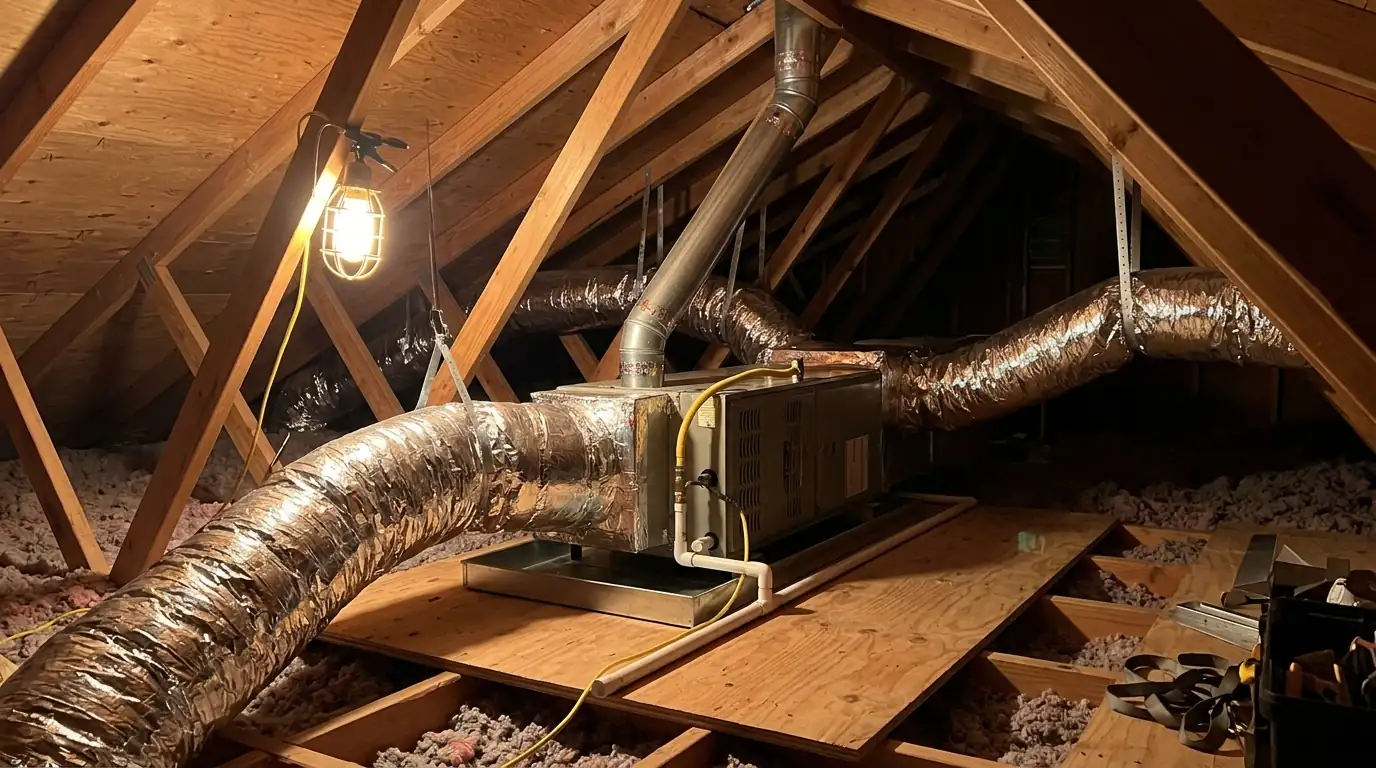
A new furnace installation in Pasadena starts with a room-by-room load calculation, then a decision on where the furnace goes, how gas reaches it, how exhaust leaves and how air reaches each room. Marco's handles the gas line, venting, ductwork, electrical hookup and the permit where the city requires one, and quotes the full job in writing before work starts.
Furnace Installation
Furnace installation is a different job from swapping an old unit. It covers homes getting central heat for the first time, additions and second stories that need their own system, remodels that move the old furnace closet, and houses moving off an aging wall or floor furnace. In each case the furnace has to fit a home that was never designed around it. Plenty of Pasadena houses built before the 1940s fall into this group, and the planning decides whether the system runs quietly for decades or fights the house.
We start in the house, not in a catalog. A technician measures rooms, notes windows and insulation, looks at the attic and crawlspace, and finds the gas meter and electrical panel. From that we size the furnace, choose a location and sketch the duct layout. You get a clear quote that names the equipment, the work and the permit, so nothing about the install is a surprise later.
Warning signs
Your home relies on space heaters, a fireplace or one wall furnace that cannot reach the back bedrooms. A ducted furnace spreads heat evenly through every room instead.
A second story, primary suite or enclosed porch often overloads the existing furnace. A separate furnace or a zoned design keeps new rooms comfortable without starving old ones.
Kitchen and bath remodels sometimes take the space the old furnace used. Relocating it to the attic or garage is a full install with new gas, venting and ducts.
If you plan to add AC within a few years, installing a furnace with a matched coil cabinet and the right blower now saves rework when the condenser arrives.
Removing a floor furnace leaves a home with no heat source, and a new forced air system with ducts is one of the most common replacements we design.
Rooms ten degrees apart on a winter night usually mean the heat source sits in the wrong spot. A well placed furnace with balanced ducts fixes the spread.
An oversized furnace heats fast, shuts off, and starts again a few minutes later. That short cycling wears igniters and blowers, leaves rooms drafty and wastes gas. An undersized furnace runs all night on a cold January evening and still falls behind. We use a Manual J style load calculation that accounts for wall and ceiling insulation, window area, orientation and the cooler design temperatures in foothill neighborhoods. Pasadena homes often need less heating capacity than owners expect, because our winters are mild and well sealed rooms hold heat.
Location drives cost and comfort. A hall closet keeps the furnace inside conditioned space, which helps efficiency, but it needs a return air path and room for service. An attic install uses a horizontal furnace on a platform, with a service light, a walkway and a drain pan if it is a condensing model. A garage location must keep the burners raised above the floor and follow fire separation rules. Crawlspace installs work in some raised-floor bungalows when there is enough clearance.
Venting decides a lot too. A standard 80 percent furnace needs a metal vent running up through the roof. A 95 percent condensing furnace vents through plastic pipe that can exit a side wall, and it needs a drain for its acidic condensate. We look at roof lines, distances to windows and the neighbor's yard before choosing.
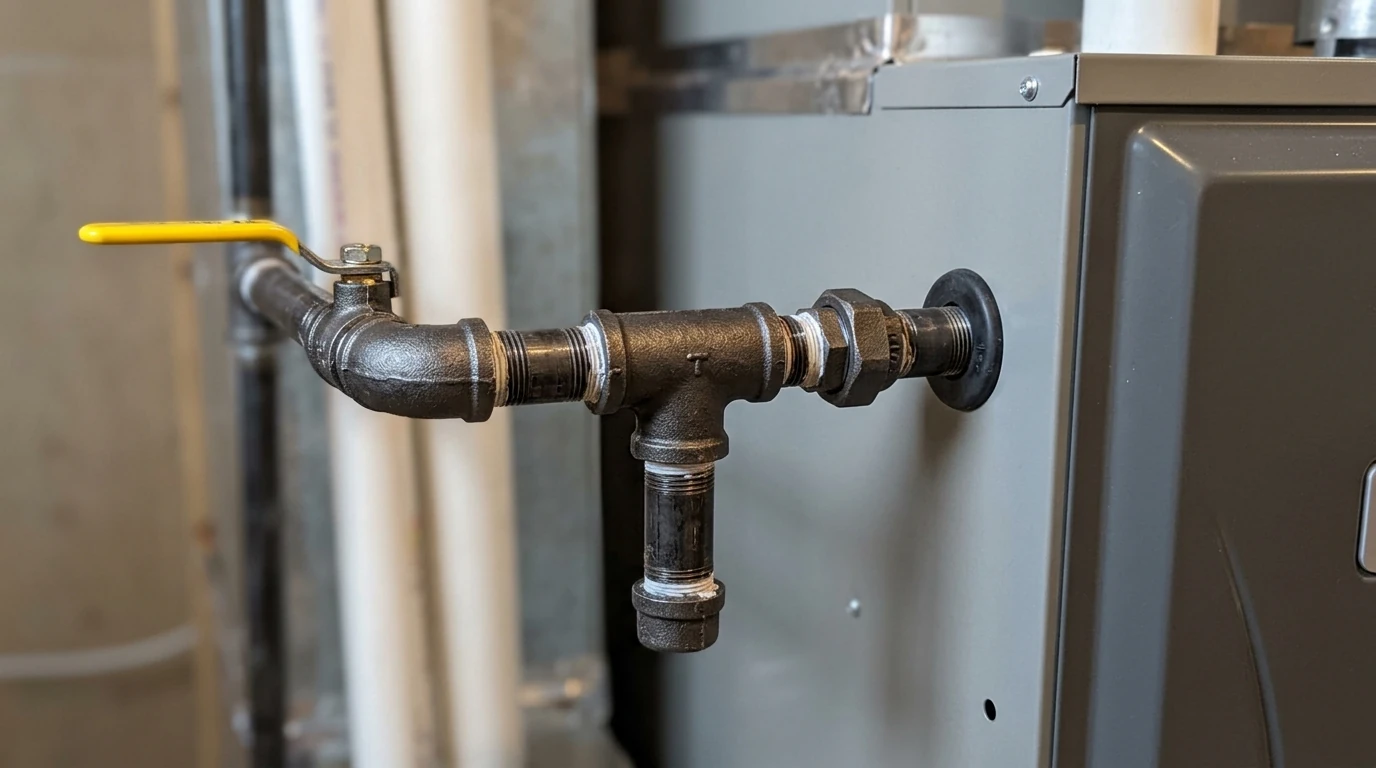
Older Pasadena homes often have gas piping sized for a stove and a water heater, not a modern furnace. We check the meter size and pipe runs, and add or upsize piping where the numbers say it is needed. The furnace also needs its own electrical circuit, a service switch and a thermostat wire run. We handle the permit where the city requires one and schedule the inspection. Under California energy rules, new duct systems are tested for leakage, and we build ducts to pass the first time.
Step by step
A technician walks every room, the attic and crawlspace, checks the gas meter and electrical panel, and asks how you use each room during the cooler months.
We size the furnace, pick the location, lay out supply and return ducts and venting, and put the equipment, the work and the permit into one written price.
Gas piping, platform, vent pipe, electrical and duct trunk lines go in first. In older homes we protect floors and plaster walls along every path we use.
The furnace is set, leveled and connected to gas, venting, ducts, power and the thermostat. We test the gas lines for leaks before the burners ever fire.
We check gas pressure, temperature rise and airflow at each register, test for carbon monoxide, show you the filter and controls, and meet the city inspector.
Typical prices
Installation prices swing more than repair prices because every house starts in a different place. A home with usable ducts and a gas line already in the closet is a modest job. A 1920s bungalow with no ducts at all is a larger project. These typical 2026 ranges help you plan, and the technician sets the final price after seeing the home.
| Job | Typical range | What is included |
|---|---|---|
| 80 percent furnace in a closet with existing ducts | $4,780 to $7,340 | Includes venting, connections, thermostat and start-up testing |
| 95 percent condensing furnace with new PVC venting | $6,290 to $9,870 | Adds the condensate drain and a side wall or roof vent termination |
| New supply and return duct system | $7,860 to $15,940 | Depends on room count, attic access and the number of registers |
| Gas piping upsizing and new branch line | $640 to $2,180 | Longer runs, wall openings and meter upgrades raise the cost |
| Duct leakage test for Title 24 | $289 to $545 | Usually required on new duct systems, and repeat tests cost less |
Equipment brand, efficiency level, attic height, plaster walls that must be opened and the permit fee in your city all move the total. Ask about current PWP, SCE or SoCalGas rebates and state heat pump incentives when funding is open. Compare other jobs in our Pasadena HVAC price guide.
Many Pasadena homes were built when a floor furnace or a single wall heater was the norm, and some had nothing but a fireplace. Craftsman bungalows in Bungalow Heaven and Historic Highlands rarely have a closet built for a furnace, so we often place a horizontal unit in the attic or a low-profile unit in the crawlspace. Spanish Revival homes with thick plaster walls make duct paths harder, and we plan routes through closets and soffits to avoid cutting into decorative ceilings.
Hillside lots in Linda Vista and the foothills above Altadena see colder nights than the flats near Lamanda Park, and we size accordingly. Many homeowners also install a furnace with a future AC or heat pump in mind, since summers past 100 F make cooling a real need. If you are weighing gas against electric, we can price a furnace and a heat pump side by side so you can compare running costs under PWP or SCE electric rates and SoCalGas rates.
Related work
An old furnace swapped for a right-sized new one in the same attic, closet or garage, with venting, ducts and permit handled.
Learn moreNew attic ductwork sized for your rooms and equipment, sealed with mastic and leak tested before we call the job done.
Learn moreFirst-time central air for older Pasadena homes, sized by a room-by-room load calculation and fitted to your attic and floor plan.
Learn moreReplace a gas furnace with an electric heat pump, starting with a panel load check so the switch works without surprises.
Learn moreOur technicians handle this work all over Pasadena and the surrounding San Gabriel Valley. A few of the places we cover:
Questions
Plan on three to six working days for a home that needs new ducts, gas piping and venting, plus the inspection. A straightforward closet install with good ducts can finish in one day. Plaster walls, tight attics and second-floor duct runs add time. We give you a schedule with the quote so you know which days, if any, you will be without heat.
Yes. A new furnace installation in Pasadena needs a mechanical permit, and gas and electrical work may be part of it. We pull the permit where the city requires one, schedule the inspection and meet the inspector. Permits also protect you when you sell, because buyers and their inspectors often ask whether major equipment went in with city approval.
Sometimes. A condensing furnace burns less gas, but in Pasadena the furnace runs only part of the year, so the savings build slowly. It makes the most sense when venting is easy, such as a closet near an outside wall, or when you heat many hours on cold foothill nights. An 80 percent furnace in an attic with a straight roof vent is often the better value. We price both.
It depends on attic height, crawlspace clearance and closet space. Attic installs are common because they keep floor space free and allow short duct runs down to each room. Crawlspace installs work when the house sits high enough off the ground. A converted closet keeps the furnace inside, which helps efficiency. We look at all three on the first visit.
Yes, and it usually saves money. Ducts, a coil cabinet, electrical work and the permit can be shared by both systems, so adding AC at the same time costs less than doing it later. With summers in the high 90s and Santa Ana heat waves, many Pasadena homeowners install both together. We can also quote a heat pump that handles heating and cooling in one system.
Call our Pasadena line any hour. A person answers, asks a few questions about the system, and gives you an arrival window.