Gas Furnace to Heat Pump Conversion
Replace a gas furnace with an electric heat pump, starting with a panel load check so the switch works without surprises.
Learn moreCooling
AC RepairAC InstallationAC ReplacementAC Tune-Up & MaintenanceRefrigerant Leak RepairAC Compressor ReplacementEvaporator Coil ReplacementAC Water Leak & Drain Line RepairHeating
Furnace RepairFurnace InstallationFurnace ReplacementFurnace Tune-Up & MaintenanceWall Furnace RepairFloor Furnace ReplacementBoiler & Radiant Heat RepairHeat Pumps & Ductless
Heat Pump RepairHeat Pump InstallationHeat Pump MaintenanceGas Furnace to Heat Pump ConversionDuctless Mini-Split InstallationDuctless Mini-Split RepairADU Heating & CoolingDucts & Attic
Duct RepairDuctwork ReplacementAir Duct CleaningDuct Sealing & Leak TestingWhole House Fan InstallationAttic InsulationIndoor Air
Indoor Air Quality TestingWhole-Home Air PurifiersUV Air SanitizersWhole-Home HumidifiersSystems & Commercial
Smart Thermostat InstallationHVAC Zoning SystemsFull HVAC System ReplacementHVAC InspectionHVAC Maintenance Plans24/7 Emergency HVAC RepairCommercial HVAC RepairCommercial HVAC MaintenanceRooftop & Package Unit RepairPasadena
Pasadena (all of the city)Bungalow HeavenMadison HeightsSan RafaelLinda VistaHastings RanchOak KnollAnnandaleProspect ParkHistoric HighlandsGarfield HeightsLamanda ParkSouth ArroyoChapman WoodsNearby cities
AltadenaSouth PasadenaSan MarinoArcadiaSierra MadreMonroviaDuarteGlendaleLa Canada FlintridgeLa CrescentaBurbankAlhambraSan GabrielTemple CityMonterey ParkRosemeadEl MonteAzusaGlendoraCovinaWest CovinaLos AngelesMontroseTujungaBaldwin ParkSouth El MonteMontebelloWhittierHacienda HeightsRowland HeightsLa PuenteWalnutDiamond BarSan DimasLa VerneClaremontPomonaUplandRancho CucamongaOntarioMontclairChino HillsBreaFullertonCounties
Los Angeles CountySan Bernardino CountyOrange CountyHeat Pumps & Ductless in Pasadena, CA
New ducted and inverter heat pumps sized to your Pasadena home, with permits, line sets, electrical and duct checks included in the quote.
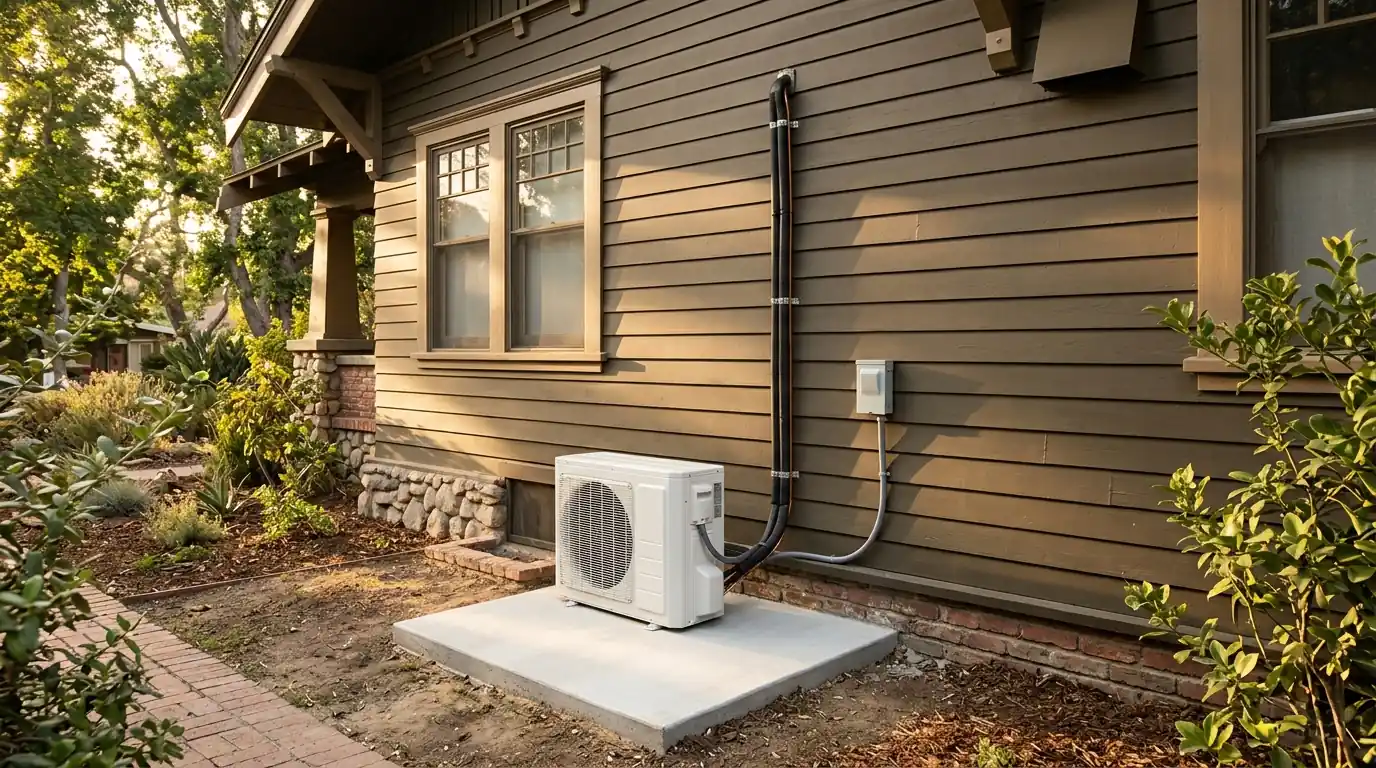
A new heat pump in Pasadena replaces both your air conditioner and your furnace with one outdoor unit and one indoor air handler. Sizing should be driven by summer cooling load, since that is the harder job here. Marco's runs a room by room load calculation, checks your ducts and electrical panel, explains SEER2 and HSPF2 ratings, and handles the permit where the city requires one. Call (626) 879-0711.
Heat Pump Installation
Southern California is close to ideal heat pump country. Winters are mild enough that a modern unit heats efficiently on almost every night of the year, and summers are hot enough that you need real cooling anyway. A heat pump does both with one refrigerant circuit, so you get air conditioning and heat from the same outdoor unit. For many Pasadena homes, it also means the gas furnace can go and the home's heating moves to electricity.
The equipment is only half of a good install. The other half is sizing, duct condition, line set routing, condensate drainage, electrical capacity and the thermostat setup. Marco's Heating & Air installs heat pumps with our own crews across Pasadena and the San Gabriel Valley. We quote the full job before we start, explain the efficiency choices without pushing the most expensive one, and clean up the attic, side yard and closet before we leave.
Warning signs
If the air conditioner is 15 or more years old and the furnace is close behind, replacing both with one heat pump system often costs less than two separate replacements.
Homes with only a furnace and no central air can add a heat pump and get efficient cooling plus heating, using the existing ducts when they are in good shape.
If SoCalGas bills climb every winter for a furnace that runs only a few months, a heat pump can move that heating load to electricity at good efficiency.
Homes with solar often have surplus summer production and can use more of their own power for heating and cooling once the furnace is replaced by a heat pump.
A kitchen remodel, attic conversion or added bedroom changes the load. That is a natural time to resize the system and move to a heat pump.
Older systems using R-22 are expensive to recharge. When a leak shows up on one of those, replacement with a new heat pump is often the better spend.
In colder states, heat pumps are sized for heating. In Pasadena, the cooling load on a 102 degree afternoon is usually the bigger number, so that is where we start. We run a Manual J style load calculation that looks at square footage, ceiling height, window area and direction, attic insulation, and how much shade the house gets. A west facing Craftsman with original single pane windows needs a very different system from a shaded postwar ranch with new windows.
Oversizing is a common mistake. A unit that is too large cools the house fast, shuts off, and never runs long enough to pull humidity out or keep temperatures even between rooms. Inverter heat pumps help because they can slow down to match smaller loads, but they still need to be sized close to the real need to run efficiently.
SEER2 measures cooling efficiency and HSPF2 measures heating efficiency, both under newer test rules that better match real duct conditions. Higher numbers mean less electricity for the same comfort. California has minimum efficiency levels for new equipment, so every unit we install meets them. Going above the minimum makes the most sense in homes with long cooling seasons and higher electric rates.
Single stage heat pumps run at one speed. Two stage units have a low and a high setting. Variable speed inverter heat pumps change compressor and fan speed in small steps, which keeps temperatures steadier and runs quieter. In a Pasadena home that sees long hot afternoons, the inverter models often pay back the extra cost through lower summer bills, but we show you the numbers rather than assuming.
A new heat pump connected to leaky, undersized or crushed ducts will not deliver what its ratings promise. Before installing, we inspect the attic or crawlspace duct runs, look for disconnected boots and torn flex duct, and check that the return is large enough for the new air handler. California's Title 24 energy rules can require duct leakage testing when certain equipment is replaced, and we plan for that in the quote.
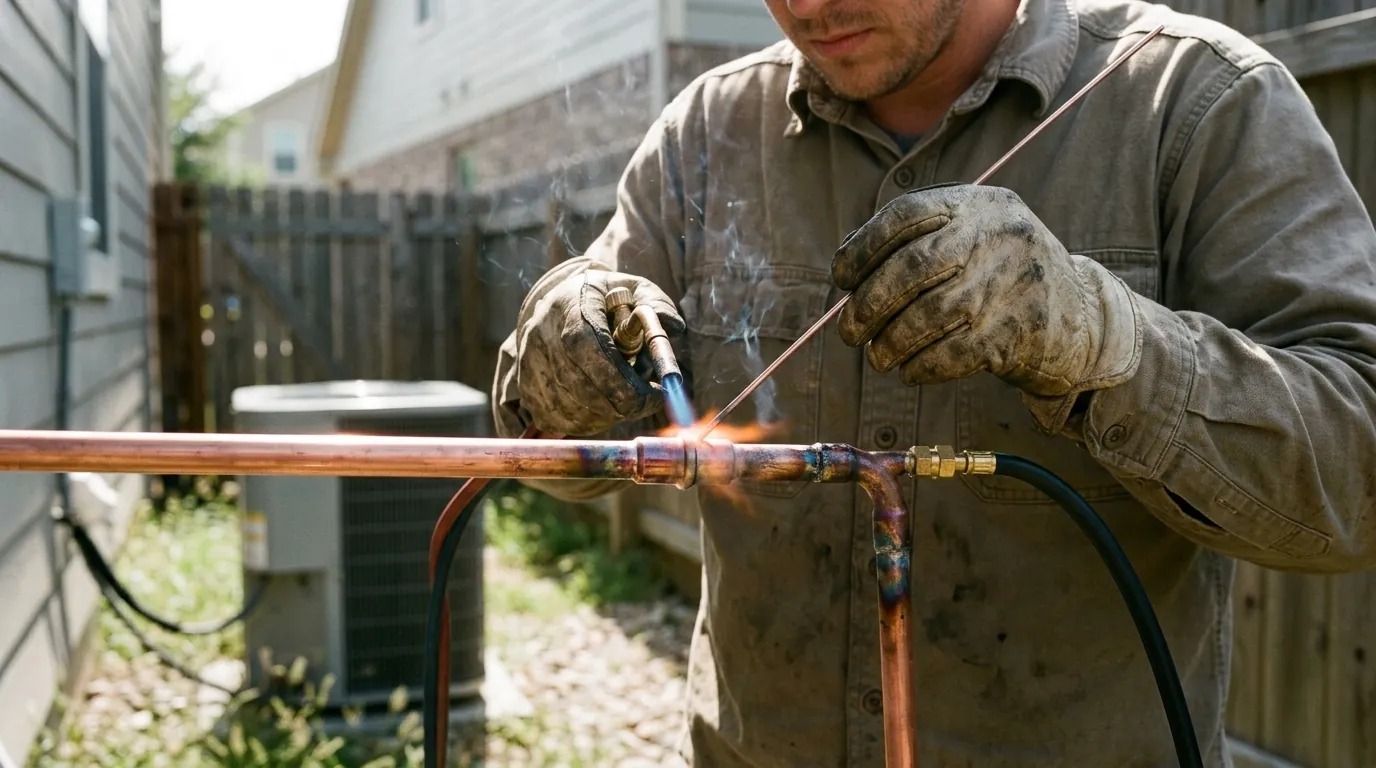
The line set carries refrigerant between the indoor and outdoor units. If the existing line set is the right size, clean and in good condition, it can sometimes be reused after flushing. Often it is better to run a new one. We braze joints with nitrogen flowing to keep scale out, pressure test, pull a deep vacuum and weigh in the charge, because those steps decide how long the compressor lasts.
Step by step
A technician measures the home, looks at windows, insulation and shading, inspects the ducts and electrical panel, and asks how you use each room through the year.
You get two or three equipment options with SEER2 and HSPF2 ratings, the full installed price, and what is included, such as permits, duct work and electrical.
We handle the permit where the city requires one and set an install date, usually one or two days of work for a standard ducted replacement.
The crew removes the old equipment, sets the outdoor pad, installs the air handler, runs line set and wiring, connects condensate drainage, and seals and tests every joint.
We run the system in both modes, set the thermostat, show you the filter location, and help you register the equipment so the manufacturer warranty is on record.
Typical prices
These are typical 2026 installed ranges for Pasadena and nearby San Gabriel Valley homes. Your final price depends on system size, efficiency, duct condition, electrical work and access. We quote the price before we start the work, with every line item spelled out.
| Job | Typical range | What is included |
|---|---|---|
| Single stage ducted heat pump, 2 to 3 tons | $11,480 to $15,870 | Replacing an existing AC and furnace on ducts that pass inspection |
| Variable speed inverter heat pump system | $15,940 to $22,630 | Higher SEER2 and HSPF2 ratings, quieter operation, steadier room temperatures |
| New line set and pad | $687 to $1,845 | Depends on run length, attic or wall routing, and outdoor unit location |
| Duct sealing or partial duct replacement | $1,240 to $4,780 | Needed when ducts leak, are crushed, or too small for the new system |
Price moves with tonnage, efficiency tier, panel or circuit upgrades, attic access in older homes, and Title 24 testing. Ask about current PWP, SCE or SoCalGas rebates and state heat pump incentives when funding is open. Compare other jobs in our Pasadena HVAC price guide.
Pasadena's housing stock shapes every install. Craftsman bungalows from the 1910s and 1920s often have low attics, knob and tube remnants, and small original duct runs added decades after the house was built. Spanish Revival homes from the 1920s may have flat roof sections, thick plaster walls and limited attic space, which pushes us toward a packaged rooftop heat pump or a careful air handler location. Postwar ranch homes in Hastings Ranch or Chapman Woods usually have open attics and are the most straightforward.
Electric rates matter too. Pasadena homes buy power from Pasadena Water and Power, while most of Altadena, Arcadia, Sierra Madre and the rest of the valley are on Southern California Edison. Rate structures and time of use periods differ between the two, and that changes how much a higher efficiency heat pump saves. We look at your utility and usage pattern before recommending a SEER2 tier, so the efficiency you pay for matches the bills you actually get.
Related work
Replace a gas furnace with an electric heat pump, starting with a panel load check so the switch works without surprises.
Learn moreA two-mode tune-up for Pasadena heat pumps: coil cleaning, electrical tests, defrost checks, drain flushing and a clear report on condition.
Learn moreWe measure duct leakage with a calibrated fan, seal joints with mastic, and test again so you see the actual improvement.
Learn moreFurnace, coil and condenser or a heat pump replaced together as a matched system, with duct testing and the city permit handled.
Learn moreOur technicians handle this work all over Pasadena and the surrounding San Gabriel Valley. A few of the places we cover:
Questions
Yes. Modern heat pumps heat efficiently well below freezing, and Pasadena rarely drops much under the high 30s. Most homes here do not need electric backup heat strips at all, though some installs include a small strip as insurance or for foothill homes that see colder nights. The load calculation tells us whether backup heat is worth adding.
Often it can, if the ducts are sized correctly, sealed, and not crushed or disconnected. Many older Pasadena homes have attic ducts that leak badly or were added piecemeal over the years. We inspect and, where required, test the ducts before the install, then quote any sealing or replacement as a separate line so you can see the cost.
A straightforward replacement of an existing AC and furnace with a ducted heat pump usually takes one to two days on site. Jobs with new ducts, a panel upgrade, a rooftop crane lift or a hard to reach attic can take longer. Permit timing varies by city, and we schedule the final inspection after the install is complete.
California's minimum is fine for small, well shaded homes with modest cooling use. If your home runs the AC most of the summer afternoons, a higher SEER2 inverter model usually makes sense, especially on time of use electric rates. We compare your current usage to the options and show the likely difference rather than recommending the top tier by default.
Yes, replacing or adding heating and cooling equipment usually requires a mechanical permit, and electrical work can add an electrical permit. We handle the permit where the city requires one, schedule the inspection, and meet the inspector. Title 24 rules may also call for duct testing, which we arrange and include in the quote.
Call our Pasadena line any hour. A person answers, asks a few questions about the system, and gives you an arrival window.