Indoor Air Quality Testing
We measure particles, humidity, CO2, VOCs and carbon monoxide in your home, find the sources and explain what would actually help.
Learn moreCooling
AC RepairAC InstallationAC ReplacementAC Tune-Up & MaintenanceRefrigerant Leak RepairAC Compressor ReplacementEvaporator Coil ReplacementAC Water Leak & Drain Line RepairHeating
Furnace RepairFurnace InstallationFurnace ReplacementFurnace Tune-Up & MaintenanceWall Furnace RepairFloor Furnace ReplacementBoiler & Radiant Heat RepairHeat Pumps & Ductless
Heat Pump RepairHeat Pump InstallationHeat Pump MaintenanceGas Furnace to Heat Pump ConversionDuctless Mini-Split InstallationDuctless Mini-Split RepairADU Heating & CoolingDucts & Attic
Duct RepairDuctwork ReplacementAir Duct CleaningDuct Sealing & Leak TestingWhole House Fan InstallationAttic InsulationIndoor Air
Indoor Air Quality TestingWhole-Home Air PurifiersUV Air SanitizersWhole-Home HumidifiersSystems & Commercial
Smart Thermostat InstallationHVAC Zoning SystemsFull HVAC System ReplacementHVAC InspectionHVAC Maintenance Plans24/7 Emergency HVAC RepairCommercial HVAC RepairCommercial HVAC MaintenanceRooftop & Package Unit RepairPasadena
Pasadena (all of the city)Bungalow HeavenMadison HeightsSan RafaelLinda VistaHastings RanchOak KnollAnnandaleProspect ParkHistoric HighlandsGarfield HeightsLamanda ParkSouth ArroyoChapman WoodsNearby cities
AltadenaSouth PasadenaSan MarinoArcadiaSierra MadreMonroviaDuarteGlendaleLa Canada FlintridgeLa CrescentaBurbankAlhambraSan GabrielTemple CityMonterey ParkRosemeadEl MonteAzusaGlendoraCovinaWest CovinaLos AngelesMontroseTujungaBaldwin ParkSouth El MonteMontebelloWhittierHacienda HeightsRowland HeightsLa PuenteWalnutDiamond BarSan DimasLa VerneClaremontPomonaUplandRancho CucamongaOntarioMontclairChino HillsBreaFullertonCounties
Los Angeles CountySan Bernardino CountyOrange CountyIndoor Air in Pasadena, CA
Bypass, fan-powered and steam humidifiers on your furnace or air handler, with a control that keeps humidity in a comfortable range.
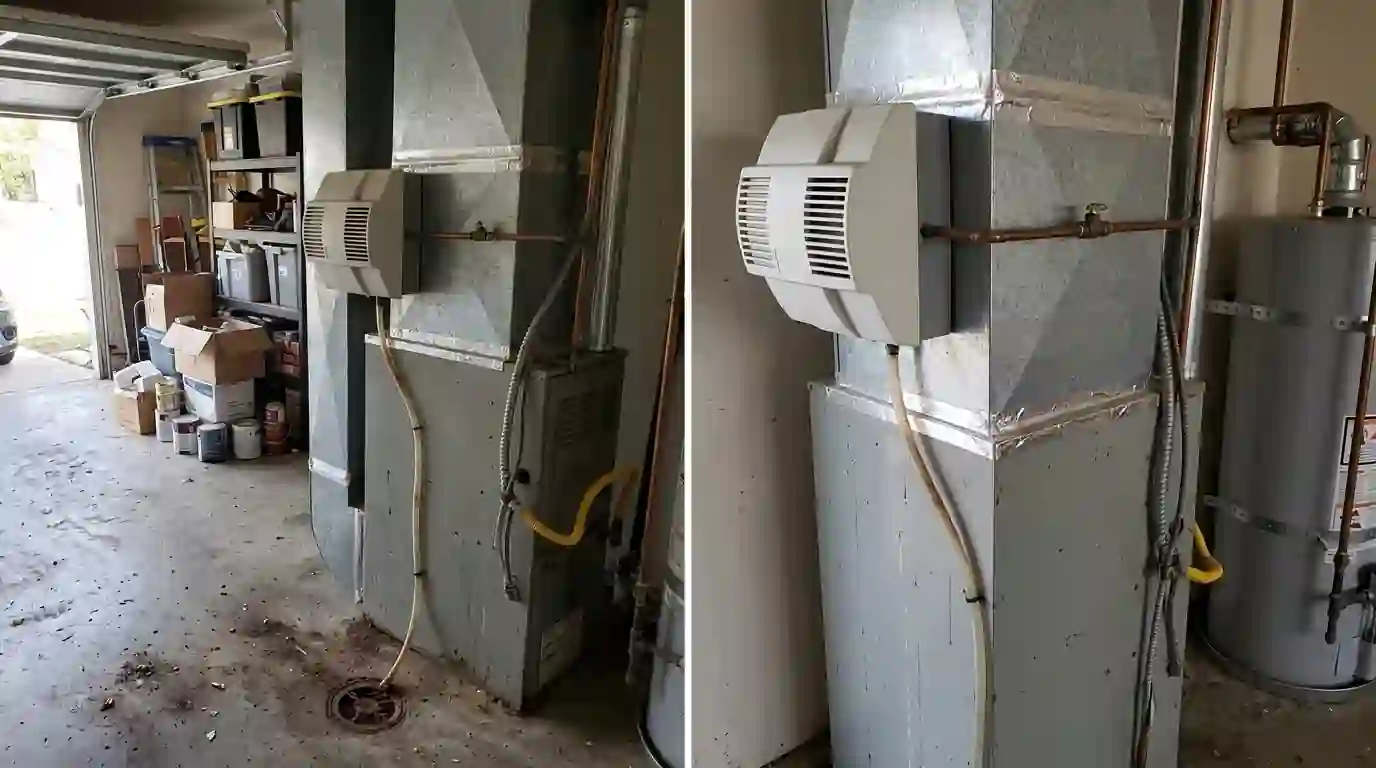
A whole-home humidifier adds moisture to the air your heating system moves, so every room gets it. In Pasadena, it helps most on Santa Ana wind days and cold winter nights, when indoor humidity can drop very low. It connects to your furnace or air handler, a water line and a drain, and a humidistat keeps levels comfortable without making windows sweat.
Whole-Home Humidifiers
When the Santa Ana winds blow, the air coming down from the mountains is warm and extremely dry, and indoor humidity can fall far below what feels comfortable. Winter heating dries the air further. The signs are familiar: static shocks off every doorknob, dry eyes and sinuses, cracked lips, nosebleeds in children, wood floors with gaps, and guitars or pianos that go out of tune. Portable humidifiers help a bedroom, but they need daily refilling and cleaning, and they do little for the rest of the house.
A whole-home humidifier mounts on your furnace, heat pump air handler or ductwork and adds moisture to the air as the system runs. Marco's sizes the unit to your home, connects it to water and a drain, and sets up a humidistat, often with an outdoor sensor, so the house stays in a comfortable range without condensation on windows. We also tell you honestly when a humidifier does not make sense, such as for a home with a damp crawlspace or existing moisture problems.
Warning signs
Frequent shocks from doorknobs, blankets and pets on dry days are one of the clearest signs that indoor humidity has dropped well below a comfortable level.
Waking up with a dry throat, irritated sinuses or cracked skin on Santa Ana days or cold winter nights often tracks closely with very low indoor humidity.
Hardwood floors in older Craftsman and Spanish Revival homes shrink when the air gets very dry, opening gaps that close again in more humid months.
Pianos and guitars drift out of tune, and wood furniture, cabinetry or old built-ins can crack when humidity swings low for days at a time.
If you refill and clean two or three portable humidifiers every day in the dry season, a single built-in unit is less work and covers the whole house.
Dry air makes skin feel cooler at the same temperature, so many people turn the heat up. Better humidity can make a lower setting feel comfortable.
There are three main types, and the right one depends on your heating system and how much moisture the house needs.
Bypass and fan-powered humidifiers use a water panel that gets wet, with warm air passing across it to pick up moisture. They work best with a gas furnace, which delivers warm air. Heat pumps blow cooler air, so evaporative units add less moisture on heat pump systems. Steam humidifiers boil water in a canister and inject steam into the duct, so they work with any system and can add moisture even when the heat is not running.
More humidity is not always better. Too much moisture can condense on cold windows and inside exterior walls, which can lead to mold. Many homes are comfortable somewhere around 35 to 45 percent relative humidity. On cold nights, windows are the first place condensation shows up, so the target should drop as the outdoor temperature drops.
That is why we pair most humidifiers with a control that has an outdoor temperature sensor. It lowers the target automatically on cold nights and raises it on mild dry days. Many smart thermostats can also manage a humidifier directly. We set up the control, show you how to read it, and check that windows stay clear after the first cold night.
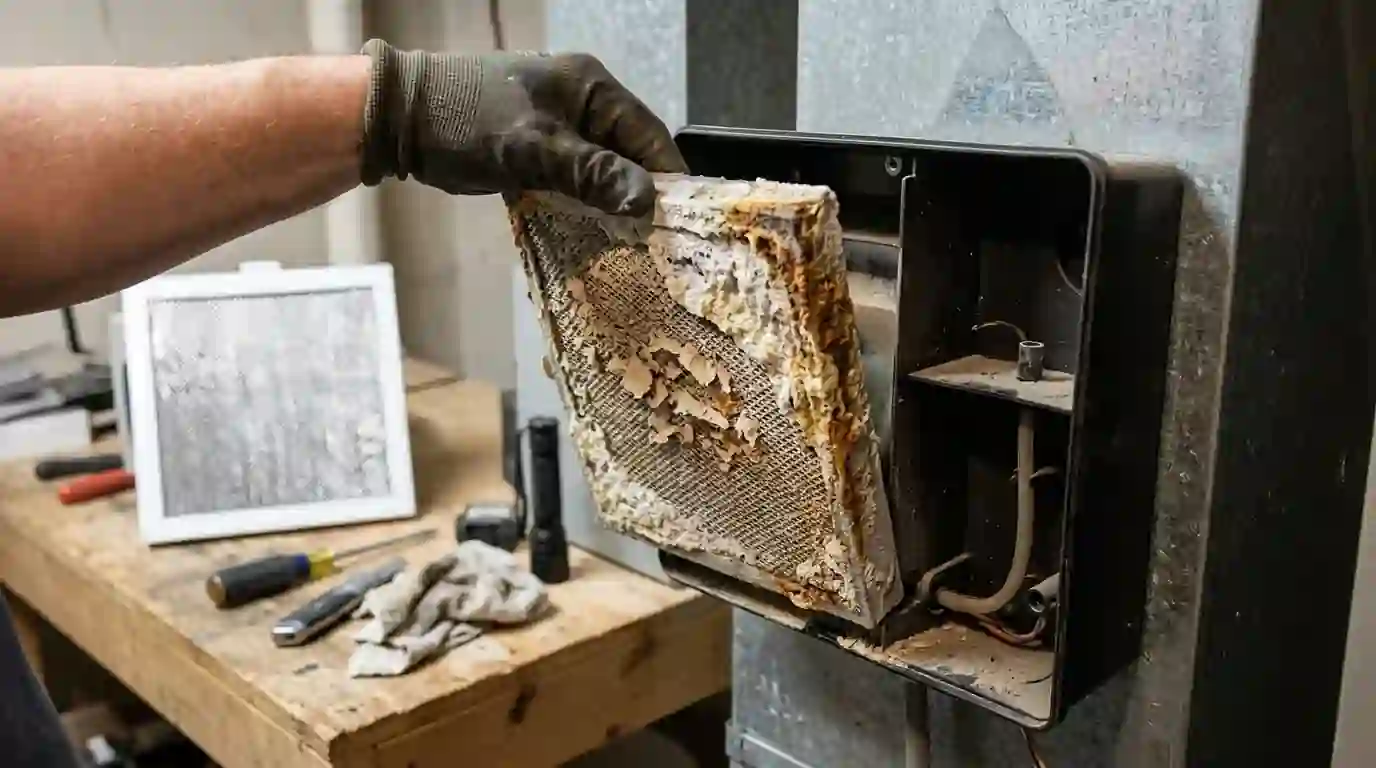
Pasadena water is moderately hard, and minerals build up in humidifiers. Evaporative panels need replacing about once a season, sometimes more often. Steam canisters fill with scale and need cleaning or replacement depending on the model and water hardness. We size the drain line properly so wastewater runs to a safe location, and we install a shutoff valve on the water supply so the unit can be serviced without turning off water to the house.
We also check the space around your system. A humidifier on an attic air handler needs a secure drain and a pan, because a leak in the attic can damage the ceiling. Closet and garage installs are easier to service and inspect.
Step by step
We measure current humidity, look at your heating system type, the space around it, the nearest water line and drain, and any existing moisture concerns.
Based on home size and system, we recommend a bypass, fan-powered or steam unit and give you the price and yearly upkeep cost.
The humidifier is mounted on the supply or return duct, connected to a water line with a shutoff valve, and drained to a safe location.
We install a humidistat, often with an outdoor sensor, or connect the unit to a compatible smart thermostat so it adjusts automatically.
We run the system, confirm water flow and drainage, check for leaks, set a starting humidity target and show you how to change panels or canisters.
Typical prices
Humidifier pricing depends on the type, the system it connects to, and how far it is to a water line and drain. A bypass unit on a closet furnace is the most affordable. A steam unit on an attic heat pump air handler is the most involved. These are typical ranges, and the final price comes after the technician sees the system.
| Job | Typical range | What is included |
|---|---|---|
| Bypass humidifier installed | $487 to $935 | Water panel unit, bypass duct, water line, drain and humidistat |
| Fan-powered humidifier installed | $689 to $1,265 | Built-in fan for more output, no bypass duct needed |
| Steam humidifier installed | $1,385 to $2,670 | Works with heat pumps, needs a dedicated electrical circuit in many cases |
| Yearly panel or canister replacement | $47 to $186 | Water panel for evaporative units or steam canister, depending on type |
Price moves with humidifier type and capacity, attic, closet or garage location, distance to water and drain, whether a new electrical circuit is needed for steam units, and the control or thermostat chosen. Compare other jobs in our Pasadena HVAC price guide.
Pasadena sits right where Santa Ana winds come down out of the San Gabriel Mountains and through the canyons. Foothill neighborhoods like Linda Vista, Hastings Ranch and upper Altadena often feel those dry winds hardest, and indoor humidity can drop sharply within a day. Winter nights in the 30s and 40s add heating season dryness on top. Many homes here are fine much of the year and only need help during those dry stretches, which is why a well-controlled humidifier that turns itself down is a better fit than one running at a fixed level.
Older homes need extra care. Single-pane windows in Craftsman bungalows and Spanish Revival homes fog up at lower humidity than modern windows, so the target has to be set conservatively. Homes with crawlspace moisture or past mold issues may not need added moisture at all. Homes switching from a furnace to a heat pump should plan for a steam unit, since warm-air evaporative units add less moisture with a heat pump.
Related work
We measure particles, humidity, CO2, VOCs and carbon monoxide in your home, find the sources and explain what would actually help.
Learn moreA fall furnace tune-up that cleans the burners and flame sensor, tests every safety and checks for carbon monoxide before winter.
Learn moreSmart thermostats installed with a proper C-wire and the right heat pump or two-stage settings, tested in every mode.
Learn moreNew ducted and inverter heat pumps sized to your Pasadena home, with permits, line sets, electrical and duct checks included in the quote.
Learn moreOur technicians handle this work all over Pasadena and the surrounding San Gabriel Valley. A few of the places we cover:
Questions
Many Pasadena homes do fine most of the year, but Santa Ana wind days and cold, dry winter nights can drop indoor humidity very low. If your household deals with static shocks, dry sinuses, nosebleeds or gapping wood floors during those stretches, a whole-home humidifier with an automatic control can help. If those problems are rare, a portable unit in the bedroom may be enough.
Many homes are comfortable around 35 to 45 percent relative humidity, but the right number depends on the outdoor temperature and your windows. On cold nights, a lower setting prevents condensation on windows, especially single-pane glass in older Pasadena homes. A control with an outdoor sensor adjusts the target automatically. We set a starting point and check it after the first cold night.
It can, but the type matters. Bypass and fan-powered humidifiers rely on warm air to evaporate water, and heat pumps deliver cooler air than gas furnaces, so those units add less moisture. A steam humidifier makes its own steam and works well with heat pumps. If you are converting from gas to a heat pump, we usually recommend steam for that reason.
It can if humidity is kept too high for the home. Moisture condenses on cold windows and inside exterior walls when the air holds too much water. That is why we use a control that lowers the target on cold nights, set conservative levels for single-pane windows, and do not recommend a humidifier for homes with existing moisture or crawlspace problems.
Evaporative units need a new water panel about once a season, sometimes more often with hard water. Steam units need the canister cleaned or replaced as scale builds up, typically once or twice a year depending on use and water hardness. We check the drain, the valve and the control during maintenance visits, and show you how to swap panels yourself if you prefer.
Call our Pasadena line any hour. A person answers, asks a few questions about the system, and gives you an arrival window.