Attic Insulation
Air sealing first, then blown-in insulation to the right depth, so your ceilings stop radiating attic heat into the rooms.
Learn moreCooling
AC RepairAC InstallationAC ReplacementAC Tune-Up & MaintenanceRefrigerant Leak RepairAC Compressor ReplacementEvaporator Coil ReplacementAC Water Leak & Drain Line RepairHeating
Furnace RepairFurnace InstallationFurnace ReplacementFurnace Tune-Up & MaintenanceWall Furnace RepairFloor Furnace ReplacementBoiler & Radiant Heat RepairHeat Pumps & Ductless
Heat Pump RepairHeat Pump InstallationHeat Pump MaintenanceGas Furnace to Heat Pump ConversionDuctless Mini-Split InstallationDuctless Mini-Split RepairADU Heating & CoolingDucts & Attic
Duct RepairDuctwork ReplacementAir Duct CleaningDuct Sealing & Leak TestingWhole House Fan InstallationAttic InsulationIndoor Air
Indoor Air Quality TestingWhole-Home Air PurifiersUV Air SanitizersWhole-Home HumidifiersSystems & Commercial
Smart Thermostat InstallationHVAC Zoning SystemsFull HVAC System ReplacementHVAC InspectionHVAC Maintenance Plans24/7 Emergency HVAC RepairCommercial HVAC RepairCommercial HVAC MaintenanceRooftop & Package Unit RepairPasadena
Pasadena (all of the city)Bungalow HeavenMadison HeightsSan RafaelLinda VistaHastings RanchOak KnollAnnandaleProspect ParkHistoric HighlandsGarfield HeightsLamanda ParkSouth ArroyoChapman WoodsNearby cities
AltadenaSouth PasadenaSan MarinoArcadiaSierra MadreMonroviaDuarteGlendaleLa Canada FlintridgeLa CrescentaBurbankAlhambraSan GabrielTemple CityMonterey ParkRosemeadEl MonteAzusaGlendoraCovinaWest CovinaLos AngelesMontroseTujungaBaldwin ParkSouth El MonteMontebelloWhittierHacienda HeightsRowland HeightsLa PuenteWalnutDiamond BarSan DimasLa VerneClaremontPomonaUplandRancho CucamongaOntarioMontclairChino HillsBreaFullertonCounties
Los Angeles CountySan Bernardino CountyOrange CountyDucts & Attic in Pasadena, CA
Quiet, insulated whole house fans that pull cool evening air through your home and flush the hot attic, with venting sized right.
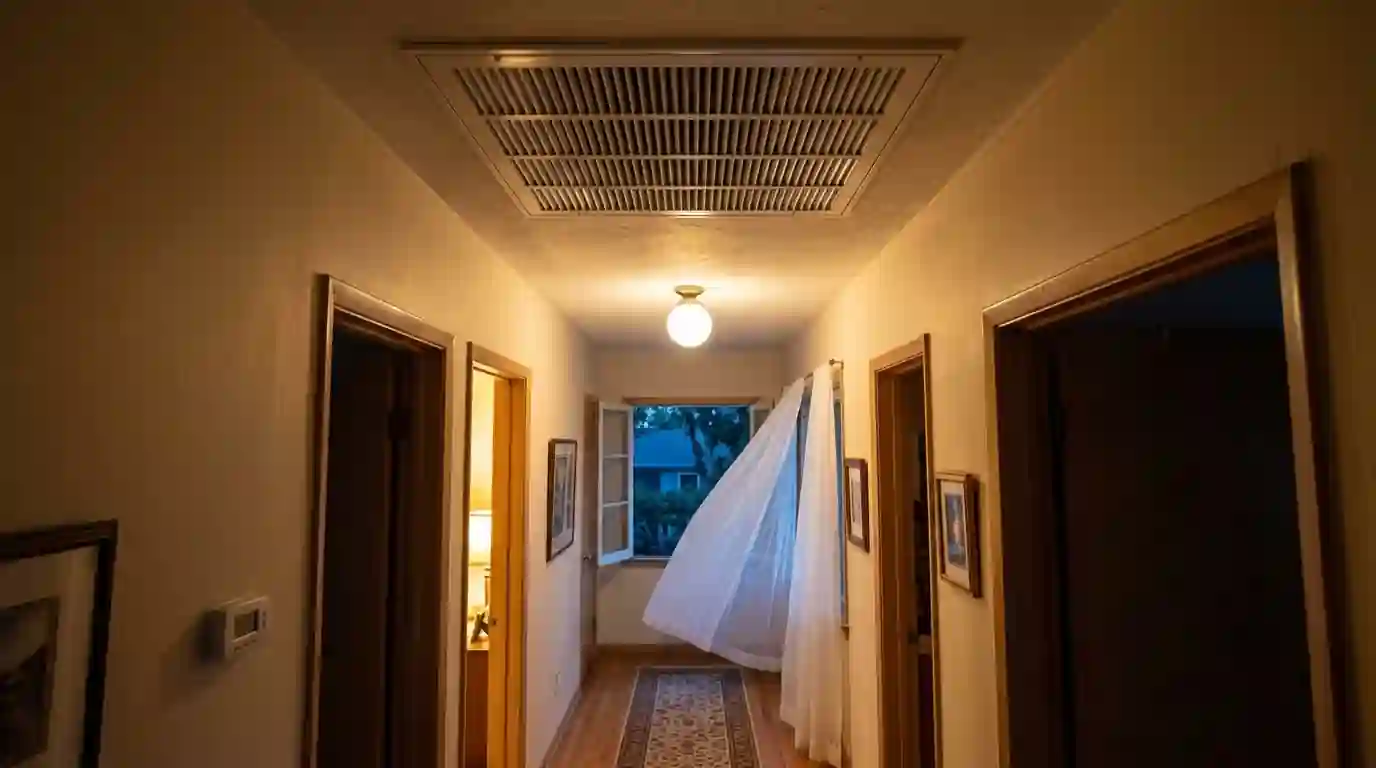
A whole house fan pulls cool outdoor air in through open windows and pushes hot indoor air out through the attic vents. In Pasadena, where hot days often turn into cool evenings, it can cool the house and the attic for a fraction of what the AC costs to run. Proper installation means sizing the fan, checking attic venting and adding a sealed damper.
Whole House Fan Installation
Pasadena summers have a pattern that suits whole house fans well. The afternoon can hit the high 90s or more, but once the sun goes down the air outside often drops into the 60s, while the house and attic stay hot. Opening windows helps a little. A whole house fan helps a lot, because it pulls that cooler air through every open window and pushes the heat out through the attic, flushing the attic at the same time so the ceiling stops radiating heat into the rooms overnight.
Marco's installs modern whole house fans, the kind with an insulated, sealed damper and a motor mounted away from the ceiling opening, so they run quietly and do not leak heat in winter. We size the fan to the home, check that the attic has enough vent area to let the air out, wire it on its own switch or timer, and walk you through how to run it alongside your AC. Call (626) 879-0711 to talk through whether your home is a good fit.
Warning signs
If the outdoor air cools down in the evening but your rooms stay warm until midnight, the house is holding heat that a fan could flush out in well under an hour.
Running the AC at 10 p.m. when it is 68 F outside means paying to remove heat that cool outdoor air could carry away for much less.
Second floors and rooms under a hot roof soak up the day's heat. A fan pulls air up and out through them first, which is where relief is needed most.
A very hot attic keeps warming the ceiling long after sunset. Flushing the attic with cooler air at night also lowers the heat load going into the next day.
Older belt-drive fans with metal louvers are loud, leak air in winter and often lack proper venting. Replacing one with a modern insulated unit is a common upgrade.
If your household already opens windows on cool evenings, a whole house fan makes that habit far more effective with very little change in routine.
The fan sits in the ceiling, usually in a central hallway, and exhausts into the attic. When it runs with windows open, it creates a steady draft through the house: cool outside air comes in through the windows, moves through the rooms, and the warm indoor air is pushed into the attic. From there it escapes through the gable, eave and roof vents. Within an hour the house air is replaced many times over, and the walls, furniture and ceiling start giving up their stored heat.
The best results come from running the fan in the evening and early morning when outside air is cooler than inside, then closing up the house before the day heats up. Many homeowners find they can skip the AC on mild days and run it far less on hot ones, because the house starts each morning cooler.
A whole house fan can only push out as much air as the attic vents let escape. If the vents are too small, air backs up, the fan gets loud, and hot attic air and dust can be forced back down through gaps and older light fixtures. A common rule of thumb is about one square foot of net free vent area for every 750 cubic feet per minute of fan capacity. Many Pasadena attics, especially in older bungalows, need extra gable or roof vents added as part of the job.
Sizing starts with the living area. Modern fans are typically chosen at roughly two to three cubic feet per minute for each square foot they serve. Too small and the house cools slowly. Too large and you need more window opening and more attic venting than the home has. We check both before we recommend a model.
Two rules matter. First, always open windows before starting the fan. Running it with the house closed up can depressurize the home and pull flue gases from a gas water heater or furnace back into the living space. We set up controls with a timer and show everyone in the house how to use them. Second, do not run the fan when the outside air is bad. On wildfire smoke days or heavy Santa Ana dust days, keep the windows shut, the fan off and the AC and a good filter doing the work.
Step by step
We look at your attic height, ceiling framing, existing vents and window layout, and confirm the home is a good candidate before recommending a fan size.
You pick from fan sizes and styles that suit the home. We choose a central ceiling location with clear framing and room for the damper and motor.
The ceiling opening is cut between joists and framed cleanly. Furniture and floors below are covered so drywall dust stays contained during the work.
The fan and damper are installed, extra attic vents are added if needed, and the fan is wired on its own switch or timer circuit.
We run the fan with windows open, check airflow and noise, confirm gas appliances vent correctly, and explain the best way to use it with your AC.
Typical prices
Whole house fan pricing depends on fan size and type, attic access, how much venting needs to be added, and the electrical run. A ducted remote fan in an accessible ranch attic is straightforward. A tight bungalow attic that needs new gable vents takes more time. These are typical ranges, and the final price comes after the technician sees the home.
| Job | Typical range | What is included |
|---|---|---|
| Standard insulated whole house fan | $1,487 to $2,365 | Fan, insulated damper, ceiling opening and switch in an accessible attic |
| Larger ducted remote fan | $2,240 to $3,780 | Quieter remote motor and higher airflow, suited to larger or two-story homes |
| Added attic vents | $289 to $865 | New gable, eave or low-profile roof vents to meet vent area needs |
| Replace an old belt-drive fan | $1,365 to $2,580 | Remove the louvered unit, reframe the opening, install a modern sealed fan |
Price moves with fan capacity, attic height and framing, the number of vents needed, distance to the electrical panel, roof type for any added vents, and whether old fans or ductwork must be moved. Compare other jobs in our Pasadena HVAC price guide.
The San Gabriel Valley is one of the better places in Southern California for a whole house fan. Inland heat builds during the day, but evenings cool off reliably for much of the summer, especially in foothill neighborhoods like Linda Vista and Hastings Ranch and up toward Altadena, where air drains down from the mountains at night. A home that is closed up during the day and flushed every evening can stay noticeably cooler with far less AC time, which matters on PWP and SCE summer bills.
There are local limits too. Fans do not help during heat waves when nights stay warm, or on smoky days during fire season. Older Craftsman attics are often short on vent area and may still have knob-and-tube wiring that should be checked before any attic work. Spanish Revival homes with flat or low-slope roofs may have too little attic space for a fan to exhaust into. We look at all of that before recommending one.
Related work
Air sealing first, then blown-in insulation to the right depth, so your ceilings stop radiating attic heat into the rooms.
Learn moreA spring tune-up that cleans the coils, tests the capacitor and contactor, clears the drain and checks the charge before summer hits.
Learn moreSmart thermostats installed with a proper C-wire and the right heat pump or two-stage settings, tested in every mode.
Learn moreWe measure duct leakage with a calibrated fan, seal joints with mastic, and test again so you see the actual improvement.
Learn moreOur technicians handle this work all over Pasadena and the surrounding San Gabriel Valley. A few of the places we cover:
Questions
For most Pasadena homes, no, but it can cut AC use a lot. On days when the evening cools off, the fan does the cooling and the AC stays off or runs much less. During heat waves with warm nights, or on smoky days, you still need the AC. Most homeowners use both: the fan in the evening and morning, the AC in the hottest afternoon hours.
Often, yes. The fan pushes air into the attic, and that air must escape through vents. A common guideline is about one square foot of net free vent area per 750 CFM of fan capacity, and many older Pasadena attics have far less than that. We measure the existing vents and add gable, eave or roof vents as part of the installation when needed.
Modern fans are much quieter than the old belt-drive units with metal louvers. Many mount the motor away from the ceiling opening, sometimes connected with a short insulated duct, so what you hear is mostly the sound of moving air. Running the fan on a lower speed overnight keeps it quiet enough for most bedrooms. We let you hear it running before we leave.
No. A whole house fan pulls outdoor air through your windows, so on smoky days it brings smoke straight into the house, and on dusty Santa Ana days it brings in dust and pollen. On those days keep the windows closed and the fan off, and let your AC and filter handle cooling and filtration until the air outside clears.
It can if the fan is run with windows closed, because that can depressurize the house and pull flue gases back inside. That is why windows must always be opened first. We check that gas appliances vent correctly with the fan running, set up a timer control, and explain the rule clearly to everyone in the household.
Call our Pasadena line any hour. A person answers, asks a few questions about the system, and gives you an arrival window.