AC Repair
Warm air, a humming outdoor unit or a tripped breaker: we find the failed part and fix most AC problems in one visit.
Learn moreCooling
AC RepairAC InstallationAC ReplacementAC Tune-Up & MaintenanceRefrigerant Leak RepairAC Compressor ReplacementEvaporator Coil ReplacementAC Water Leak & Drain Line RepairHeating
Furnace RepairFurnace InstallationFurnace ReplacementFurnace Tune-Up & MaintenanceWall Furnace RepairFloor Furnace ReplacementBoiler & Radiant Heat RepairHeat Pumps & Ductless
Heat Pump RepairHeat Pump InstallationHeat Pump MaintenanceGas Furnace to Heat Pump ConversionDuctless Mini-Split InstallationDuctless Mini-Split RepairADU Heating & CoolingDucts & Attic
Duct RepairDuctwork ReplacementAir Duct CleaningDuct Sealing & Leak TestingWhole House Fan InstallationAttic InsulationIndoor Air
Indoor Air Quality TestingWhole-Home Air PurifiersUV Air SanitizersWhole-Home HumidifiersSystems & Commercial
Smart Thermostat InstallationHVAC Zoning SystemsFull HVAC System ReplacementHVAC InspectionHVAC Maintenance Plans24/7 Emergency HVAC RepairCommercial HVAC RepairCommercial HVAC MaintenanceRooftop & Package Unit RepairPasadena
Pasadena (all of the city)Bungalow HeavenMadison HeightsSan RafaelLinda VistaHastings RanchOak KnollAnnandaleProspect ParkHistoric HighlandsGarfield HeightsLamanda ParkSouth ArroyoChapman WoodsNearby cities
AltadenaSouth PasadenaSan MarinoArcadiaSierra MadreMonroviaDuarteGlendaleLa Canada FlintridgeLa CrescentaBurbankAlhambraSan GabrielTemple CityMonterey ParkRosemeadEl MonteAzusaGlendoraCovinaWest CovinaLos AngelesMontroseTujungaBaldwin ParkSouth El MonteMontebelloWhittierHacienda HeightsRowland HeightsLa PuenteWalnutDiamond BarSan DimasLa VerneClaremontPomonaUplandRancho CucamongaOntarioMontclairChino HillsBreaFullertonCounties
Los Angeles CountySan Bernardino CountyOrange CountySystems & Commercial in Pasadena, CA
Night, weekend and holiday repairs for a dead AC in a heat wave or a furnace that quits on a cold night, any hour.
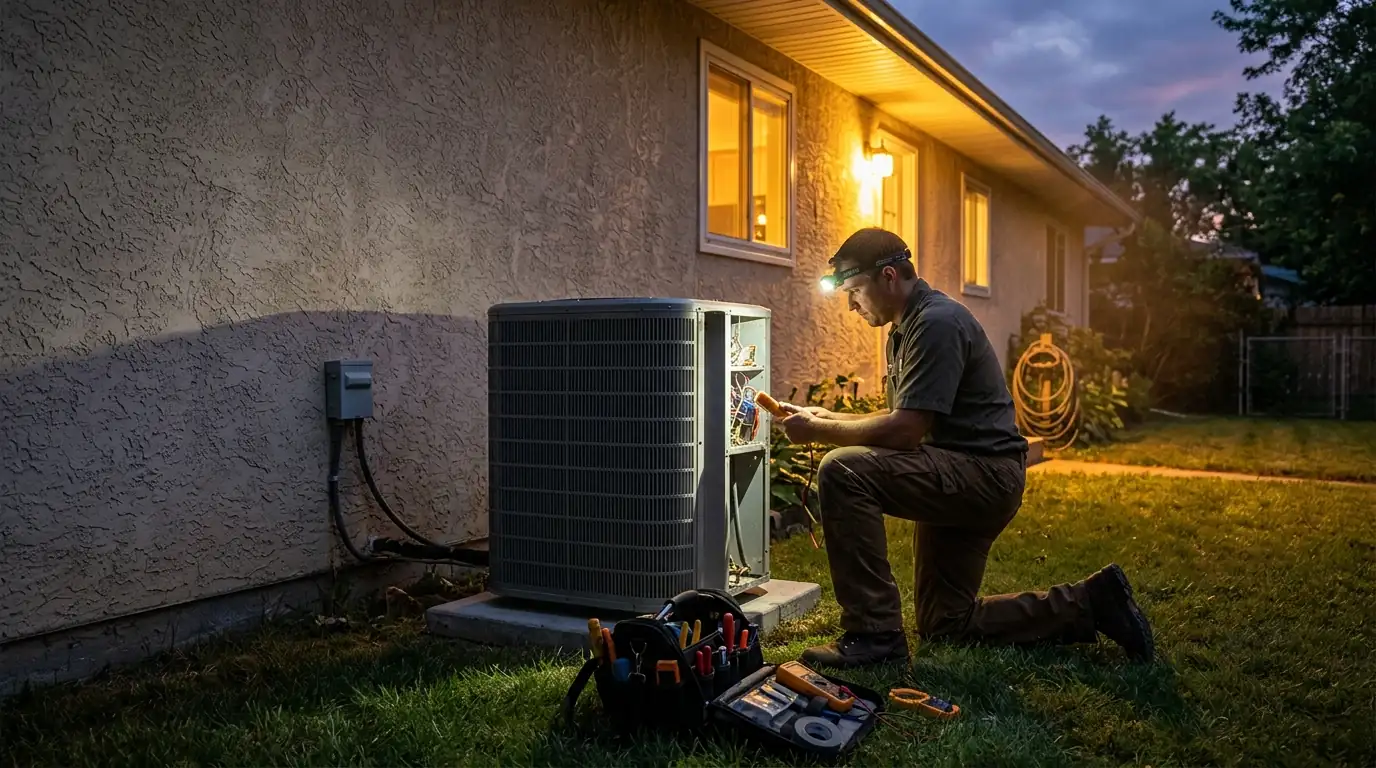
Marco's answers (626) 879-0711 around the clock and sends our own technicians for urgent heating and cooling failures, including nights, weekends and holidays. Most emergency calls are a failed capacitor, a tripped safety switch, a frozen coil or an igniter that quit. If you smell gas, leave the house first and call SoCalGas or 911. A typical after-hours visit runs $167 to $289 before repairs.
24/7 Emergency HVAC Repair
HVAC systems fail when they work hardest. An air conditioner that has run since noon on a 104 degree day finally loses its capacitor at 7 p.m. A furnace that sat idle all summer refuses to light on the first January night in the 30s. For some households these are inconveniences. For an infant, an older parent, someone with a heart or breathing condition, or a pet left at home, they are urgent. That is why we answer every hour of every day.
When you call, a real person asks what the system is doing, whether anyone in the home is at risk, and what you can check safely while you wait. We dispatch a Marco's technician with common parts on the truck, so many repairs are finished on the first visit. You get the price before work starts, and if the problem is a part we need to order, we explain how to stay safe and comfortable until it arrives.
Warning signs
When the outdoor unit hums but the fan does not spin, or the system blows warm air on a day in the high 90s, call. Running a failed compressor can turn a small repair into a big one.
A furnace that clicks, tries to light and shuts off, or does nothing at all when nights drop into the 30s needs attention, especially with young children or older adults at home.
A hot electrical smell from vents or the equipment can mean a failing motor or overheated wiring. Turn the system off at the thermostat and the breaker, then call us.
Get everyone out to fresh air, call 911, and do not go back in until responders say it is safe. Then call us to inspect the furnace, water heater venting and gas appliances.
A clogged condensate drain or frozen coil can send water through a ceiling or across a floor. Turn the system off and catch the water, then call so we can clear it before damage spreads.
A breaker that trips each time the AC or heat pump starts usually means a shorted compressor, a failing fan motor or a wiring fault. Do not keep resetting it.
A rotten egg smell near the furnace, water heater, stove or gas meter can mean a gas leak. Do not switch lights or appliances on or off, do not use the thermostat, and do not try to find the leak. Get everyone out of the house, leave the door open behind you, and call SoCalGas or 911 from outside. SoCalGas responds to gas leak calls and can shut off the supply. Once the gas company or fire department says the house is safe, call Marco's to repair the furnace, gas connector or venting so heat can be restored.
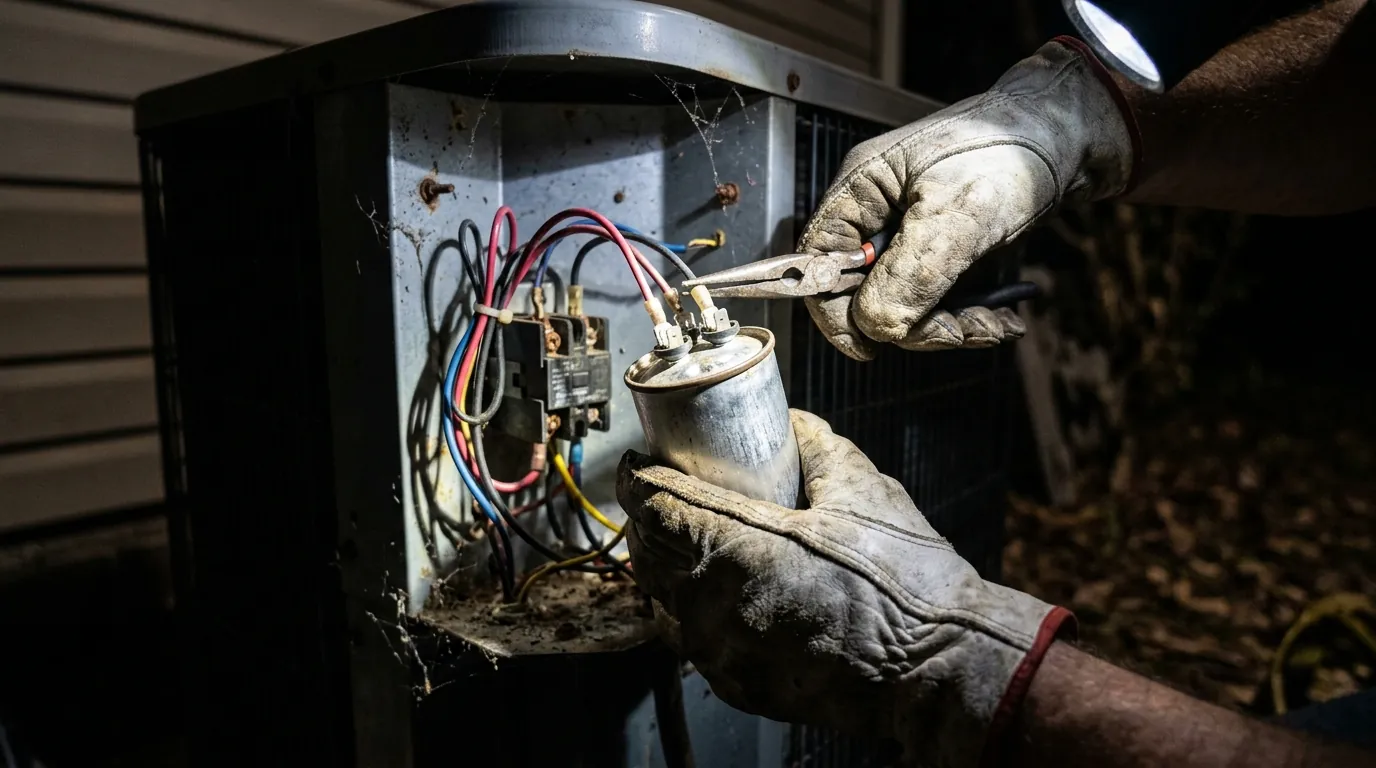
On cooling calls, the most common failures are a weak or failed run capacitor, a burned contactor, a seized condenser fan motor, a tripped float switch from a clogged drain, or an evaporator coil frozen solid from a dirty filter or low refrigerant. Capacitors and contactors are on the truck, and those repairs are usually done in under an hour. A frozen coil has to thaw before we can test it properly, which can take a few hours with the fan running.
On heating calls, we often find a dirty flame sensor that shuts the burner off after a few seconds, a cracked hot surface igniter, a failed inducer motor, a pressure switch tripped by a blocked vent, or a limit switch tripped because a clogged filter let the furnace overheat. Older wall furnaces often need a new thermocouple or pilot assembly. Each of these shows a pattern in how the furnace starts and stops, which the technician reads before replacing anything.
Some emergencies have simple causes. Check that the thermostat is set to heat or cool, the setpoint is above or below room temperature, and the batteries are good if it uses them. Look at the breaker panel for a tripped breaker labeled furnace, air handler or AC, and reset it once only. Check the furnace switch, which often looks like a light switch near the unit. A filter so dirty it bows inward can shut the system down, and swapping it can help.
If cooling is out, close blinds on the sunny side, run ceiling fans, and keep vulnerable family members in the coolest room. If heat is out, close doors to unused rooms and use a space heater only if it is safe, with clearance from curtains and bedding. Never use a gas oven or a grill indoors for heat.
Step by step
Call (626) 879-0711 any hour. We ask what the system is doing, who is in the home, and walk you through safe checks that might restore heat or cooling right away.
A Marco's technician heads out with common parts. We give you an arrival window and call when on the way, so you are not waiting at the door all night.
The technician checks power, controls, safety switches and the failed part, using meters and the system's own fault codes, then explains what failed and why.
You get the price for the repair before any work starts. If a part needs to be ordered, we make the system safe and explain how to stay comfortable overnight.
Once fixed, we run the system through full cycles, check temperatures and safety controls, and tell you if anything else looks close to failing.
Typical prices
After-hours visits cost more than daytime service because a technician is working nights, weekends or holidays. Repair parts and labor are added once the problem is found. These are typical 2026 ranges in the Pasadena area. The final price depends on what the technician finds, and we quote it before we start the work.
| Job | Typical range | What is included |
|---|---|---|
| After-hours or holiday diagnostic visit | $167 to $289 | Covers travel, diagnosis and safety checks outside regular daytime hours |
| Capacitor or contactor replacement | $219 to $467 | Most common summer emergency, usually fixed in under an hour |
| Igniter or flame sensor repair | $187 to $443 | Common first cold night failure on gas furnaces that sat idle |
| Condenser fan or blower motor | $487 to $1,137 | Depends on motor type, variable-speed blowers cost more |
| Clearing a clogged condensate drain | $147 to $293 | Includes resetting the float switch and flushing the line |
Holidays, late nights, attic or rooftop access, and parts that are not on the truck change the total. If the system needs a major part like a compressor or heat exchanger, we explain repair and replacement options before you decide anything. Compare other jobs in our Pasadena HVAC price guide.
Our busiest emergency nights follow the hottest days. When the San Gabriel Valley sits in the high 90s or above 100 for several days, systems that have run nonstop start failing in the evening, and attic air handlers above older bungalows bake in heat that can pass 130 degrees. Santa Ana wind days add dust that clogs outdoor coils and filters. During wildfire smoke events, many households close windows and run the AC all day, and filters clog faster than usual, which can freeze a coil or trip a limit switch.
Winter emergencies cluster on the first cold nights of the season, when furnaces that sat idle since spring try to start. Foothill neighborhoods in Altadena, Sierra Madre and La Canada Flintridge often run colder than central Pasadena. Older homes with wall or floor furnaces often lose a pilot or thermocouple. Families rebuilding or living in temporary homes after the Eaton Fire may be running unfamiliar equipment, and we are glad to explain how it works when we visit.
Related work
Warm air, a humming outdoor unit or a tripped breaker: we find the failed part and fix most AC problems in one visit.
Learn moreNo heat on a cold night? We trace the ignition sequence, find the failed part and fix most furnaces in a single visit.
Learn moreDiagnosis and repair for heat pumps that will not heat, will not cool, ice up, trip breakers or show inverter fault codes.
Learn moreTwo visits a year, cooling in spring and heating in fall, so small problems get caught before a heat wave or a cold night.
Learn moreOur technicians handle this work all over Pasadena and the surrounding San Gabriel Valley. A few of the places we cover:
Questions
Yes. The phone at (626) 879-0711 is answered 24 hours a day, every day, including holidays. A real person takes the call, asks what the system is doing and who is in the house, and dispatches one of our own technicians. Arrival time depends on how many emergencies are open that night, and we give you an honest window when we dispatch.
Leave the house first. Do not touch light switches, the thermostat or appliances. From outside, call SoCalGas or 911 so they can check for a leak and shut off the gas if needed. Once they say the house is safe, call Marco's to repair the furnace, gas connector or venting. We do not send a technician into a home with a suspected active leak before the gas company clears it.
Turn it off at the thermostat if it blows warm air for more than a few minutes. A compressor that cannot start, or one running without refrigerant or airflow, can overheat and fail, turning a small capacitor repair into a much larger one. Run the indoor fan only if the coil is frozen, to help it thaw. Then call us so a technician can find the cause.
Often, yes. The most common winter failures, such as a dirty flame sensor, cracked igniter, failed pressure switch or tripped limit switch, are parts we carry. Older wall furnace pilot assemblies and thermocouples are also usually on the truck. Less common parts, such as a control board for a specific model, may need ordering. Then we make the system safe and help you stay warm overnight.
Night and holiday visits mean a technician is working outside normal hours, often after a full day of service calls. The diagnostic fee reflects that. Repair parts are priced the same way as daytime work. If the problem can wait safely until morning, we tell you honestly on the phone, and a daytime visit may cost less.
Call our Pasadena line any hour. A person answers, asks a few questions about the system, and gives you an arrival window.