Furnace Repair
No heat on a cold night? We trace the ignition sequence, find the failed part and fix most furnaces in a single visit.
Learn moreCooling
AC RepairAC InstallationAC ReplacementAC Tune-Up & MaintenanceRefrigerant Leak RepairAC Compressor ReplacementEvaporator Coil ReplacementAC Water Leak & Drain Line RepairHeating
Furnace RepairFurnace InstallationFurnace ReplacementFurnace Tune-Up & MaintenanceWall Furnace RepairFloor Furnace ReplacementBoiler & Radiant Heat RepairHeat Pumps & Ductless
Heat Pump RepairHeat Pump InstallationHeat Pump MaintenanceGas Furnace to Heat Pump ConversionDuctless Mini-Split InstallationDuctless Mini-Split RepairADU Heating & CoolingDucts & Attic
Duct RepairDuctwork ReplacementAir Duct CleaningDuct Sealing & Leak TestingWhole House Fan InstallationAttic InsulationIndoor Air
Indoor Air Quality TestingWhole-Home Air PurifiersUV Air SanitizersWhole-Home HumidifiersSystems & Commercial
Smart Thermostat InstallationHVAC Zoning SystemsFull HVAC System ReplacementHVAC InspectionHVAC Maintenance Plans24/7 Emergency HVAC RepairCommercial HVAC RepairCommercial HVAC MaintenanceRooftop & Package Unit RepairPasadena
Pasadena (all of the city)Bungalow HeavenMadison HeightsSan RafaelLinda VistaHastings RanchOak KnollAnnandaleProspect ParkHistoric HighlandsGarfield HeightsLamanda ParkSouth ArroyoChapman WoodsNearby cities
AltadenaSouth PasadenaSan MarinoArcadiaSierra MadreMonroviaDuarteGlendaleLa Canada FlintridgeLa CrescentaBurbankAlhambraSan GabrielTemple CityMonterey ParkRosemeadEl MonteAzusaGlendoraCovinaWest CovinaLos AngelesMontroseTujungaBaldwin ParkSouth El MonteMontebelloWhittierHacienda HeightsRowland HeightsLa PuenteWalnutDiamond BarSan DimasLa VerneClaremontPomonaUplandRancho CucamongaOntarioMontclairChino HillsBreaFullertonCounties
Los Angeles CountySan Bernardino CountyOrange CountyHeating in Pasadena, CA
A fall furnace tune-up that cleans the burners and flame sensor, tests every safety and checks for carbon monoxide before winter.
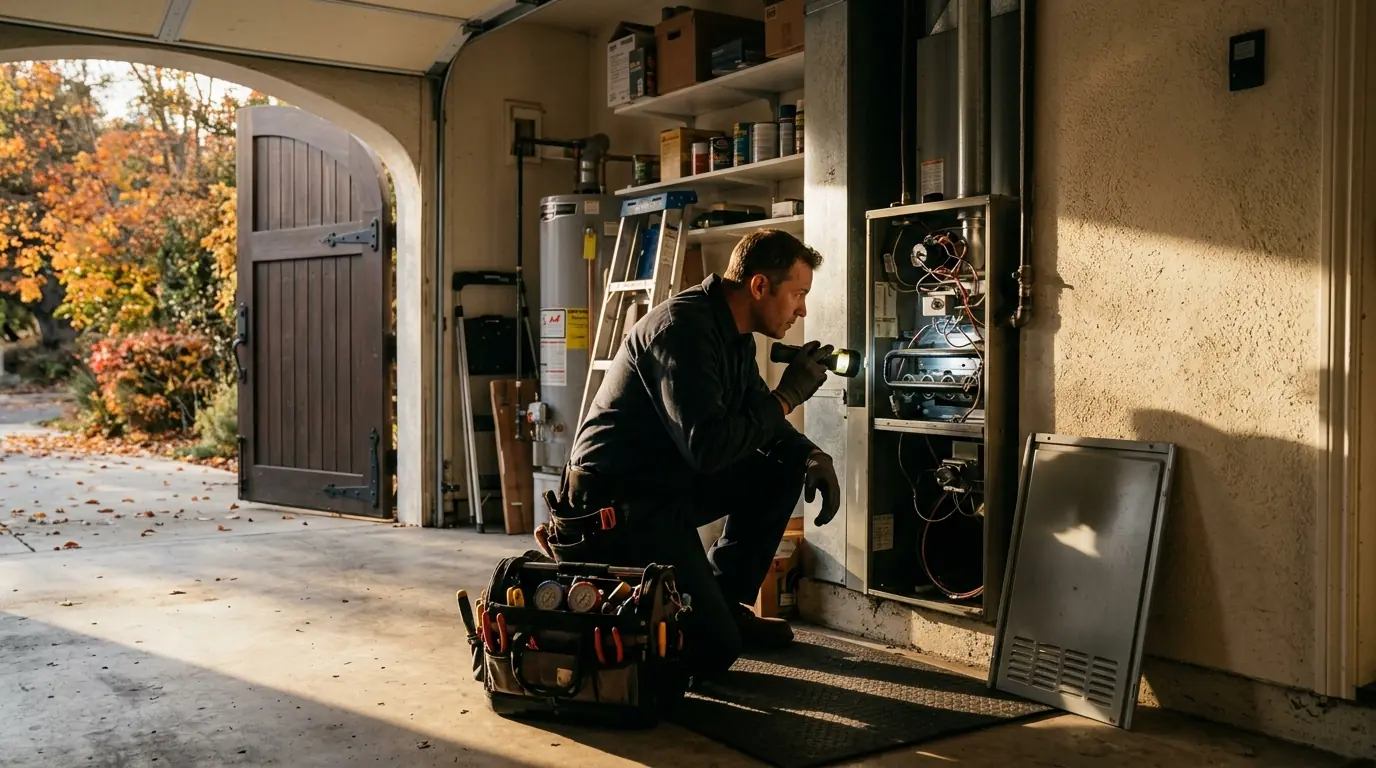
A furnace tune-up cleans and tests the parts that fail most after months of sitting idle: burners, flame sensor, igniter, pressure switch, limit switch and blower. Marco's technicians also check gas pressure, venting and the heat exchanger, and test for carbon monoxide. In Pasadena, October or early November is the best time, before nights fall into the 40s and the first heat call.
Furnace Tune-Up & Maintenance
A Pasadena furnace has an odd life. It runs hard for a few weeks in December and January, a little in February, and then sits for six or seven months while the AC does the work. During those months dust from Santa Ana days settles on the burners, spiders build in the burner tubes, and the flame sensor picks up a coating. The furnace looks fine until the first cold evening, when it tries to light and fails. A tune-up is how you find that out on a warm afternoon instead.
Our furnace maintenance visit is a working inspection, not a quick look. We clean what needs cleaning, measure what can be measured and write down what we found, so you know the condition of your furnace before winter. If a part is wearing out, you hear about it with a price and can decide whether to replace it now or watch it. If everything is in good shape, you get that in plain words too.
Warning signs
Furnaces that go several seasons without cleaning collect enough dust and debris to cause ignition trouble, overheating and a burning smell that hangs around for days.
If heat took longer to arrive or rooms never quite warmed, the blower wheel may be caked with dust or the filter path may be restricted. Both are maintenance fixes.
Burners that light late or roll with a soft boom are often dirty or misaligned. Cleaning and adjusting them during a tune-up keeps the problem from getting worse.
After wildfire smoke seasons, filters and blower compartments can hold fine ash. A maintenance visit clears the furnace side so residue is not baked onto the burners.
A furnace in its late teens is more likely to have a weak inducer, worn igniter or rusted vent. Yearly checks catch these while they are still small repairs.
Treat any carbon monoxide alarm alert as real. Leave the house and call SoCalGas or 911 first, then have the furnace fully tested before it runs again.
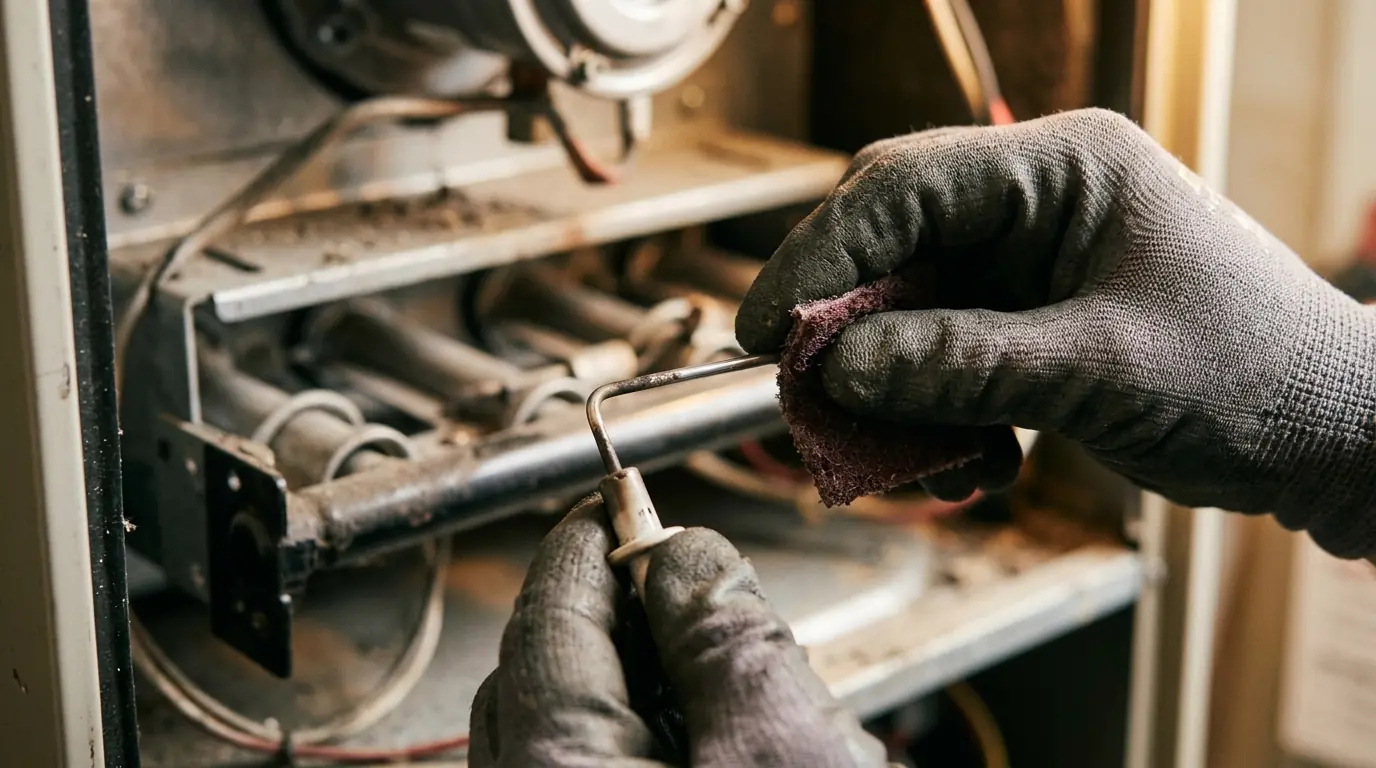
The visit is built around the parts that cause most winter no-heat calls. We pull and clean the burners, clean the flame sensor with a fine abrasive pad, and check the hot surface igniter for hairline cracks and correct resistance. We test the pressure switch, the high limit and the rollout switches so the safety chain works when it matters. The blower motor gets an amp draw check, and we look at the blower wheel for dust buildup.
Running is the furnace's normal state, and long rest is where trouble builds. Rubber pressure switch hoses harden in a summer attic. Condensing furnaces can dry out their condensate trap, letting the pressure switch see a false reading. Insects nest in burner openings and vent caps. Moisture from occasional rain can rust the bottom of the vent where it meets the furnace. None of this shows up until the furnace is asked to work, which is why a pre-season check catches so much in Pasadena.
Fall maintenance also lines up well with AC care. If your AC coil sits on top of the furnace, we can look at the coil, the drain line and the filter path in the same visit, and many homeowners schedule both together each year.
The heat exchanger and vent are the parts that protect you from combustion gases, so they get careful attention. We watch the flame when the blower starts, because a flame that flickers or shifts when air moves can point to a crack. We look at the exchanger with a light and, on many models, a camera through the burner openings. We confirm the vent draws properly and that the vent cap is clear. We also remind every household to keep working CO alarms near bedrooms and on each floor.
Step by step
We check the filter, thermostat, clearances around the furnace and the vent run first, and ask about anything odd you noticed during last winter.
We run the furnace from a cold start and watch each step, so we see how it behaves before any cleaning changes the picture.
Burners, flame sensor and the blower compartment are cleaned. Gas pressure and blower settings are adjusted to the manufacturer's numbers when they are off.
We record temperature rise, flame signal, carbon monoxide readings and safety switch response, and check electrical connections for signs of heat damage.
You get a short report of what we found, any part showing wear with its price, and a reminder of how often to change the filter in your home.
Typical prices
Furnace tune-up pricing is simpler than repair pricing because the work is planned. The main variables are the furnace type, how dirty it is and whether it sits in a closet or a cramped attic. These are typical 2026 ranges for Pasadena and nearby cities. We quote the price before we start, and any added repair is priced separately for you to approve.
| Job | Typical range | What is included |
|---|---|---|
| Standard furnace tune-up | $109 to $179 | Closet, garage or attic furnace with routine cleaning and safety tests |
| Furnace and AC tune-up in one visit | $189 to $296 | Both sides of the system checked, including the coil and drain line |
| Blower wheel removal and deep cleaning | $164 to $327 | Needed when dust buildup has cut airflow noticeably |
| Second furnace at the same address | $79 to $134 | Common in two-story homes with an attic unit and a closet unit |
Heavy dust, ash from smoke seasons, tight attic access and older furnaces that need extra time move the price. A maintenance plan can bundle yearly furnace and AC visits so you do not have to remember to schedule them. Compare other jobs in our Pasadena HVAC price guide.
Pasadena days in November and December are often in the 60s and 70s, so homeowners forget the furnace exists until a clear night drops into the low 40s or upper 30s. Foothill homes in Altadena, La Canada Flintridge and upper Linda Vista feel it first. The first week of real cold brings a wave of no-heat calls, and many of those furnaces needed nothing more than the cleaning a tune-up includes. Booking in October puts you ahead of that rush.
Santa Ana wind days blow fine dust through every gap in a house and into the return ducts, and wildfire smoke seasons add ash. Both end up on filters, blower wheels and burners. If your home was close to the Eaton Fire area, a tune-up is a good moment to check how much residue the furnace collected and whether the ducts need attention too. We describe what we see calmly and only recommend cleaning when it is actually needed.
Related work
No heat on a cold night? We trace the ignition sequence, find the failed part and fix most furnaces in a single visit.
Learn moreTwo visits a year, cooling in spring and heating in fall, so small problems get caught before a heat wave or a cold night.
Learn moreA spring tune-up that cleans the coils, tests the capacitor and contactor, clears the drain and checks the charge before summer hits.
Learn moreWe measure particles, humidity, CO2, VOCs and carbon monoxide in your home, find the sources and explain what would actually help.
Learn moreOur technicians handle this work all over Pasadena and the surrounding San Gabriel Valley. A few of the places we cover:
Questions
Once a year is right for most homes, ideally in the fall. Pasadena furnaces run fewer hours than furnaces in colder places, but the long idle season brings its own problems: dust, dry seals and dirty flame sensors. A yearly visit catches those before winter. Homes with heavy dust, pets or recent smoke exposure benefit from changing filters more often between visits.
Some handy homeowners do, and it can restore heat in a pinch. The sensor slides out after removing one screw and is cleaned with a fine pad, not coarse sandpaper. But a tune-up covers much more: gas pressure, CO readings, safety switch tests and a heat exchanger inspection. If you clean the sensor yourself, still have the whole furnace checked each fall.
Yes. Every Marco's furnace tune-up includes carbon monoxide measurements in the flue gas and at a supply register, along with a check of the flame and venting. If readings are high we find the cause, whether that is a burner adjustment, a blocked vent or a deeper problem. We also check that your home has working CO alarms where California expects them.
October is the sweet spot. Summer heat has passed, so the AC is less urgent, and the first cold nights usually arrive in November. Scheduling is easier, and any part we find wearing out can be replaced before you need heat. Late September and early November also work well. December visits are fine, but you may wait longer during cold snaps.
It helps. That smell is dust burning off the heat exchanger and burners after months of sitting. A tune-up clears much of that dust, so the first run is cleaner. A light smell that fades within an hour is normal even after cleaning. A smell that lingers, smells like plastic or wiring, or comes with smoke should be checked right away.
Call our Pasadena line any hour. A person answers, asks a few questions about the system, and gives you an arrival window.