Furnace Tune-Up & Maintenance
A fall furnace tune-up that cleans the burners and flame sensor, tests every safety and checks for carbon monoxide before winter.
Learn moreCooling
AC RepairAC InstallationAC ReplacementAC Tune-Up & MaintenanceRefrigerant Leak RepairAC Compressor ReplacementEvaporator Coil ReplacementAC Water Leak & Drain Line RepairHeating
Furnace RepairFurnace InstallationFurnace ReplacementFurnace Tune-Up & MaintenanceWall Furnace RepairFloor Furnace ReplacementBoiler & Radiant Heat RepairHeat Pumps & Ductless
Heat Pump RepairHeat Pump InstallationHeat Pump MaintenanceGas Furnace to Heat Pump ConversionDuctless Mini-Split InstallationDuctless Mini-Split RepairADU Heating & CoolingDucts & Attic
Duct RepairDuctwork ReplacementAir Duct CleaningDuct Sealing & Leak TestingWhole House Fan InstallationAttic InsulationIndoor Air
Indoor Air Quality TestingWhole-Home Air PurifiersUV Air SanitizersWhole-Home HumidifiersSystems & Commercial
Smart Thermostat InstallationHVAC Zoning SystemsFull HVAC System ReplacementHVAC InspectionHVAC Maintenance Plans24/7 Emergency HVAC RepairCommercial HVAC RepairCommercial HVAC MaintenanceRooftop & Package Unit RepairPasadena
Pasadena (all of the city)Bungalow HeavenMadison HeightsSan RafaelLinda VistaHastings RanchOak KnollAnnandaleProspect ParkHistoric HighlandsGarfield HeightsLamanda ParkSouth ArroyoChapman WoodsNearby cities
AltadenaSouth PasadenaSan MarinoArcadiaSierra MadreMonroviaDuarteGlendaleLa Canada FlintridgeLa CrescentaBurbankAlhambraSan GabrielTemple CityMonterey ParkRosemeadEl MonteAzusaGlendoraCovinaWest CovinaLos AngelesMontroseTujungaBaldwin ParkSouth El MonteMontebelloWhittierHacienda HeightsRowland HeightsLa PuenteWalnutDiamond BarSan DimasLa VerneClaremontPomonaUplandRancho CucamongaOntarioMontclairChino HillsBreaFullertonCounties
Los Angeles CountySan Bernardino CountyOrange CountySan Dimas, CA
San Dimas keeps a small-town feel, with its Western-style downtown along Bonita Avenue and plenty of horse trails.
San Dimas stretches from foothill streets below the San Gabriel Mountains down to the hills around Bonelli Park, so homes face hot summers and chilly winter nights. Marco's technicians repair AC, tune up and fix furnaces, and work on ducts and heat pumps across the city. Our Duarte office is a short drive east on the 210. Call (626) 879-0711 any hour, 24/7.
Overview
San Dimas keeps a small-town feel, with its Western-style downtown along Bonita Avenue and plenty of horse trails. North of the 210, neighborhoods rise into the foothills toward the mountains. To the south, the city wraps around Frank G. Bonelli Regional Park and Puddingstone Reservoir, with homes on rolling hills and open space nearby. The 210 and the 57 both pass through, which puts San Dimas within easy reach of our Duarte office.
Temperature swings are a big part of HVAC life here. Summer afternoons regularly hit the high 90s, and foothill nights in winter can drop into the 30s. That means both the AC and the furnace earn their keep. We see a lot of furnaces that were ignored for years until a cold snap, and plenty of air conditioners worn down by long heat waves. We find the actual fault and quote the price before any work.
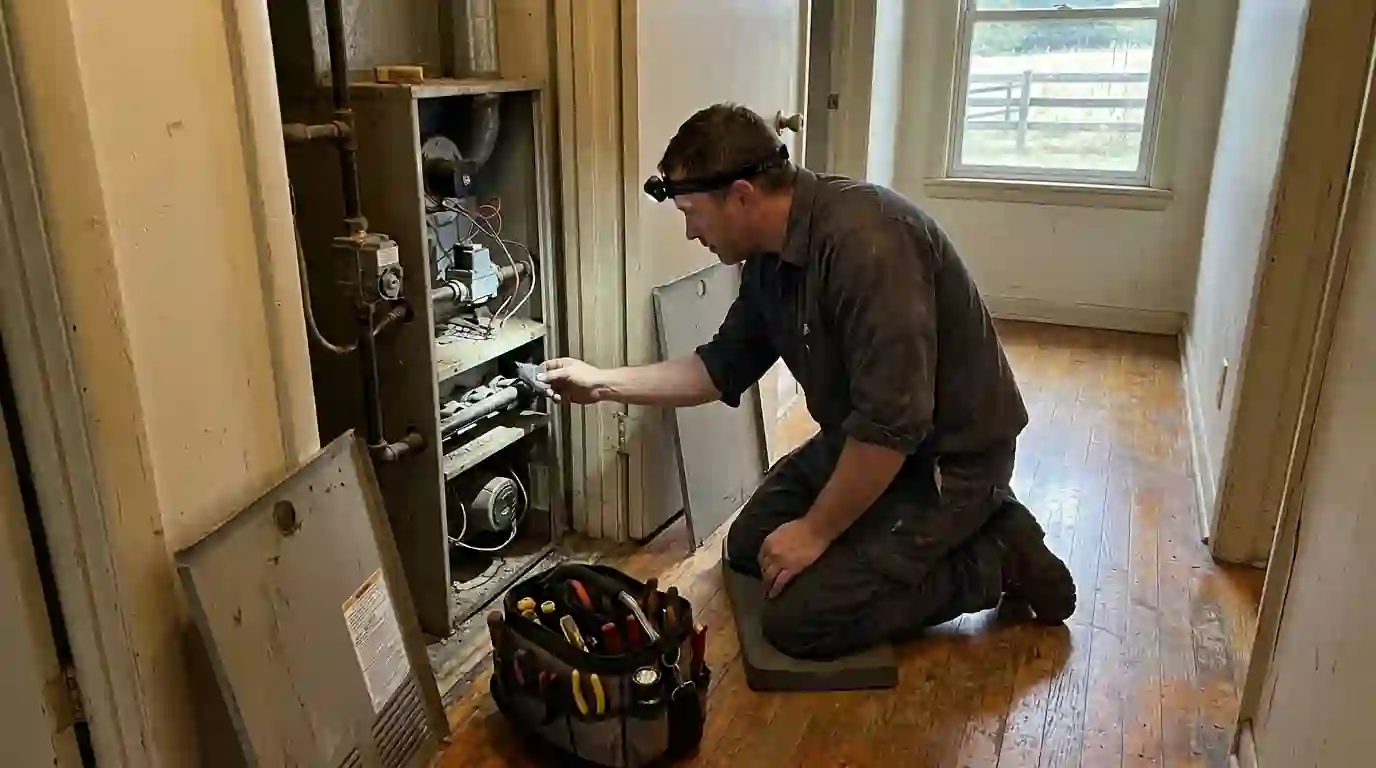
Many San Dimas homes are single-story ranch houses from the 1950s, 1960s and 1970s, with a furnace in a hall closet or garage and ducts in the attic or under the floor. North San Dimas has larger foothill homes on bigger lots, some with horse facilities and outdoor units placed far from the house. Original ducts in these homes are often thin metal or early flex that has been patched over the years, and they lose a lot of air into the attic.
South San Dimas, around the Via Verde area and the hills near Bonelli Park, has more two-story homes from the 1970s and 1980s. These houses often have attic furnaces with an AC coil on top and a single return, which leaves upstairs rooms warm. On hot afternoons the attic above these bedrooms gets far hotter than the outdoor air, and the ducts carry that heat straight into the rooms. Sealing, insulating and adding returns usually helps more than a bigger unit.
Common problems
Furnaces that sit unused from April to November often fail on the first cold night. Dirty flame sensors, weak igniters and clogged filters are the usual causes, and a fall tune-up catches them.
Older furnaces in 1960s and 1970s San Dimas homes can develop cracks in the heat exchanger. We inspect it closely and test for carbon monoxide, and we explain what we see with photos.
Long summer runs wear out the electrical parts on condensers. A humming unit with a stopped fan often has a failed capacitor, a quick repair when it is caught early.
Patched metal and old flex ducts in ranch homes lose conditioned air into the attic. Rooms at the ends of the runs stay hot in summer and cool in winter.
Horse properties and homes near open hills collect dust, hay and dry grass on outdoor coils. A clogged coil raises pressures and power use, and cleaning restores capacity.
Most requested
A yearly furnace tune-up in San Dimas checks the burners, flame sensor, igniter, blower and heat exchanger before the cold nights arrive, and it is the best way to avoid a no-heat call in December. Furnace repair and furnace replacement cover the older units in ranch homes. AC repair handles the summer breakdowns. Duct sealing helps leaky original systems deliver air where it belongs, and an HVAC maintenance plan keeps both the spring AC visit and the fall furnace visit on the calendar.
A fall furnace tune-up that cleans the burners and flame sensor, tests every safety and checks for carbon monoxide before winter.
Learn moreNo heat on a cold night? We trace the ignition sequence, find the failed part and fix most furnaces in a single visit.
Learn moreWarm air, a humming outdoor unit or a tripped breaker: we find the failed part and fix most AC problems in one visit.
Learn moreAn old furnace swapped for a right-sized new one in the same attic, closet or garage, with venting, ducts and permit handled.
Learn moreWe measure duct leakage with a calibrated fan, seal joints with mastic, and test again so you see the actual improvement.
Learn moreTwo visits a year, cooling in spring and heating in fall, so small problems get caught before a heat wave or a cold night.
Learn moreSan Dimas sees summer highs in the high 90s and some days over 100 F, while foothill winter nights can drop into the 30s. Santa Ana winds blow dust and debris down from the canyons several times a year. Electricity comes from Southern California Edison and gas from SoCalGas. Ask about current SCE or SoCalGas rebates and state heat pump incentives when funding is open. We handle the permit where the city requires one.
From our Duarte office we head east on the 210, so most San Dimas homes are a short drive away. Horse properties and foothill lots sometimes have gates, long driveways or animals in the yard near the equipment. Let us know about any of that when you call (626) 879-0711, so the technician can plan a safe approach to the outdoor unit.
Questions
October or early November is ideal, before the first cold nights in San Dimas. The technician cleans the flame sensor and burners, checks the igniter, tests safety switches, inspects the heat exchanger, measures gas pressure and checks the blower. Booking early also avoids the rush on the first cold weekend, when many furnaces that sat all summer refuse to light.
Many older furnaces still run safely, but age raises the risk of a cracked heat exchanger. In your San Dimas home we inspect the heat exchanger, test for carbon monoxide near the furnace and at the registers, and check the flue. If we find a crack, we show you photos and explain the options. A working carbon monoxide alarm is a good idea in every home.
Yes. San Dimas has many horse properties, and the outdoor units there often collect dust, hay and dry grass. We clean the coil carefully, check that the unit has enough clear space, and look for chewed or damaged wiring. Please let us know if animals are kept near the equipment so the technician can work safely.
For most San Dimas homes, yes, because both the AC and the furnace get real use. A plan covers a spring cooling visit and a fall heating visit, so neither gets skipped. The technician catches worn parts before they fail during a heat wave or a cold snap. Ask about the plan when you call (626) 879-0711.
Call our Pasadena line any hour. A person answers, asks a few questions about the system, and gives you an arrival window.