Whole-Home Air Purifiers
Media filter cabinets and electronic air cleaners built into your HVAC system, sized so they clean the air without choking airflow.
Learn moreCooling
AC RepairAC InstallationAC ReplacementAC Tune-Up & MaintenanceRefrigerant Leak RepairAC Compressor ReplacementEvaporator Coil ReplacementAC Water Leak & Drain Line RepairHeating
Furnace RepairFurnace InstallationFurnace ReplacementFurnace Tune-Up & MaintenanceWall Furnace RepairFloor Furnace ReplacementBoiler & Radiant Heat RepairHeat Pumps & Ductless
Heat Pump RepairHeat Pump InstallationHeat Pump MaintenanceGas Furnace to Heat Pump ConversionDuctless Mini-Split InstallationDuctless Mini-Split RepairADU Heating & CoolingDucts & Attic
Duct RepairDuctwork ReplacementAir Duct CleaningDuct Sealing & Leak TestingWhole House Fan InstallationAttic InsulationIndoor Air
Indoor Air Quality TestingWhole-Home Air PurifiersUV Air SanitizersWhole-Home HumidifiersSystems & Commercial
Smart Thermostat InstallationHVAC Zoning SystemsFull HVAC System ReplacementHVAC InspectionHVAC Maintenance Plans24/7 Emergency HVAC RepairCommercial HVAC RepairCommercial HVAC MaintenanceRooftop & Package Unit RepairPasadena
Pasadena (all of the city)Bungalow HeavenMadison HeightsSan RafaelLinda VistaHastings RanchOak KnollAnnandaleProspect ParkHistoric HighlandsGarfield HeightsLamanda ParkSouth ArroyoChapman WoodsNearby cities
AltadenaSouth PasadenaSan MarinoArcadiaSierra MadreMonroviaDuarteGlendaleLa Canada FlintridgeLa CrescentaBurbankAlhambraSan GabrielTemple CityMonterey ParkRosemeadEl MonteAzusaGlendoraCovinaWest CovinaLos AngelesMontroseTujungaBaldwin ParkSouth El MonteMontebelloWhittierHacienda HeightsRowland HeightsLa PuenteWalnutDiamond BarSan DimasLa VerneClaremontPomonaUplandRancho CucamongaOntarioMontclairChino HillsBreaFullertonCounties
Los Angeles CountySan Bernardino CountyOrange CountyIndoor Air in Pasadena, CA
We measure particles, humidity, CO2, VOCs and carbon monoxide in your home, find the sources and explain what would actually help.
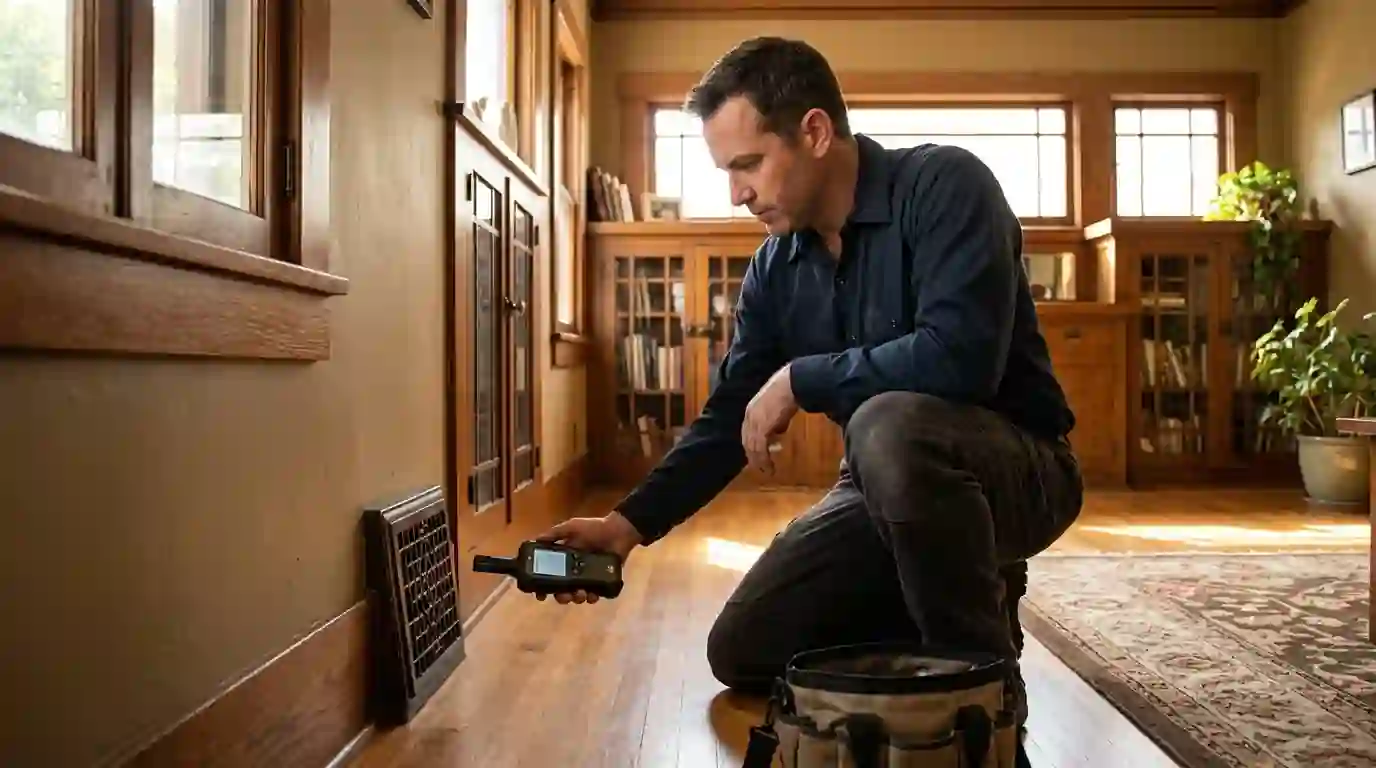
Indoor air quality testing measures what is in the air you breathe at home: fine particles from smoke and dust, humidity, carbon dioxide from stale air, volatile chemicals, and carbon monoxide near gas appliances. In Pasadena, the usual concerns are wildfire smoke, Santa Ana dust, very dry air and stuffy, sealed-up rooms. We test first, then recommend only what the readings support.
Indoor Air Quality Testing
People call about indoor air for different reasons. A family member with allergies sneezes more indoors than out. The house smells stale or musty. Smoke from a fire season lingered for weeks. Someone noticed dust on everything a day after cleaning. Or a new baby is coming and the parents want to know what is in the air. In each case the honest starting point is the same: measure, find the source, and only then decide whether a filter, a duct repair, ventilation or a piece of equipment will help.
Marco's brings calibrated meters into the home and checks the air room by room and at the HVAC system. We look at fine particles, humidity, carbon dioxide as a sign of fresh air, total volatile organic compounds, and carbon monoxide around gas appliances. We also inspect the filter, the return, the ducts and the coil, because the system that moves your air is often part of the problem. You get the readings in plain language and a short list of options, from the simplest to the most involved.
Warning signs
Sneezing, itchy eyes or stuffiness that ease when you leave the house, and return when you come home, often point to dust, pollen or pet dander circulating indoors.
A faint smoky odor weeks after the air outside cleared suggests soot and ash settled in the ducts, coil, attic or furnishings and keep releasing odor.
Bedrooms that feel stuffy in the morning, or afternoon headaches in a home office, can mean carbon dioxide is building up from too little fresh air.
A musty smell from vents or closets can come from a wet drain pan, a dirty coil, a crawlspace leak or hidden mold growth, and the source needs finding.
Static shocks, cracked lips and dry sinuses on Santa Ana days and cold nights mean humidity is very low, sometimes far below a comfortable range.
New flooring, cabinets, paint and furniture release chemicals for weeks. Testing shows whether levels are dropping or whether more ventilation is needed.
Each reading tells a different part of the story. Together they point to a source, which is what makes the test useful.
We take readings in the main living space, bedrooms, near the return and at the supply registers, and compare them with an outdoor reading on the same day. That comparison tells us whether a problem is coming from outside, being generated indoors, or being made worse by the HVAC system.
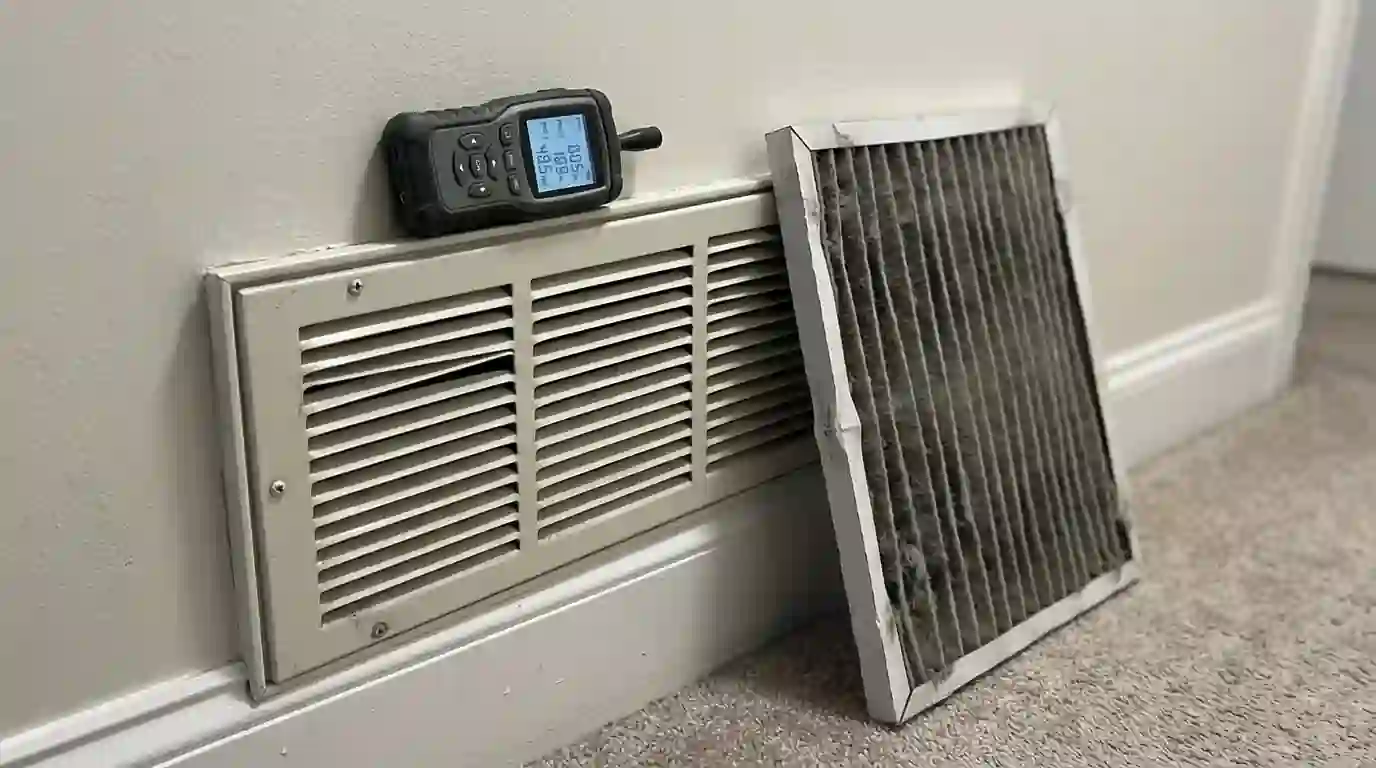
A large share of indoor air problems trace back to the system that moves the air. A loose filter that lets air bypass it, a return duct leak pulling attic dust, a dirty coil, a clogged condensate drain or a blower full of debris all show up in the readings. We check the filter rack and the filter rating, look at the return path, inspect the coil and drain pan, and note any duct gaps we see.
We also check static pressure, which is the resistance the blower is working against. It matters because a dense high-MERV filter on a system with small returns can choke airflow, freeze the coil in summer and overheat the furnace in winter. Knowing the static pressure tells us how much filtration your system can handle before it needs a larger filter cabinet or another return.
Many homes improve with simple steps: the right filter seated properly, sealing a return leak, cleaning the coil, running the fan on a schedule during smoke days, or fixing a bathroom exhaust fan that never vented outdoors. When more is needed, options include a media filter cabinet with a deeper filter, a whole-home air purifier, a whole-home humidifier for very dry months, a UV lamp at the coil, or a fresh air ventilator for tightly sealed homes. We recommend only what the readings support, and you choose what to do.
Step by step
We ask what you notice, when it happens, who is affected and what has changed recently, such as remodeling, new furniture, a fire season or new pets.
Calibrated meters measure particles, humidity, carbon dioxide, VOCs and carbon monoxide in the main rooms, plus one outdoor reading for comparison.
We check the filter, filter rack, return, coil, drain pan, blower and visible ducts, and measure static pressure across the system.
You get the readings in plain language, what they likely mean, and the probable sources, with photos of anything we found in the system.
We list fixes from the simplest and least expensive to the most involved, with typical prices, so you can choose what makes sense.
Typical prices
Testing is priced by how many rooms and readings are taken and how much of the HVAC system is inspected. Most homes need a standard visit. Larger homes, two systems, or concerns that require lab sampling cost more. These are typical ranges, and the final price comes after the technician sees the home.
| Job | Typical range | What is included |
|---|---|---|
| Standard indoor air quality test | $189 to $345 | Room readings, outdoor comparison, filter, coil and return inspection |
| Test with full system check | $287 to $468 | Adds static pressure, drain pan and blower inspection, written summary |
| Two systems or larger home | $376 to $595 | More rooms, a second air handler, and separate readings for each zone |
| Follow-up retest after changes | $127 to $219 | Repeat readings after a fix to confirm what improved |
Price moves with home size, number of HVAC systems, whether attic or crawlspace inspection is needed, and whether a specific concern calls for lab sampling handled by a separate testing service. Compare other jobs in our Pasadena HVAC price guide.
Air quality in Pasadena changes with the season. Late summer and fall bring wildfire smoke, sometimes from far away and sometimes very close, as Altadena and nearby neighborhoods learned during the Eaton Fire. Santa Ana wind days bring fine dry dust and pollen down from the foothills and drop humidity sharply. Inland summer heat keeps homes closed up with the AC running for long stretches, which can let carbon dioxide and household chemicals build up in rooms with little fresh air.
Older homes add their own factors. Craftsman bungalows and 1920s homes may have floor furnaces, wall furnaces or gas ranges that need a carbon monoxide check, and attic ducts with return leaks. Newer ADUs and remodeled homes are often sealed much tighter, which saves energy but can trap moisture and odors without proper ventilation. Testing tells us which of these applies to your home, so you do not spend money on the wrong fix.
Related work
Media filter cabinets and electronic air cleaners built into your HVAC system, sized so they clean the air without choking airflow.
Learn moreBypass, fan-powered and steam humidifiers on your furnace or air handler, with a control that keeps humidity in a comfortable range.
Learn moreCamera inspection first, then negative-pressure HEPA cleaning of supply, return, blower and coil when your ducts actually need it.
Learn moreUV lamps mounted at the AC coil to keep the coil and drain pan surfaces cleaner, installed safely with sealed, interlocked access.
Learn moreOur technicians handle this work all over Pasadena and the surrounding San Gabriel Valley. A few of the places we cover:
Questions
It shows the levels of fine particles, humidity, carbon dioxide, volatile chemicals and carbon monoxide in your home, compared with the outdoor air that day. More importantly, it points to likely sources, such as a return leak pulling attic dust, a filter that is bypassing, poor ventilation, or smoke residue. That lets you fix the cause instead of guessing at equipment.
It is a good idea if you still smell smoke, see fine ash around registers, or anyone in the home has breathing complaints. We measure particles indoors and out, inspect the filter, coil and ducts for soot and ash, and tell you whether cleaning, a better filter or a purifier makes sense. Testing again after any cleaning confirms the improvement.
Yes. We take carbon monoxide readings near furnaces, wall furnaces, floor furnaces, water heaters, gas ranges and any door to an attached garage. If we find elevated levels, we explain the likely cause and treat it as a priority. We also recommend working carbon monoxide alarms on every level of the home, near bedrooms, whether or not the readings are normal.
It can help with particles, but only if your system can handle it. Higher MERV filters catch smaller particles but also resist airflow more, which raises static pressure. On systems with small returns, that can freeze the coil or overheat the furnace. During testing we measure static pressure so we can tell you which filter rating your system can use safely.
Most visits take about one to two hours, including room readings, the outdoor comparison and the HVAC inspection. A larger home or a second system adds time. We explain the results before we leave, so you do not wait for a report to understand what we found. A follow-up retest after any changes is shorter, usually under an hour.
Call our Pasadena line any hour. A person answers, asks a few questions about the system, and gives you an arrival window.