Wall Furnace Repair
Pilot lights, thermocouples, gas valves and fans on gravity and fan-type wall furnaces, with a venting and CO check every visit.
Learn moreCooling
AC RepairAC InstallationAC ReplacementAC Tune-Up & MaintenanceRefrigerant Leak RepairAC Compressor ReplacementEvaporator Coil ReplacementAC Water Leak & Drain Line RepairHeating
Furnace RepairFurnace InstallationFurnace ReplacementFurnace Tune-Up & MaintenanceWall Furnace RepairFloor Furnace ReplacementBoiler & Radiant Heat RepairHeat Pumps & Ductless
Heat Pump RepairHeat Pump InstallationHeat Pump MaintenanceGas Furnace to Heat Pump ConversionDuctless Mini-Split InstallationDuctless Mini-Split RepairADU Heating & CoolingDucts & Attic
Duct RepairDuctwork ReplacementAir Duct CleaningDuct Sealing & Leak TestingWhole House Fan InstallationAttic InsulationIndoor Air
Indoor Air Quality TestingWhole-Home Air PurifiersUV Air SanitizersWhole-Home HumidifiersSystems & Commercial
Smart Thermostat InstallationHVAC Zoning SystemsFull HVAC System ReplacementHVAC InspectionHVAC Maintenance Plans24/7 Emergency HVAC RepairCommercial HVAC RepairCommercial HVAC MaintenanceRooftop & Package Unit RepairPasadena
Pasadena (all of the city)Bungalow HeavenMadison HeightsSan RafaelLinda VistaHastings RanchOak KnollAnnandaleProspect ParkHistoric HighlandsGarfield HeightsLamanda ParkSouth ArroyoChapman WoodsNearby cities
AltadenaSouth PasadenaSan MarinoArcadiaSierra MadreMonroviaDuarteGlendaleLa Canada FlintridgeLa CrescentaBurbankAlhambraSan GabrielTemple CityMonterey ParkRosemeadEl MonteAzusaGlendoraCovinaWest CovinaLos AngelesMontroseTujungaBaldwin ParkSouth El MonteMontebelloWhittierHacienda HeightsRowland HeightsLa PuenteWalnutDiamond BarSan DimasLa VerneClaremontPomonaUplandRancho CucamongaOntarioMontclairChino HillsBreaFullertonCounties
Los Angeles CountySan Bernardino CountyOrange CountyHeating in Pasadena, CA
Old floor grate heaters removed and replaced with a new floor furnace, a wall furnace, a ducted system or a ductless heat pump.
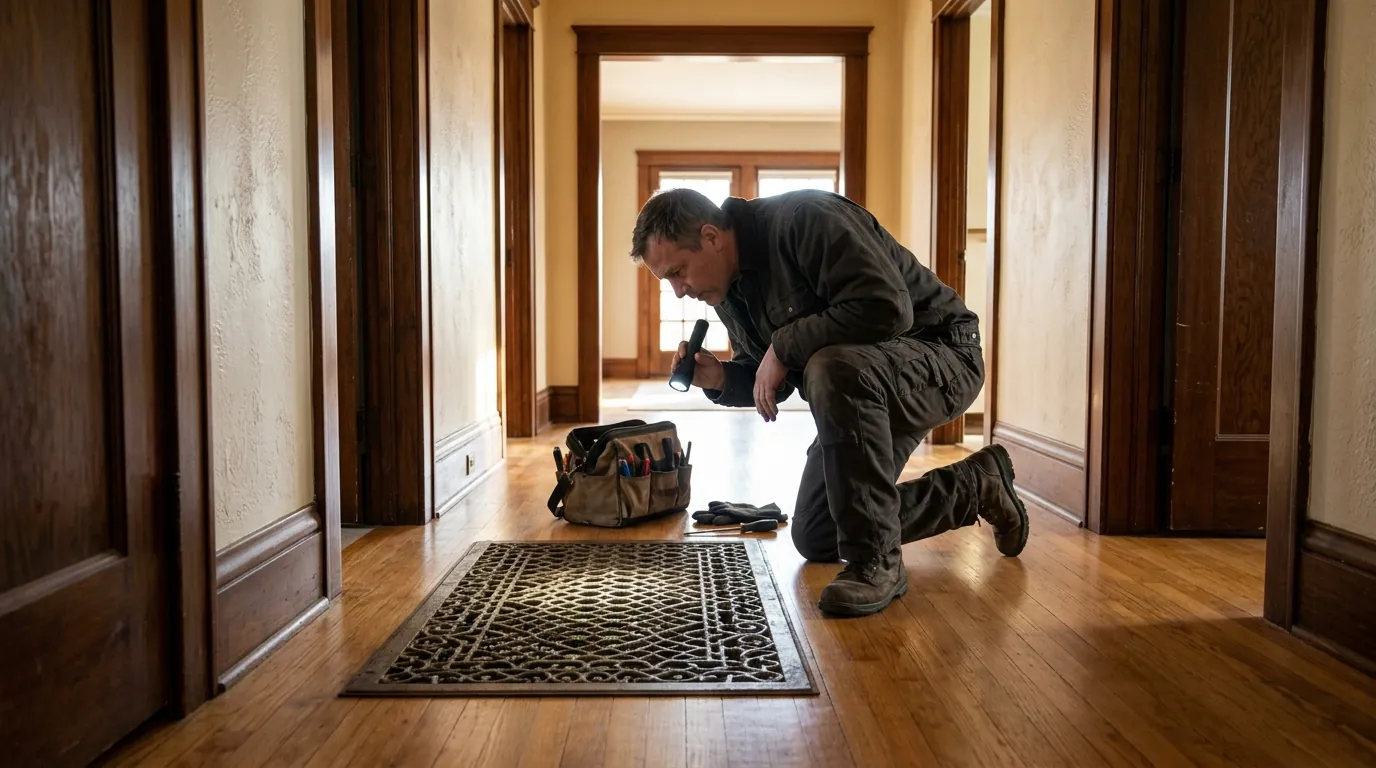
Replacing a floor furnace in Pasadena means choosing what comes next: a new floor furnace in the same opening, a wall furnace, a ducted forced air system or a ductless heat pump. Marco's removes the old unit from the crawlspace, caps the gas, closes the floor opening when needed and installs the new heat, with the permit handled where the city requires one.
Floor Furnace Replacement
A floor furnace is a metal box hung under the floor with a large grate at floor level, usually in a central hallway. Hot air rises through the grate and cool air drops back down around its edges. A great many Pasadena bungalows were built with one in the 1910s, 1920s and 1930s, and plenty still have one today. They work without a fan or ducts, which is why they last so long, but most of those still running are well past any reasonable service life.
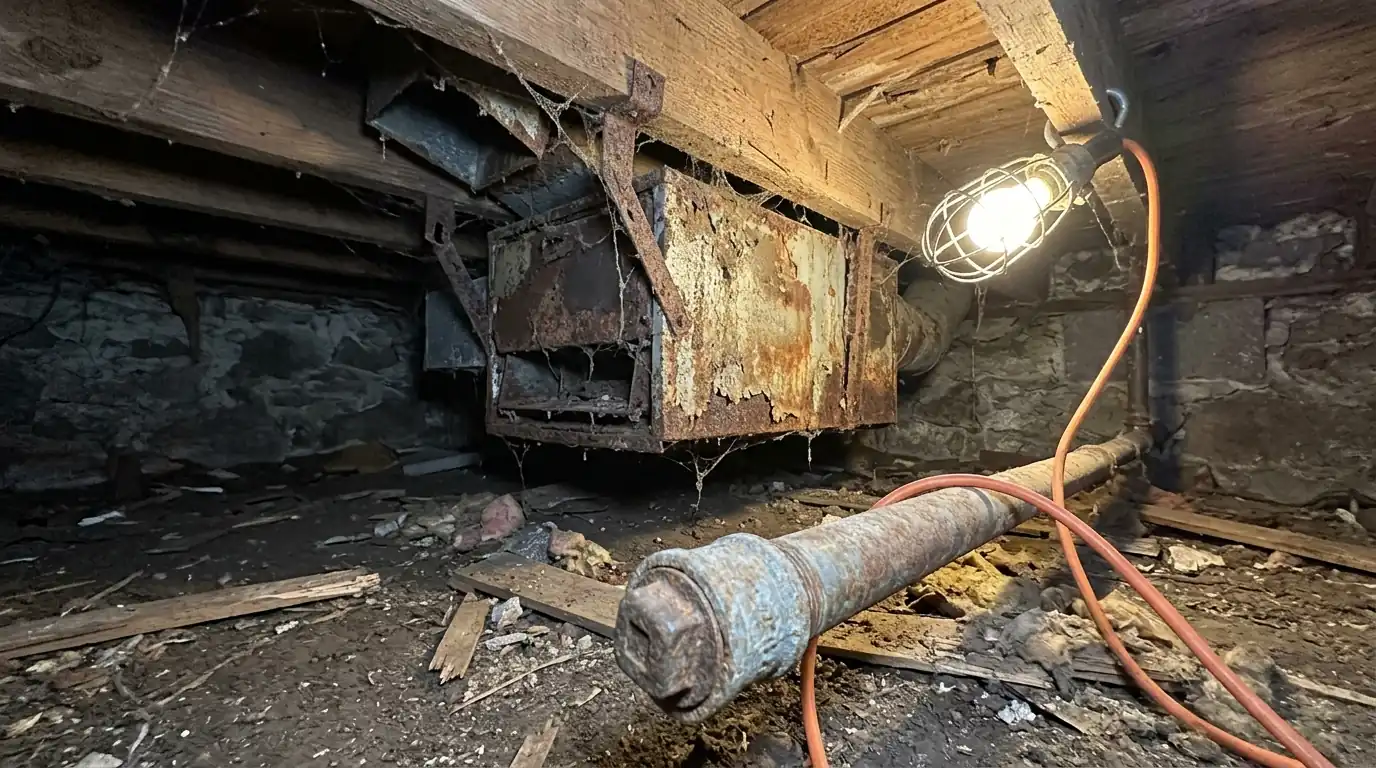
The grate is the obvious problem. It gets hot enough to burn bare feet and can leave a grid-shaped mark on a toddler's hands or a dog's paws. Less obvious is what happens under the floor: rusted heat exchangers, cracked combustion chambers and vent pipes that have shifted in the crawlspace. Floor furnace replacement removes those risks and gives you a chance to heat the whole house better than one hot spot in the hallway ever could.
Warning signs
Children, older relatives or pets have touched the grate, or you avoid walking on that part of the hallway. The surface can get hot enough to cause real burns in seconds.
Shine a flashlight down through the grate while it is cold. Flaking rust, holes or scale on the heat exchanger mean combustion gases may not stay contained.
Old floor furnaces often need constant pilot relighting, and parts for many models stopped being made decades ago, so each repair gets harder to source.
One floor grate in the middle of the house cannot heat back bedrooms on a 38 F night. Most families end up adding space heaters, which bring their own risks.
A yellow or orange flame visible through the grate signals poor combustion. That raises carbon monoxide risk and usually reflects burner or heat exchanger wear.
Home inspectors often flag old floor furnaces, and remodels that refinish hardwood are a natural time to retire one and close the opening properly.
You have real choices. A new floor furnace drops into the same opening and keeps the house heated the old way, which suits owners who want to change as little as possible. A wall furnace moves the heat into a hallway wall, removes the floor grate entirely and often adds a fan for better spread. A ducted furnace or heat pump, set in the attic or crawlspace, sends heat to every room through registers. A ductless heat pump uses wall-mounted heads in the rooms you use most and adds cooling for summer.
Most floor furnaces hang from the floor joists in a crawlspace that may be only eighteen inches to two feet high. Removal means working under the house, shutting off and capping the gas line, disconnecting the vent and lowering the heavy cabinet out through the floor opening or a crawlspace hatch. Old vent pipes sometimes run along the joists to an outside wall, or up through an interior wall to the roof. We cap or remove the vent so nothing leaves an open path into the house.
Some older floor furnaces and their vents used materials that contain asbestos. If we see suspect material, we stop and tell you, because it needs testing and proper abatement before anyone disturbs it.
Once a floor furnace is out for good, the opening needs framing and subfloor. We frame it to the joists and close it with plywood level with the surrounding floor, ready for whatever finish you choose. Many Pasadena bungalows have old-growth fir or oak floors, and some owners weave in salvaged boards for a close match, while others lay a runner over the spot. If the new heat is a wall furnace or ductless head, we place it so warmth reaches the bedrooms, not only the hallway.
Step by step
We inspect the grate, the floor around it, the crawlspace, the gas line and the vent path, and check for any material that needs testing first.
We walk through the four options with prices, room by room, and agree on the plan, the location and the permit before scheduling the work.
The old floor furnace is disconnected and removed, the gas line is capped or rerouted, and the old vent is sealed off or taken out entirely.
The new floor furnace, wall furnace, ducted system or ductless heat pump is installed and connected, with every gas joint leak tested.
The floor opening is framed and closed if the grate is gone for good, and we test for carbon monoxide and walk you through the new controls.
Typical prices
The price depends mostly on what replaces the floor furnace. Swapping in a new floor furnace is the smallest job, and moving to ducted heat is the largest. Crawlspace height and the condition of the gas line also matter. These are typical 2026 ranges for Pasadena homes, with the final price set after the technician sees the house and quoted before work starts.
| Job | Typical range | What is included |
|---|---|---|
| New floor furnace in the existing opening | $3,140 to $4,960 | Removal, gas and vent connections, a new grate and start-up |
| Floor furnace removed, wall furnace installed | $3,480 to $5,670 | Includes framing the floor opening and running a new vent |
| Ductless heat pump in place of a floor furnace | $4,870 to $9,640 | One to three indoor heads, and it may need an electrical upgrade |
| Ducted furnace or heat pump with new ductwork | $9,280 to $16,430 | Even heat to every room from an attic or crawlspace install |
| Floor opening framing and subfloor closure | $380 to $1,270 | Varies with the opening size and joist condition below |
Crawlspace clearance, gas line repairs, panel capacity for heat pumps, vent removal, permit fees and any asbestos testing move the total. Ask about current PWP, SCE or SoCalGas rebates and state heat pump incentives when funding is open. Compare other jobs in our Pasadena HVAC price guide.
Floor furnaces are most common in the city's early twentieth century neighborhoods, including Bungalow Heaven, Historic Highlands, Madison Heights and Garfield Heights, along with the bungalow courts scattered across central Pasadena. These homes sit on raised foundations with crawlspaces, which is what made floor furnaces practical. Many owners in historic districts care about keeping original floors and street-facing details, so we plan replacements that avoid new roof vents on the street side and keep outdoor units out of view where possible.
Pasadena's mild winters mean a floor furnace may only run a few months a year, which is why so many have survived. Surviving is not the same as safe, though. Families moving into these homes, especially with young children, often ask about replacement in their first fall. Foothill homes in Altadena share the same housing type, and since the Eaton Fire many owners there are repairing or rebuilding. We help them choose heat that suits a restored or rebuilt house.
Related work
Pilot lights, thermocouples, gas valves and fans on gravity and fan-type wall furnaces, with a venting and CO check every visit.
Learn moreDuctless heat pumps for Craftsman bungalows, additions, converted garages and hot upstairs rooms, with head styles chosen room by room.
Learn moreNew gas furnace installs sized by load calculation, with gas piping, venting, ducts and the city permit handled by our crew.
Learn moreReplace a gas furnace with an electric heat pump, starting with a panel load check so the switch works without surprises.
Learn moreOur technicians handle this work all over Pasadena and the surrounding San Gabriel Valley. A few of the places we cover:
Questions
Yes. After we remove the floor furnace and frame the opening, the patch can be finished with matching boards, often salvaged from a closet or reclaimed fir and oak. The patch is usually about the size of the old grate, so a careful weave can make it hard to spot. Some owners refinish the whole hallway at the same time to blend the color.
Yes. A few manufacturers still make gas floor furnaces sized for older openings, with modern safety controls. They suit homeowners who want minimal change. The grate still gets hot, though, so a new floor furnace does not solve the burn risk for small children or pets. For homes with young kids, a wall furnace or heat pump is often the better replacement.
A floor furnace swap or a move to a wall furnace usually takes one to two days. A ductless heat pump takes two to three days, depending on the number of indoor heads and the electrical work. A new ducted system with crawlspace or attic ducts runs four to seven days. We plan the gas shutoff so you are not left without heat on a cold night.
Yes. Removing a gas appliance and installing new heating equipment involves mechanical, gas and sometimes electrical work, and that calls for permits. Homes in historic districts may face added review if the work changes the outside of the house, such as a new roof vent or an outdoor unit visible from the street. We handle the permit where the city requires one and explain any added steps.
Often. A small two-bedroom bungalow can be heated and cooled by two or three wall-mounted heads and one outdoor unit, with no ducts to run through plaster walls. Pasadena winters suit heat pumps well, and summers past 100 F make the added cooling valuable. The main question is electrical panel capacity, which we check on the first visit.
Call our Pasadena line any hour. A person answers, asks a few questions about the system, and gives you an arrival window.