Furnace Tune-Up & Maintenance
A fall furnace tune-up that cleans the burners and flame sensor, tests every safety and checks for carbon monoxide before winter.
Learn moreCooling
AC RepairAC InstallationAC ReplacementAC Tune-Up & MaintenanceRefrigerant Leak RepairAC Compressor ReplacementEvaporator Coil ReplacementAC Water Leak & Drain Line RepairHeating
Furnace RepairFurnace InstallationFurnace ReplacementFurnace Tune-Up & MaintenanceWall Furnace RepairFloor Furnace ReplacementBoiler & Radiant Heat RepairHeat Pumps & Ductless
Heat Pump RepairHeat Pump InstallationHeat Pump MaintenanceGas Furnace to Heat Pump ConversionDuctless Mini-Split InstallationDuctless Mini-Split RepairADU Heating & CoolingDucts & Attic
Duct RepairDuctwork ReplacementAir Duct CleaningDuct Sealing & Leak TestingWhole House Fan InstallationAttic InsulationIndoor Air
Indoor Air Quality TestingWhole-Home Air PurifiersUV Air SanitizersWhole-Home HumidifiersSystems & Commercial
Smart Thermostat InstallationHVAC Zoning SystemsFull HVAC System ReplacementHVAC InspectionHVAC Maintenance Plans24/7 Emergency HVAC RepairCommercial HVAC RepairCommercial HVAC MaintenanceRooftop & Package Unit RepairPasadena
Pasadena (all of the city)Bungalow HeavenMadison HeightsSan RafaelLinda VistaHastings RanchOak KnollAnnandaleProspect ParkHistoric HighlandsGarfield HeightsLamanda ParkSouth ArroyoChapman WoodsNearby cities
AltadenaSouth PasadenaSan MarinoArcadiaSierra MadreMonroviaDuarteGlendaleLa Canada FlintridgeLa CrescentaBurbankAlhambraSan GabrielTemple CityMonterey ParkRosemeadEl MonteAzusaGlendoraCovinaWest CovinaLos AngelesMontroseTujungaBaldwin ParkSouth El MonteMontebelloWhittierHacienda HeightsRowland HeightsLa PuenteWalnutDiamond BarSan DimasLa VerneClaremontPomonaUplandRancho CucamongaOntarioMontclairChino HillsBreaFullertonCounties
Los Angeles CountySan Bernardino CountyOrange CountyHeating in Pasadena, CA
No heat on a cold night? We trace the ignition sequence, find the failed part and fix most furnaces in a single visit.
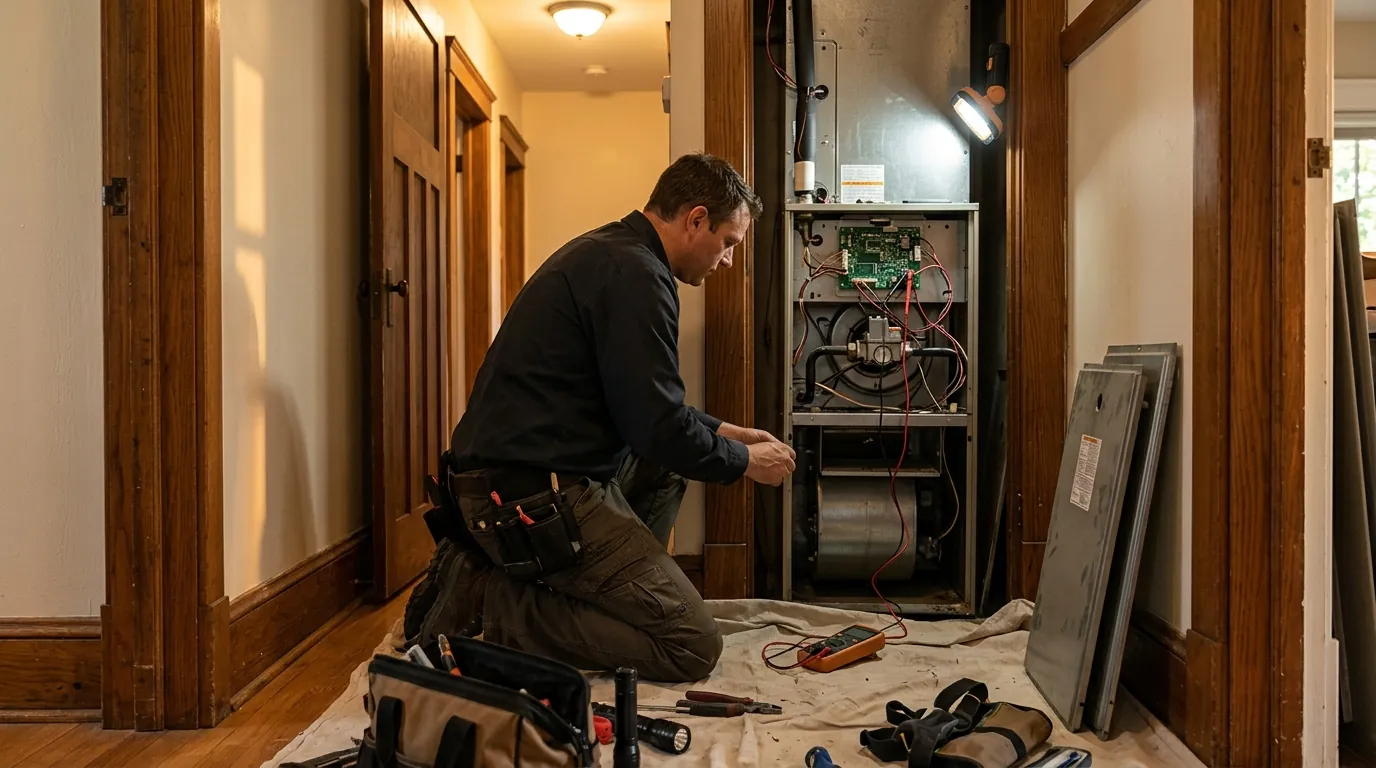
Most furnace failures in Pasadena come down to one step in the start-up sequence: the inducer, pressure switch, hot surface igniter, gas valve, flame sensor or limit switch. A Marco's technician watches the furnace try to start, reads the control board's fault code, tests the failing part and quotes the repair before any work begins. Many fixes finish in the same visit.
Furnace Repair
A furnace that sat quiet from April through October has had half a year to collect dust, dry out its seals and let a weak part get weaker. Then the first night drops into the low 40s, the thermostat calls for heat, and the furnace clicks, hums or blows cold air. That pattern is so common in Pasadena that the first chilly week of the season keeps our phones busy. The good news is that most of these failures are a single part, not the whole furnace.
Furnace repair at Marco's starts with watching the unit run, not guessing. Modern gas furnaces follow a fixed sequence, and each step has to prove itself before the next one is allowed. When the sequence stops, the control board usually records where. Our technicians carry common igniters, flame sensors, pressure switches, capacitors and limit switches on the truck, so a closet furnace in a bungalow or a horizontal unit in a hot attic can often be heating again before we leave.
Warning signs
You hear the inducer start and maybe a click, then nothing. The igniter may be cracked, the pressure switch may not be closing, or the gas valve is not opening when the board tells it to.
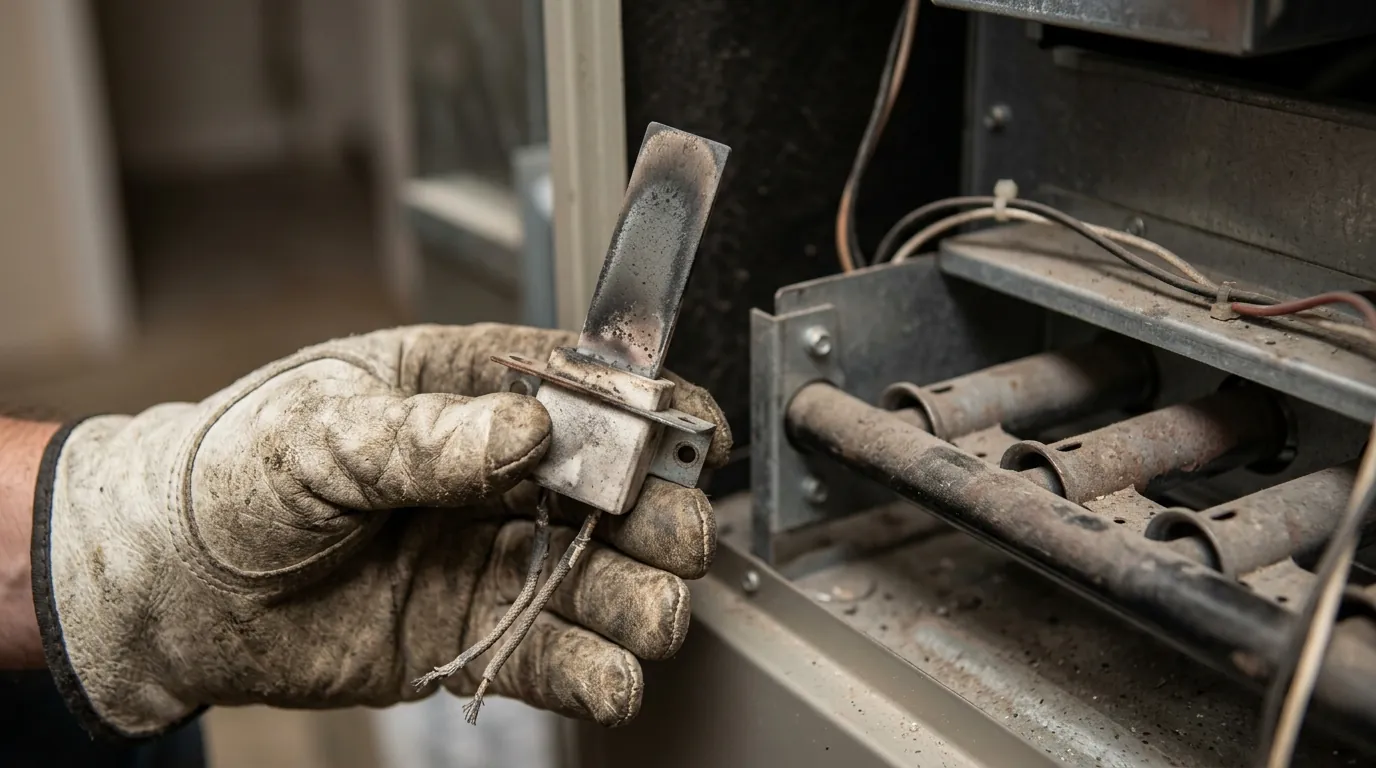
Flame appears for a few seconds and drops out. A dirty flame sensor is the usual cause, because the board cannot confirm the flame and shuts the gas off for safety.
The fan moves air but the burners never fire, or they fired and tripped a limit switch. Clogged filters and blocked returns overheat the heat exchanger and trip that limit.
Most furnaces built in the last twenty-five years flash a code through a small window in the blower door. Count the flashes before you call, since it helps us bring the right part.
A delayed ignition, where gas builds up for a moment before it lights, makes a boom inside the cabinet. It points to dirty burners or a weak igniter and should be checked soon.
A dusty smell on the first run of the season is normal and fades within an hour. A smell that lasts, or smells electrical, means turn the furnace off and call us.
When your thermostat calls for heat, the control board starts the inducer motor, a small fan that pulls combustion gases through the heat exchanger and out the flue. The pressure switch must sense that draft and close. Then the hot surface igniter glows orange for several seconds, the gas valve opens, and the burners light. Within a few seconds the flame sensor has to prove a flame, or the board shuts the gas off. Only after the heat exchanger warms does the main blower start pushing air through the ducts.
The heat exchanger is the metal wall that keeps burner flames and exhaust separate from the air you breathe. Years of heating and cooling cycles can crack it, especially on furnaces that overheat from restricted airflow. A crack can let exhaust, including carbon monoxide, mix into the supply air. On every repair visit we look at the flame pattern, check for flame rollout and inspect the exchanger where it can be seen. If we find a crack, we show you what we saw and explain your options plainly.
Carbon monoxide has no smell or color. Every home with a gas furnace, wall furnace or gas water heater should have working CO alarms near sleeping areas and on each level. California requires them in most homes with fuel-burning appliances, and they cost little. If an alarm sounds, leave the house, call 911 or SoCalGas, and do not restart the furnace until it has been checked.
Most furnace repairs are worth doing. An igniter, sensor or pressure switch on a twelve-year-old furnace is a small cost against a unit that may have years left. The math changes when the heat exchanger is cracked, when the inducer and control board fail in the same season on a furnace past twenty years, or when parts for an older model are hard to find. We give you the repair price first, and if replacement makes more sense, we say why without pushing.
Some no-heat calls turn out to be simple. These checks take five minutes and are safe for any homeowner. If none of them restores heat, leave the furnace off and call (626) 879-0711, day or night.
Step by step
We ask what you heard, when it stopped and whether you saw a code. Then we look at the thermostat, the filter and the area around the furnace before opening anything.
We call for heat and watch each step of the sequence with meters attached, so we see the inducer, pressure switch, igniter and flame sensor perform in real time.
Igniters are checked for resistance, sensors for microamp current, switches for continuity and the gas valve for correct pressure. The failed part gets confirmed, not assumed.
You get the price before we start. Common parts come off the truck. If a model-specific board or inducer is needed, we order it and tell you when we expect it.
We run a full cycle, check temperature rise across the furnace, look at the venting and test for carbon monoxide at the supply registers before we call the job finished.
Typical prices
Furnace repair prices depend on the part, the furnace brand and where the unit sits. A closet furnace is quicker to work on than a horizontal unit in a cramped attic. These are typical 2026 ranges across Pasadena and the San Gabriel Valley. Your final price comes after the technician sees the system, and we quote it before we start.
| Job | Typical range | What is included |
|---|---|---|
| Diagnostic visit and heat cycle test | $119 to $189 | Covers testing the full start-up sequence and reading fault codes |
| Flame sensor cleaning or igniter replacement | $164 to $438 | Igniters vary by brand, and sensor cleaning sits at the low end |
| Pressure switch or limit switch | $238 to $517 | Includes checking the hose, condensate trap and the airflow behind the trip |
| Inducer motor replacement | $627 to $1,185 | Brand-specific motors cost more, and attic units add labor time |
| Control board or gas valve | $468 to $1,092 | Universal boards cost less than factory boards on newer furnaces |
Attic access, after-hours timing, furnace age and whether a part must be ordered all move the price. If the same furnace needs several parts, we quote them together so you can weigh repair against replacement. Compare other jobs in our Pasadena HVAC price guide.
Pasadena furnaces live in a few main places. Craftsman bungalows and Spanish Revival homes often have an upflow furnace in a hall closet, added decades after the house was built. Postwar ranch homes in places like Hastings Ranch and Chapman Woods often have a horizontal furnace in the attic, lying on its side on a platform with ducts running to every room. Some garages hold the furnace too. Attic furnaces bake through summers that reach past 100 F, which ages wiring, hoses and control boards, and attic dust finds its way into the burner area.
Our winters are mild by most standards, but nights in the foothills above Altadena, Linda Vista and Sierra Madre regularly drop into the 30s. A furnace may run only three or four months a year, so parts that sat idle fail when they are first asked to work. Homes near the Eaton Fire area may also have ash in the return ducts and filter, which can choke airflow and trip limit switches. We check for that carefully and talk you through cleaning if it is needed.
Related work
A fall furnace tune-up that cleans the burners and flame sensor, tests every safety and checks for carbon monoxide before winter.
Learn moreAn old furnace swapped for a right-sized new one in the same attic, closet or garage, with venting, ducts and permit handled.
Learn moreNight, weekend and holiday repairs for a dead AC in a heat wave or a furnace that quits on a cold night, any hour.
Learn moreCamera inspection first, then negative-pressure HEPA cleaning of supply, return, blower and coil when your ducts actually need it.
Learn moreOur technicians handle this work all over Pasadena and the surrounding San Gabriel Valley. A few of the places we cover:
Questions
After months of sitting idle, weak parts get their first real test. Flame sensors collect a light coating, igniters that were already cracked finally fail, and pressure switch hoses dry out. Dust from the summer settles on the burners. A tune-up in October catches many of these, but if the furnace already quit, a repair visit usually finds a single failed part.
Most furnace repairs take one to two hours, including diagnosis and the safety check afterward. A flame sensor or igniter is often under an hour once it is found. Horizontal attic furnaces take longer because of tight access and heat. If a brand-specific part has to be ordered, we make the furnace safe, explain the timing and return to finish once the part arrives.
One reset is reasonable. Turn the power off at the service switch for a minute and back on. If it locks out again, stop. Lockouts are a safety response, and repeated resets on a furnace with a rollout or limit problem can overheat parts or push exhaust where it should not go. Write down the blink code and call us instead.
No. Manufacturers do not approve patching or welding a cracked heat exchanger, because a patch cannot be trusted to hold through heating cycles. The options are a replacement heat exchanger, if the manufacturer still supplies one and the furnace is young enough to justify the labor, or a new furnace. We shut off a furnace with a confirmed crack and explain both paths with prices.
Yes. Marco's answers (626) 879-0711 around the clock, every day of the year, and our technicians handle no-heat calls at night and on weekends across Pasadena and nearby cities. When temperatures drop into the 30s, a home with young children, older adults or someone who is ill gets priority. You still hear the price before the work begins.
Call our Pasadena line any hour. A person answers, asks a few questions about the system, and gives you an arrival window.