Indoor Air Quality Testing
We measure particles, humidity, CO2, VOCs and carbon monoxide in your home, find the sources and explain what would actually help.
Learn moreCooling
AC RepairAC InstallationAC ReplacementAC Tune-Up & MaintenanceRefrigerant Leak RepairAC Compressor ReplacementEvaporator Coil ReplacementAC Water Leak & Drain Line RepairHeating
Furnace RepairFurnace InstallationFurnace ReplacementFurnace Tune-Up & MaintenanceWall Furnace RepairFloor Furnace ReplacementBoiler & Radiant Heat RepairHeat Pumps & Ductless
Heat Pump RepairHeat Pump InstallationHeat Pump MaintenanceGas Furnace to Heat Pump ConversionDuctless Mini-Split InstallationDuctless Mini-Split RepairADU Heating & CoolingDucts & Attic
Duct RepairDuctwork ReplacementAir Duct CleaningDuct Sealing & Leak TestingWhole House Fan InstallationAttic InsulationIndoor Air
Indoor Air Quality TestingWhole-Home Air PurifiersUV Air SanitizersWhole-Home HumidifiersSystems & Commercial
Smart Thermostat InstallationHVAC Zoning SystemsFull HVAC System ReplacementHVAC InspectionHVAC Maintenance Plans24/7 Emergency HVAC RepairCommercial HVAC RepairCommercial HVAC MaintenanceRooftop & Package Unit RepairPasadena
Pasadena (all of the city)Bungalow HeavenMadison HeightsSan RafaelLinda VistaHastings RanchOak KnollAnnandaleProspect ParkHistoric HighlandsGarfield HeightsLamanda ParkSouth ArroyoChapman WoodsNearby cities
AltadenaSouth PasadenaSan MarinoArcadiaSierra MadreMonroviaDuarteGlendaleLa Canada FlintridgeLa CrescentaBurbankAlhambraSan GabrielTemple CityMonterey ParkRosemeadEl MonteAzusaGlendoraCovinaWest CovinaLos AngelesMontroseTujungaBaldwin ParkSouth El MonteMontebelloWhittierHacienda HeightsRowland HeightsLa PuenteWalnutDiamond BarSan DimasLa VerneClaremontPomonaUplandRancho CucamongaOntarioMontclairChino HillsBreaFullertonCounties
Los Angeles CountySan Bernardino CountyOrange CountyDucts & Attic in Pasadena, CA
Camera inspection first, then negative-pressure HEPA cleaning of supply, return, blower and coil when your ducts actually need it.
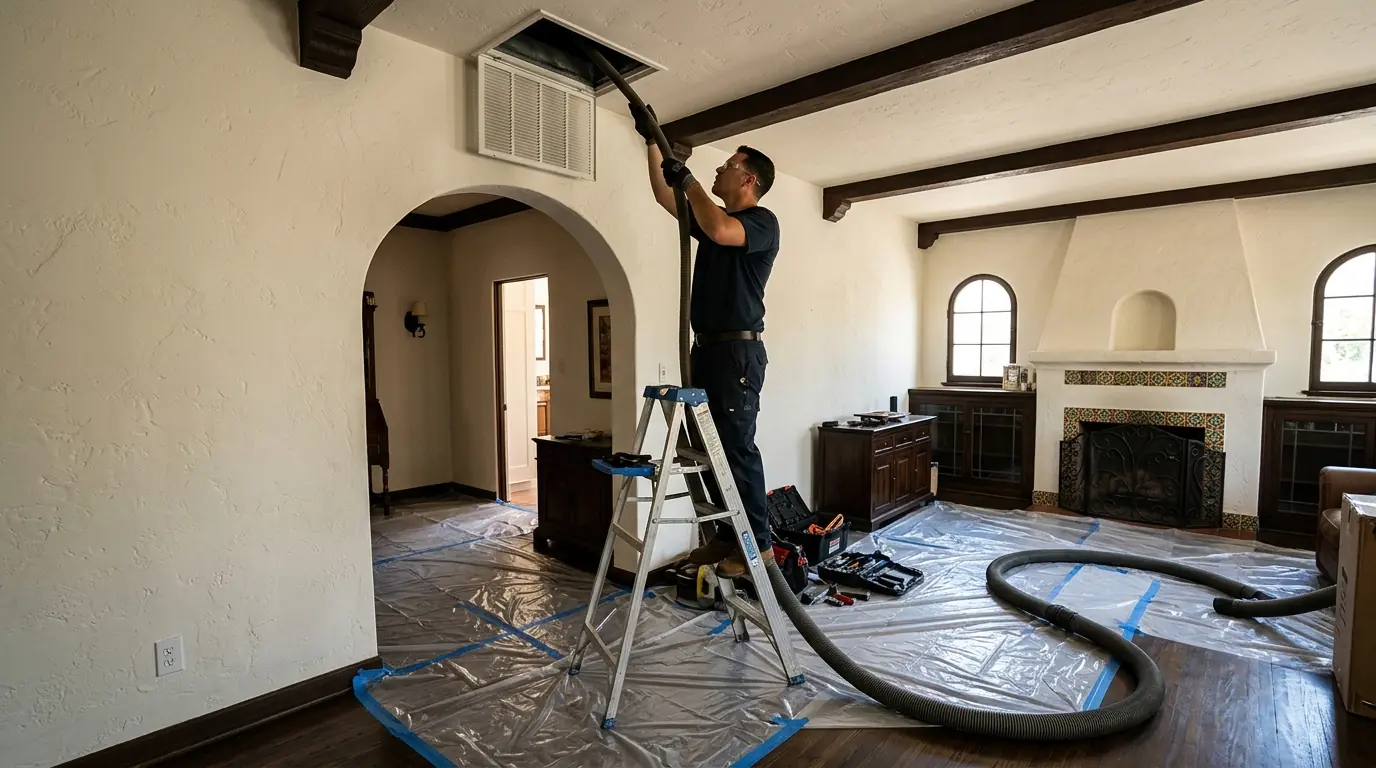
Air duct cleaning is worth it in a Pasadena home when there is a clear reason: drywall dust after a remodel, smoke and ash from a wildfire, rodent droppings, or debris you can see at the registers. We look inside with a camera first. If cleaning is needed, we put the system under negative pressure with a HEPA vacuum and clean the ducts, blower and coil.
Air Duct Cleaning
Air duct cleaning is one of the most oversold services in home heating and cooling. Coupons for whole-house cleaning at a very low price often turn into a quick vacuum at the registers and a sales pitch. Dust on a supply grille does not always mean the ducts are dirty, and clean-looking ducts can still hide a problem in the return. The useful question is not whether ducts have some dust in them, because all ducts do, but whether there is enough debris, contamination or odor to affect your air or your equipment.
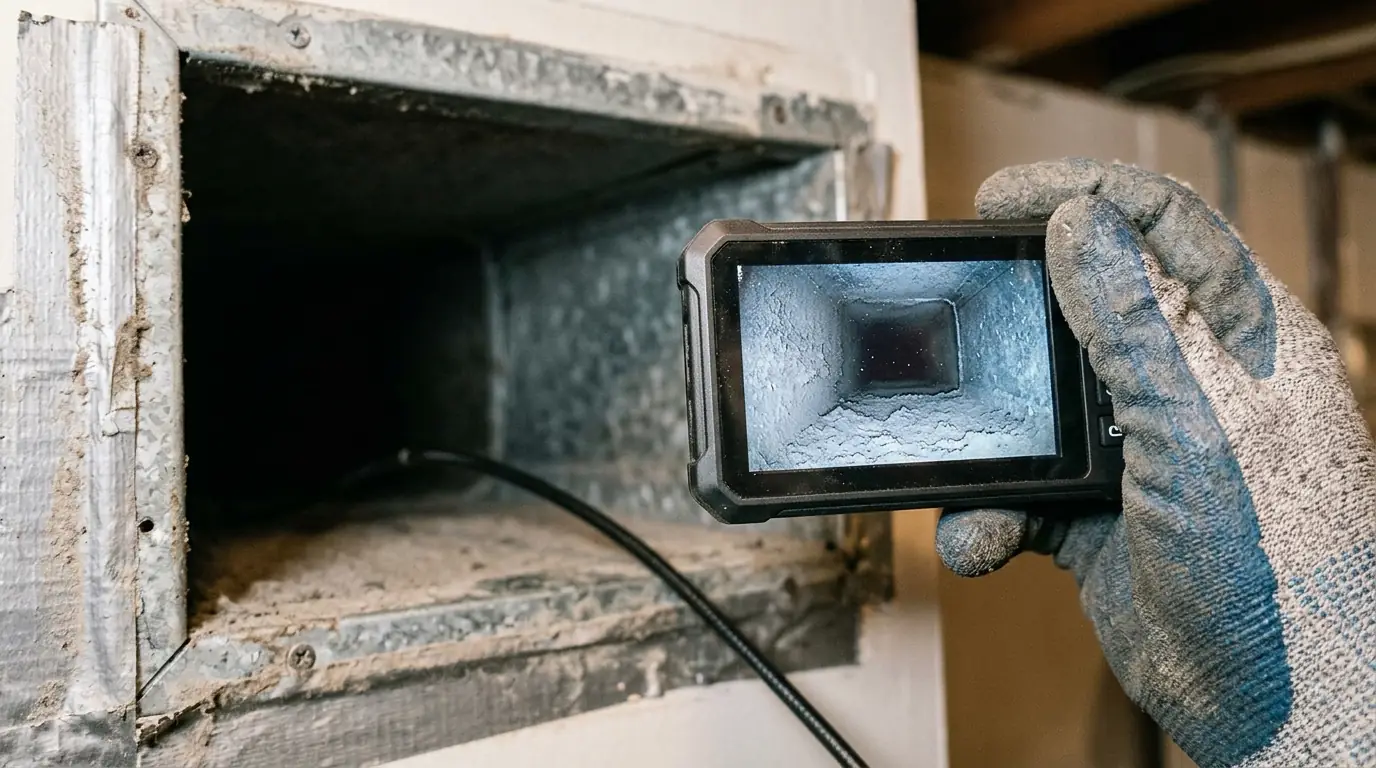
Marco's starts with a camera inspection of the return, the supply trunk and a few branch runs, and shows you what is in there. If the ducts look normal, we tell you, and suggest a better filter instead. If there is real buildup, we clean the full system with a HEPA vacuum that holds the ducts under negative pressure, agitation tools sized to each run, and hand cleaning of the blower and coil. Call (626) 879-0711 to set up an inspection.
Warning signs
Clumps of dust, construction debris or insulation fibers blowing out of supply registers, or caked on the return grille, mean the inside of the ducts holds more than normal dust.
A stale smoke smell when the system starts, weeks after a wildfire, usually means ash and soot settled in the return and on duct walls while the system was running.
Sanding drywall or tearing out plaster with the system running sends fine dust deep into the return. This is one of the most common real reasons to clean ducts.
Rats and mice sometimes get into attic or crawlspace ducts through chewed openings. Droppings and nesting material need to be removed and the openings repaired.
A damp, musty odor can come from a dirty coil or drain pan, or from moisture inside ducts. The source needs finding before any cleaning makes sense.
If a new filter turns gray within days, a return leak may be pulling in attic dust, or heavy debris in the ducts is recirculating every time the blower runs.
Cleaning helps when something got into the ducts that should not be there. Drywall dust and plaster grit after a remodel, soot and ash after a nearby fire, rodent contamination, and debris from construction are all good reasons. It also makes sense in a home you just bought, where you do not know the history and the camera shows heavy buildup.
Cleaning does not fix leaks, poor airflow or a dusty house on its own. If the return duct has a gap in the attic or garage, it will pull dust right back in after cleaning. That is why we inspect the return path closely and point out leaks while we are there. Sealing the return and using a good filter often does more for household dust than cleaning ever could.
The core of real duct cleaning is negative pressure. We connect a high-powered HEPA vacuum to the main trunk so the whole system is pulling air inward, then work through each run with rotary brushes, air whips or skipper balls matched to the duct type. Loosened debris gets pulled to the vacuum instead of blowing into the house. Registers are removed and washed, and openings we cut for access are closed with metal patches and mastic.
Flex duct needs a gentler touch than sheet metal. Stiff brushes can tear the inner liner, so we use soft whips and lower speeds on flex runs, and we suggest replacing any section that is already torn rather than cleaning a duct that will keep leaking anyway.
After the Eaton Fire, many homes in Altadena, northeast Pasadena and Sierra Madre that were still standing took in smoke and fine ash, sometimes for days. Ash is gritty and alkaline, and it settles in return ducts, on the blower wheel and in the coil. We take these jobs slowly and carefully: change the filter first, inspect with a camera, clean the full system under negative pressure, then clean the coil and blower, which often hold more odor than the ducts do. If an insurance claim is involved, we provide photos and a written description of what we found and what we did.
Step by step
We inspect the return, the supply trunk and several branch runs with a camera, show you the images, and tell you plainly whether cleaning is worth it.
Floors under registers and the air handler get covered, and supply registers are sealed so loosened dust cannot blow into the rooms during cleaning.
A HEPA vacuum is connected to the main trunk through a sealed access opening, so the whole duct system pulls air inward while we work.
Each supply and return run is cleaned with brushes or air whips suited to its material. Registers and grilles are removed and washed separately.
We clean the blower wheel and coil if they need it, patch every access hole with metal and mastic, install a fresh filter and record after images.
Typical prices
Honest duct cleaning takes several hours with real equipment, so a very low advertised price usually means a register vacuum and an upsell. Our price depends on the number of runs, the system type and how much debris is inside. These are typical ranges, and the final price comes after the technician sees the system.
| Job | Typical range | What is included |
|---|---|---|
| Camera inspection only | $129 to $187 | Return, trunk and branch runs checked, with images shown on the spot |
| Full system cleaning, one air handler | $489 to $865 | Up to about 14 runs, supply and return, registers washed, HEPA vacuum |
| Blower wheel and coil cleaning | $268 to $575 | Added when buildup is found on the blower or evaporator coil |
| Post-fire or post-remodel deep cleaning | $795 to $1,480 | Heavier debris, extra passes, coil and blower work, detailed photo record |
Price moves with the number of supply and return runs, attic or crawlspace access, flex versus metal ducts, how much debris is inside, and whether a second system or blower and coil cleaning is part of the job. Compare other jobs in our Pasadena HVAC price guide.
Dust here has a few distinct sources. Santa Ana wind days push fine dry dust and pollen through every gap in a house, and a return duct leak in the attic or garage turns that into a daily delivery. Foothill homes in Altadena, Linda Vista and Hastings Ranch tend to see more of it than homes on the flats. Wildfire seasons add smoke and ash on top of that, and the ash tends to stay in ducts and coils long after the air outside clears.
Pasadena also has a steady stream of remodels, ADU builds and older homes being updated. Plaster dust from a Craftsman remodel is extremely fine and travels far through a running system. If you are planning work, the best step is to turn the system off during demolition, cover the registers and change the filter afterward. If it is too late for that, a post-construction cleaning is one of the cases where duct cleaning truly pays off.
Related work
We measure particles, humidity, CO2, VOCs and carbon monoxide in your home, find the sources and explain what would actually help.
Learn moreWe find crushed, torn and disconnected attic ducts, fix them with mastic and new flex, and check airflow before we leave.
Learn moreMedia filter cabinets and electronic air cleaners built into your HVAC system, sized so they clean the air without choking airflow.
Learn moreA spring tune-up that cleans the coils, tests the capacitor and contactor, clears the drain and checks the charge before summer hits.
Learn moreOur technicians handle this work all over Pasadena and the surrounding San Gabriel Valley. A few of the places we cover:
Questions
There is no fixed schedule that fits every home, and many houses go many years without needing it. We suggest cleaning when there is a specific reason: a remodel, wildfire smoke, rodents, a newly purchased home with unknown history, or heavy buildup we can see on camera. Changing filters on time and sealing return leaks does more for most homes than routine cleaning.
It often helps a great deal, but the smell usually lives in more than the ducts. Ash and soot collect on the blower wheel, the evaporator coil and the return plenum, so we clean those along with the duct runs. Furnishings, carpets and the attic can hold odor too. We tell you what we find and how much of the odor the HVAC system is likely responsible for.
It can if the wrong tools are used. Stiff rotary brushes at high speed can tear the thin inner liner of flex duct. We use soft air whips and lower speeds on flex runs. If a run is already torn or crushed, we point it out and suggest replacing that section, since cleaning a leaking duct only pulls more attic dust back in.
Our standard cleaning is mechanical: agitation plus a HEPA vacuum under negative pressure. We do not fog ducts with scented products, which can mask odors without removing the source. If a specific problem like rodent contamination needs a cleaning agent, we explain what it is and where it goes before using it, and we keep it off the inner liner of flex duct.
If the ducts are staying and the camera shows heavy debris, cleaning before the new system starts keeps that debris off the new coil and blower. If the ducts are old flex with leaks and torn liners, replacing them is usually the better use of money, and the new system starts with clean ducts automatically. We look first and give you both options.
Call our Pasadena line any hour. A person answers, asks a few questions about the system, and gives you an arrival window.