Evaporator Coil Replacement
Replace a corroded or leaking indoor AC coil with a matched one, a fresh drain pan and a proper vacuum and recharge.
Learn moreCooling
AC RepairAC InstallationAC ReplacementAC Tune-Up & MaintenanceRefrigerant Leak RepairAC Compressor ReplacementEvaporator Coil ReplacementAC Water Leak & Drain Line RepairHeating
Furnace RepairFurnace InstallationFurnace ReplacementFurnace Tune-Up & MaintenanceWall Furnace RepairFloor Furnace ReplacementBoiler & Radiant Heat RepairHeat Pumps & Ductless
Heat Pump RepairHeat Pump InstallationHeat Pump MaintenanceGas Furnace to Heat Pump ConversionDuctless Mini-Split InstallationDuctless Mini-Split RepairADU Heating & CoolingDucts & Attic
Duct RepairDuctwork ReplacementAir Duct CleaningDuct Sealing & Leak TestingWhole House Fan InstallationAttic InsulationIndoor Air
Indoor Air Quality TestingWhole-Home Air PurifiersUV Air SanitizersWhole-Home HumidifiersSystems & Commercial
Smart Thermostat InstallationHVAC Zoning SystemsFull HVAC System ReplacementHVAC InspectionHVAC Maintenance Plans24/7 Emergency HVAC RepairCommercial HVAC RepairCommercial HVAC MaintenanceRooftop & Package Unit RepairPasadena
Pasadena (all of the city)Bungalow HeavenMadison HeightsSan RafaelLinda VistaHastings RanchOak KnollAnnandaleProspect ParkHistoric HighlandsGarfield HeightsLamanda ParkSouth ArroyoChapman WoodsNearby cities
AltadenaSouth PasadenaSan MarinoArcadiaSierra MadreMonroviaDuarteGlendaleLa Canada FlintridgeLa CrescentaBurbankAlhambraSan GabrielTemple CityMonterey ParkRosemeadEl MonteAzusaGlendoraCovinaWest CovinaLos AngelesMontroseTujungaBaldwin ParkSouth El MonteMontebelloWhittierHacienda HeightsRowland HeightsLa PuenteWalnutDiamond BarSan DimasLa VerneClaremontPomonaUplandRancho CucamongaOntarioMontclairChino HillsBreaFullertonCounties
Los Angeles CountySan Bernardino CountyOrange CountyCooling in Pasadena, CA
We trace refrigerant leaks with electronic detectors, bubble tests and nitrogen pressure, then repair and recharge by weight.
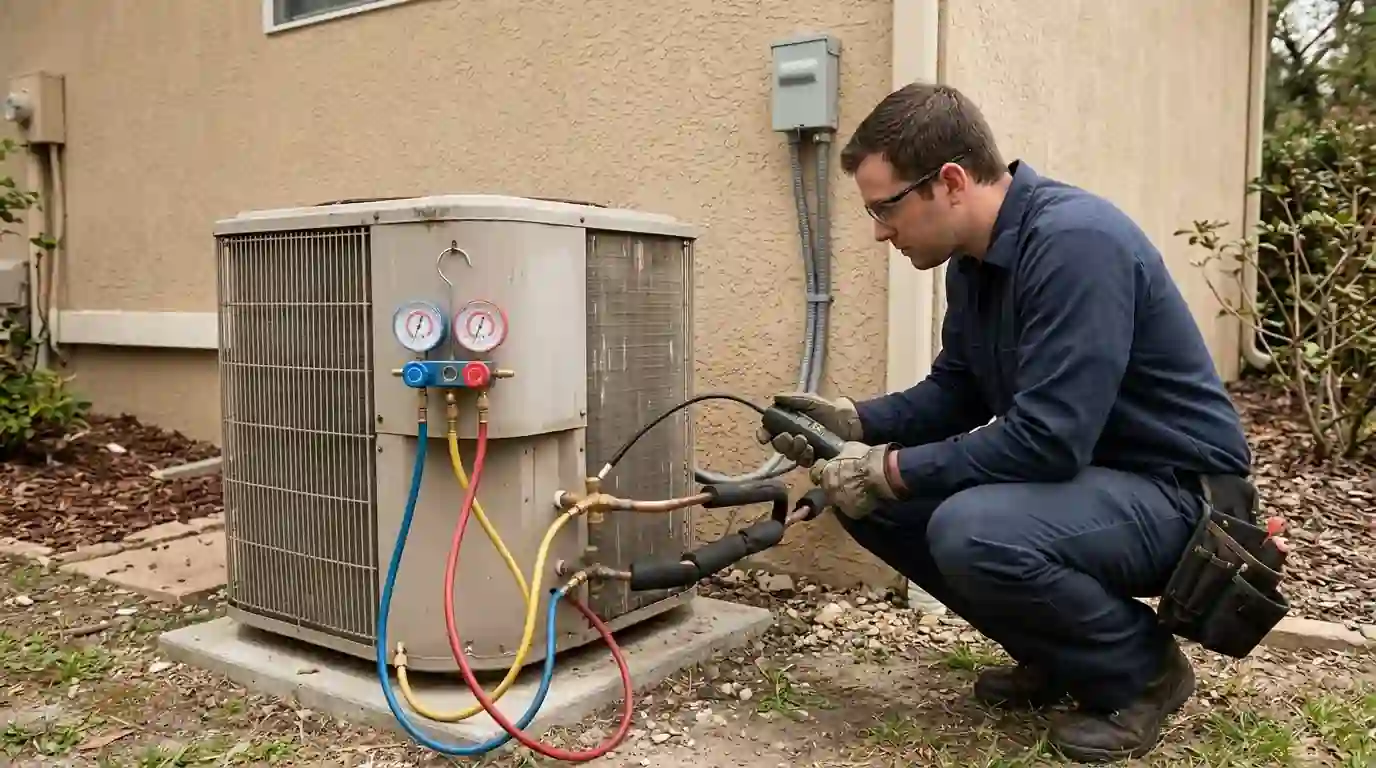
If your AC needs refrigerant, it has a leak, because the system is sealed and does not use refrigerant up. Marco's locates the leak with an electronic detector, bubble solution or a nitrogen pressure test, repairs it by brazing, replacing a valve core or swapping the leaking part, then pulls a deep vacuum and recharges by weight. We quote before any repair begins.
Refrigerant Leak Repair
A lot of homeowners are told their AC is just a little low and needs a top-off every summer. That is like adding air to a tire with a nail in it every Monday. The refrigerant in your system circulates in a closed loop. If the level drops, it went somewhere, and it will keep going until the hole gets fixed.
Low refrigerant does more than reduce cooling. The compressor relies on returning refrigerant gas to stay cool, so an undercharged system runs hot and can fail early. The indoor coil can ice over and drip water when it thaws. Marco's leak repair service focuses on finding the actual leak point and fixing it, so you stop paying for refrigerant every year.
Warning signs
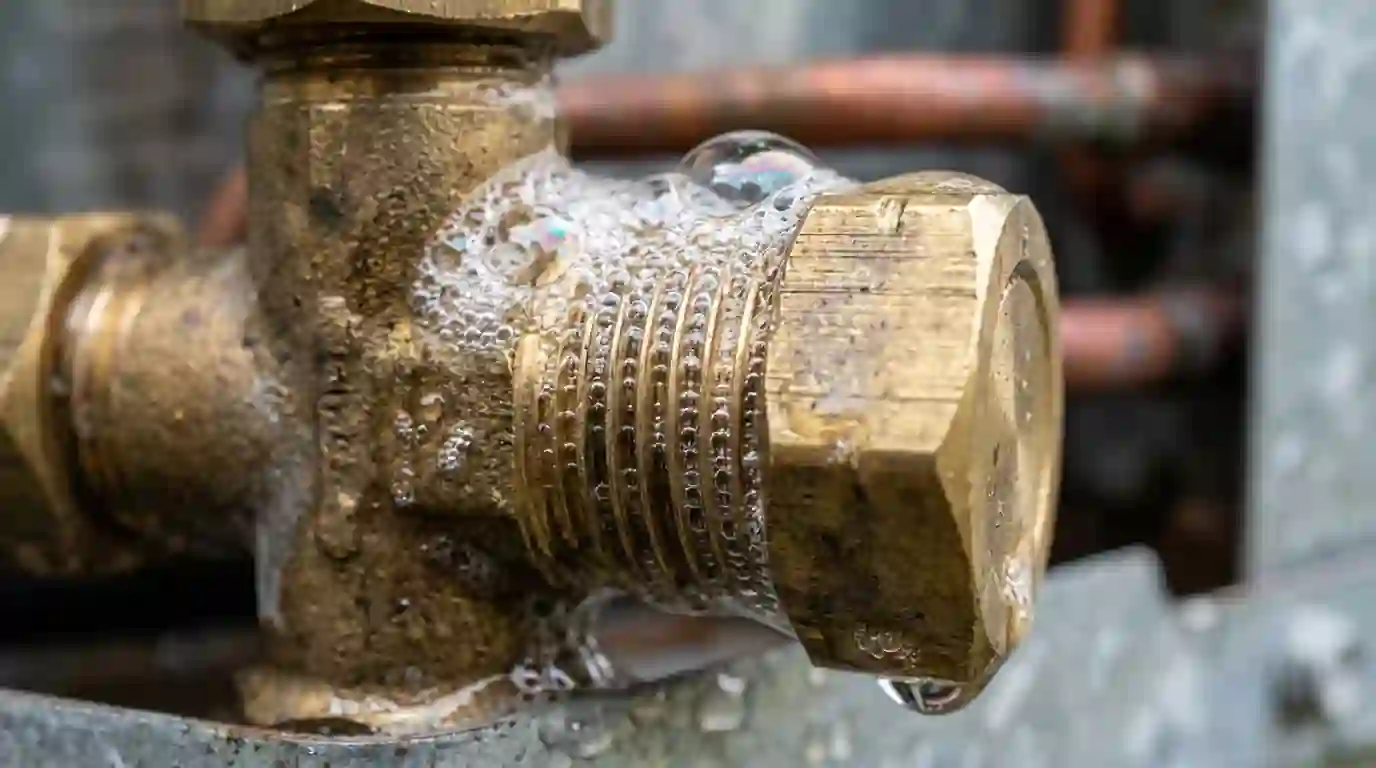
A faint hiss or bubbling sound near the outdoor unit or the indoor coil can be gas escaping from a cracked joint or a loose fitting. Larger leaks are sometimes audible.
Low refrigerant drops the pressure in the evaporator so far that moisture on the coil freezes. You may see frost on the copper line at the outdoor unit.
Refrigerant carries compressor oil through the system. Where it leaks out, the oil stays behind, leaving a dark, dusty, greasy spot on a joint, valve or coil.
A slow leak shows up as a gradual loss of cooling. The system runs longer and longer each afternoon, but the house never quite reaches the thermostat setting.
If a technician has added refrigerant in a past season without finding a leak, the leak is almost certainly still there. Each top-off only resets the clock.
Ice that forms on a low-charge coil melts when the system shuts off, sometimes faster than the drain can carry it away, leaving water around the furnace or air handler.
Leaks tend to show up in the same places. Evaporator coils develop pinholes from formicary corrosion, a slow chemical attack caused by household chemicals, cleaning products and off-gassing in the air. Schrader valve cores at the service ports can loosen or wear. Flare fittings on mini splits and some older systems work loose with thermal expansion. Brazed joints can crack from vibration over years.
Outdoor condenser coils corrode too, especially when fertilizer, pool chemicals or dog urine reach the fins. Line sets running through an attic or along a wall may have been kinked or rubbed against a metal edge at installation, and the copper wears through over time.
We start with the system running and an electronic leak detector, a heated-diode or infrared sensor that reacts to tiny amounts of refrigerant. It is moved slowly along joints, valves and coil surfaces. Suspected spots get a bubble solution to confirm, since detectors can sometimes react to cleaning sprays or dust.
When the detector cannot pinpoint a small leak, we recover the remaining refrigerant and pressurize the system with dry nitrogen to a test pressure, then watch a gauge to see if it holds. A drop confirms a leak and lets us isolate it to the indoor or outdoor side. On a few systems, ultraviolet dye can help track a slow leak over days.
Some leaks have a simple fix. A worn Schrader core can be replaced for a modest price. A cracked accessible joint can be cleaned and rebrazed with a nitrogen purge to keep scale out of the system. A rubbed line set can be cut and spliced.
Coil leaks are different. Pinhole corrosion in an evaporator usually means more pinholes are forming nearby, so patching one spot rarely lasts. In that case, we recommend replacing the coil. On R-22 systems, the price of reclaimed refrigerant changes the math, and replacing the whole system may cost less over a few years than repairing and recharging.
Step by step
Gauges and temperature probes measure superheat and subcooling to confirm the system is actually undercharged, not starved for airflow from a dirty filter or a weak blower.
An electronic detector and bubble solution are used along every accessible joint, valve and coil surface, indoors and outdoors, until the leak point is found.
For hidden leaks, we recover the refrigerant and pressurize with nitrogen to confirm and isolate the leak to one section of the system.
Depending on location, we rebraze under nitrogen, replace a valve core or fitting, splice the line set, or replace the leaking coil after you approve the quote.
The system is evacuated with a vacuum pump and micron gauge to remove moisture, then charged by weight to the factory spec and checked under load.
Typical prices
Leak repair cost depends mostly on where the leak is and what refrigerant your system uses. These typical 2026 ranges cover Pasadena and the surrounding San Gabriel Valley. The final price comes after the technician finds the leak, and we quote it before the repair starts.
| Job | Typical range | What is included |
|---|---|---|
| Leak search with electronic detector | $227 to $468 | Detector and bubble test of all accessible joints, valves and coils |
| Nitrogen pressure test | $318 to $592 | Added when a leak is too small or hidden for a detector alone |
| Valve core or fitting repair | $264 to $587 | Simple accessible fixes, plus refrigerant to restore the full charge |
| Brazed joint or line set repair | $486 to $1,315 | Includes nitrogen purge, filter drier, vacuum and recharge |
| R-410A recharge per pound | $87 to $164 | R-22 reclaimed refrigerant is priced much higher when available |
Price moves with leak location, how much of the system has to open up, refrigerant type and pounds needed. Attic coils and rooftop package units take more labor than a leak at the outdoor service valve. Compare other jobs in our Pasadena HVAC price guide.
We see a lot of corroded evaporator coils in Pasadena homes where the air handler sits in a garage alongside paint cans, cleaners, pool chemicals and gardening supplies. Fumes from those products can speed up formicary corrosion on copper. Moving chemicals away from the furnace closet and keeping the return sealed helps a new coil last longer.
Systems that went in during the 1990s and early 2000s in Pasadena, Arcadia and San Marino often still run on R-22. When those systems leak, the refrigerant cost becomes the deciding factor. Newer installs running R-410A, and the latest R-454B and R-32 equipment, are far cheaper to recharge. If you are unsure which refrigerant you have, the data plate on the outdoor unit lists it, and we can read it for you over the phone.
Related work
Replace a corroded or leaking indoor AC coil with a matched one, a fresh drain pan and a proper vacuum and recharge.
Learn moreWarm air, a humming outdoor unit or a tripped breaker: we find the failed part and fix most AC problems in one visit.
Learn moreWe test windings, start components and pressures to confirm a dead compressor, then replace it and protect the new one from the same fate.
Learn moreRepairs for dripping indoor heads, blinking error codes, dead zones, noisy fans and mini-splits that blow air but do not cool.
Learn moreOur technicians handle this work all over Pasadena and the surrounding San Gabriel Valley. A few of the places we cover:
Questions
It depends on the age, the refrigerant type and where the leak is. A loose valve core on a 10 year old R-410A system is an easy, sensible repair. A corroded coil on a 20 year old R-22 unit often costs a large share of a new system. We give you the repair price next to the replacement price so you can compare.
Adding refrigerant without fixing the leak means paying again next season. Meanwhile, the system runs undercharged between recharges, which raises compressor temperatures and can cause an expensive failure. Federal rules also discourage repeatedly releasing refrigerant. Finding and fixing the leak once is almost always the cheaper path over time.
A leak at an accessible valve or joint can often be found and repaired in two to four hours, including vacuum and recharge. Hidden leaks needing a nitrogen pressure test may take longer. If the coil must be replaced, the job usually becomes a second visit once the matched coil arrives.
Refrigerant leaking slowly from a home AC is not usually a health risk in a ventilated space, but it can displace oxygen in a small closed room and should not be breathed in quantity. Newer A2L refrigerants are mildly flammable, which is why modern systems include leak sensors. If you smell something unusual or hear loud hissing, turn the system off.
Yes. Mini split leaks often happen at the flare connections behind the indoor head or at the outdoor unit. We test those joints, remake flares with the correct torque, or replace the line set section if needed. The system is then evacuated and charged by weight to the manufacturer's specification.
Call our Pasadena line any hour. A person answers, asks a few questions about the system, and gives you an arrival window.