Ductless Mini-Split Installation
Ductless heat pumps for Craftsman bungalows, additions, converted garages and hot upstairs rooms, with head styles chosen room by room.
Learn moreCooling
AC RepairAC InstallationAC ReplacementAC Tune-Up & MaintenanceRefrigerant Leak RepairAC Compressor ReplacementEvaporator Coil ReplacementAC Water Leak & Drain Line RepairHeating
Furnace RepairFurnace InstallationFurnace ReplacementFurnace Tune-Up & MaintenanceWall Furnace RepairFloor Furnace ReplacementBoiler & Radiant Heat RepairHeat Pumps & Ductless
Heat Pump RepairHeat Pump InstallationHeat Pump MaintenanceGas Furnace to Heat Pump ConversionDuctless Mini-Split InstallationDuctless Mini-Split RepairADU Heating & CoolingDucts & Attic
Duct RepairDuctwork ReplacementAir Duct CleaningDuct Sealing & Leak TestingWhole House Fan InstallationAttic InsulationIndoor Air
Indoor Air Quality TestingWhole-Home Air PurifiersUV Air SanitizersWhole-Home HumidifiersSystems & Commercial
Smart Thermostat InstallationHVAC Zoning SystemsFull HVAC System ReplacementHVAC InspectionHVAC Maintenance Plans24/7 Emergency HVAC RepairCommercial HVAC RepairCommercial HVAC MaintenanceRooftop & Package Unit RepairPasadena
Pasadena (all of the city)Bungalow HeavenMadison HeightsSan RafaelLinda VistaHastings RanchOak KnollAnnandaleProspect ParkHistoric HighlandsGarfield HeightsLamanda ParkSouth ArroyoChapman WoodsNearby cities
AltadenaSouth PasadenaSan MarinoArcadiaSierra MadreMonroviaDuarteGlendaleLa Canada FlintridgeLa CrescentaBurbankAlhambraSan GabrielTemple CityMonterey ParkRosemeadEl MonteAzusaGlendoraCovinaWest CovinaLos AngelesMontroseTujungaBaldwin ParkSouth El MonteMontebelloWhittierHacienda HeightsRowland HeightsLa PuenteWalnutDiamond BarSan DimasLa VerneClaremontPomonaUplandRancho CucamongaOntarioMontclairChino HillsBreaFullertonCounties
Los Angeles CountySan Bernardino CountyOrange CountyHeat Pumps & Ductless in Pasadena, CA
Repairs for dripping indoor heads, blinking error codes, dead zones, noisy fans and mini-splits that blow air but do not cool.
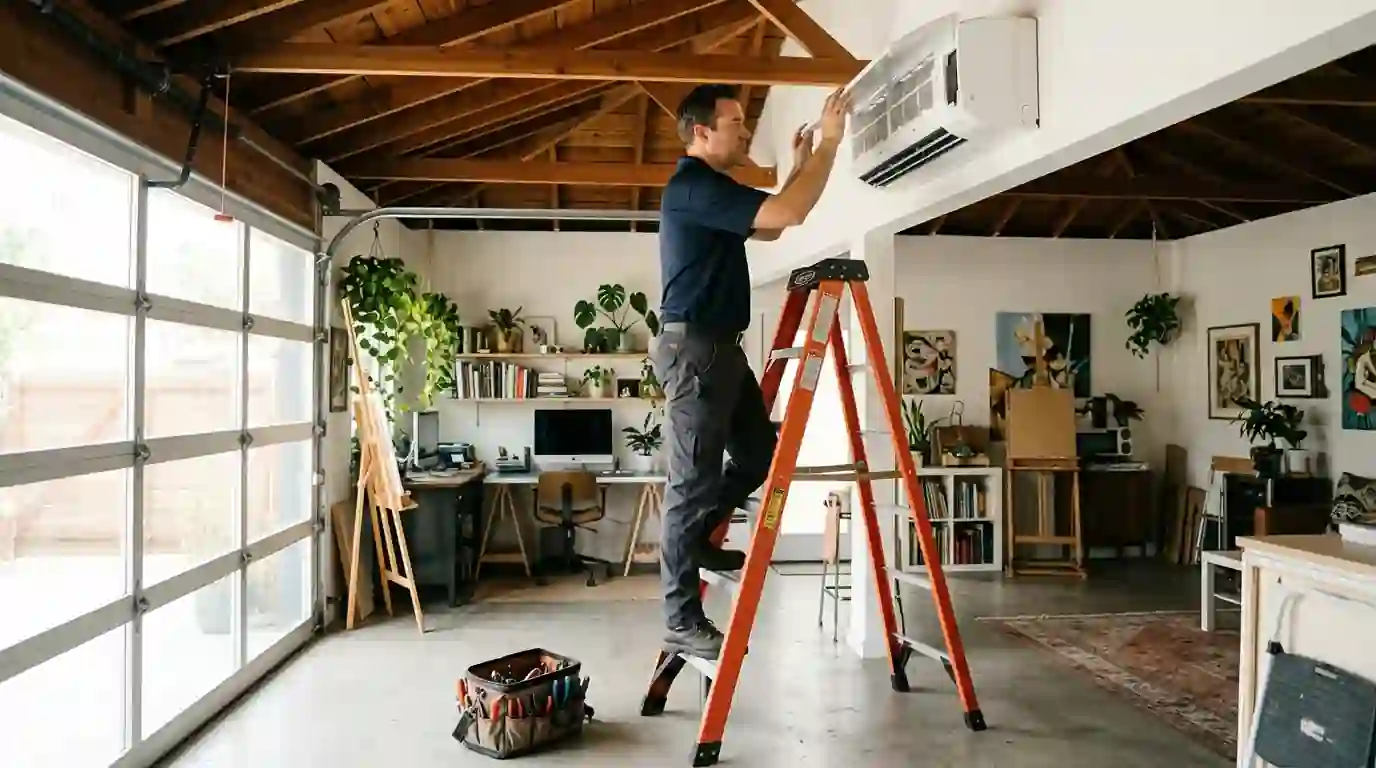
Most mini-split problems in Pasadena are a clogged drain, a dirty blower wheel, a failed condensate pump, a communication fault between heads and the outdoor unit, a bad sensor, or a slow refrigerant leak at a flare joint. Marco's reads the error code, checks it with meters, and quotes the repair before starting. Call (626) 879-0711, 24/7.
Ductless Mini-Split Repair
Ductless mini-splits are reliable, but they fail in their own ways. An indoor head that drips water down the wall, a remote that shows a blinking light, or a zone that blows air but never cools are the calls we see most. Because each head is its own small air handler with a fan, coil, drain pan and circuit board, a problem in one room does not always mean a problem with the whole system.
Marco's Heating & Air repairs single zone and multi zone mini-splits from the major manufacturers across Pasadena and the San Gabriel Valley. Our technicians carry the meters and tools to read communication signals, check thermistors and test inverter boards, plus common parts like condensate pumps, drain hoses and capacitors for older models. We explain what failed and why, and give you a price before any work begins.
Warning signs
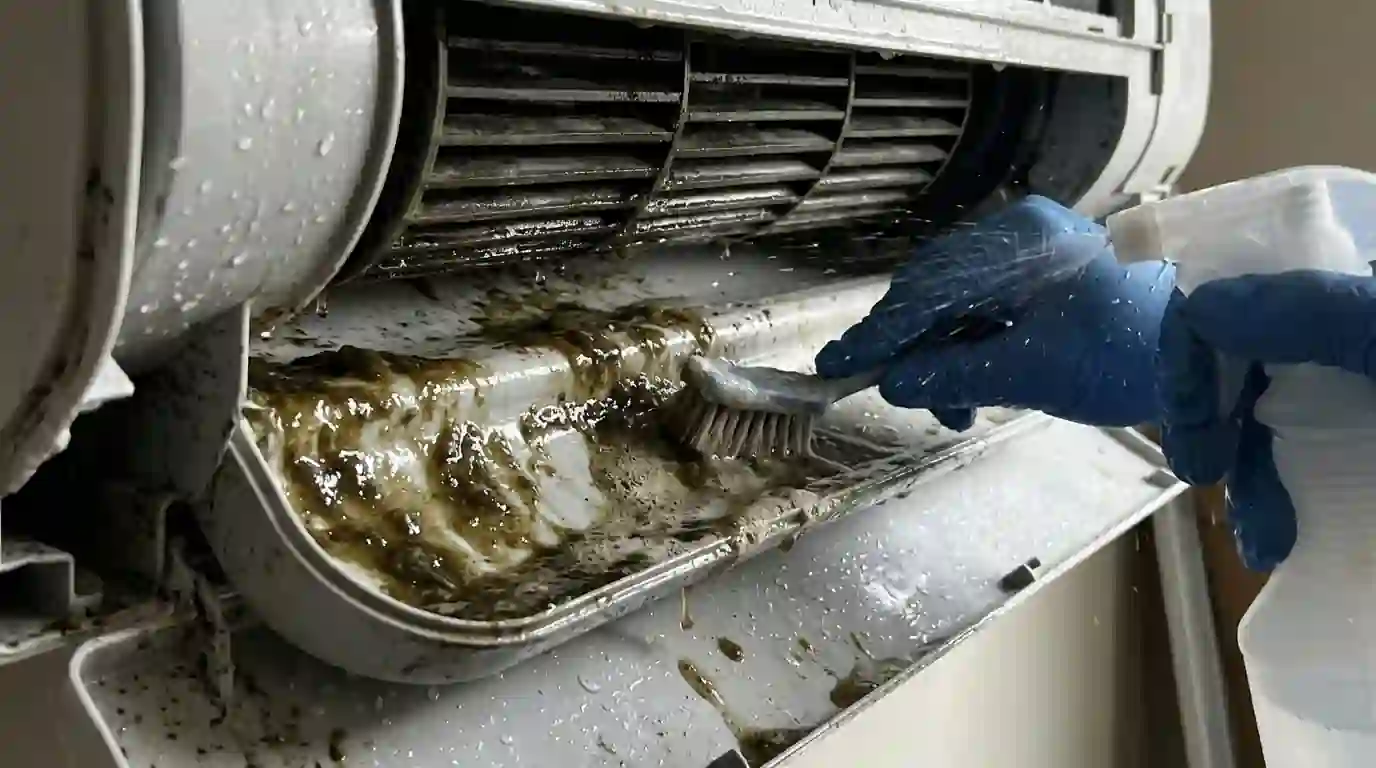
A clogged drain line, a slime filled drain pan, a failed condensate pump or a head mounted slightly off level can push water out of the bottom of the unit.
Mini-splits report faults through blinking LEDs or codes on the display. The pattern points to a sensor, communication, pressure or inverter problem worth diagnosing.
Low refrigerant, a stuck expansion valve, a dead outdoor fan or a compressor that will not start can leave the indoor fan blowing room temperature air.
Mold and dust build up on the blower wheel and coil inside the head. The smell is strongest when the unit first starts in cooling mode.
On a multi zone system, a single dead head often points to that head's board, its communication wire, or a valve in the outdoor unit for that zone.
A cracked louver motor, a loose panel, a blower wheel out of balance or debris in the outdoor fan can all cause new sounds worth checking before they worsen.
Each brand uses its own code list, and the same code can mean different things on different models. A code tells us where to start, not what to replace. A communication error, for example, can be a bad indoor board, a bad outdoor board, a loose wire at the terminal block, or water in a line set junction outside. Swapping boards on a guess is how mini-split repairs get expensive.
We look up the code for your exact model, then test the circuit it points to. That may mean checking the DC signal on the communication wire, measuring thermistor resistance against a temperature chart, or reading compressor winding resistance. Many units also store a fault history that shows whether a problem is new or has been happening for weeks.
Water leaks are the most common mini-split complaint in Pasadena summers. In cooling mode, the indoor coil pulls moisture out of the air and drops it into a pan that drains through a small hose. Dust, pet hair and the slime that grows in that warm wet pan slowly block the outlet. The pan overflows and water runs down the wall, often behind the paint where it damages drywall.
Ceiling cassettes and heads mounted on inside walls often use a condensate pump. Those small pumps have a float switch that can stick, a check valve that clogs, or a motor that simply wears out. We clean the pan and drain, check the slope of the line, test the pump and float, and replace the pump when needed. A head that leaks because it was mounted slightly tilted gets re-leveled.
Mini-splits connect with flare fittings at the head and the outdoor unit. A flare that was not torqued correctly or was made without the right tools can leak slowly for years. Low charge shows up as weak cooling, ice on the indoor coil, or a low pressure fault code. We test flare joints first, then the coils, and repair the leak before recharging rather than simply topping off.
The outdoor unit holds the inverter compressor, the inverter board, the fan motor and the electronic expansion valves. Heat, dust and power surges are hard on that board. We check incoming voltage, the board's DC bus, fan motor operation and compressor windings before deciding whether a board, motor or compressor is the real failure.
Step by step
When you call, tell us the brand, model if visible, and any blinking pattern or code. That helps the technician bring the right parts and information for your system.
The technician opens the indoor unit, checks filters, coil, blower wheel and drain pan, and looks for water damage, slime or broken louvers.
Meters are used on the communication line, thermistors, power supply, fan motors and compressor so the code is confirmed with real readings.
You get the cause, the part, the price and the timing. If a factory board has to be ordered, we tell you how long it usually takes to arrive.
After the repair, every zone on the system runs in cooling and heating so we know the fix did not leave another head with a problem.
Typical prices
These are typical 2026 ranges for mini-split repairs in Pasadena and the San Gabriel Valley. Brand, part availability, the number of zones and how hard the head is to reach all affect the price. We quote the price before we start the work.
| Job | Typical range | What is included |
|---|---|---|
| Diagnostic visit with code testing | $119 to $213 | Code lookup, meter testing and a clear finding for one system |
| Drain clearing and blower wheel cleaning | $227 to $489 | Fixes most dripping heads and musty smells, priced per indoor head |
| Condensate pump replacement | $289 to $547 | Pump, float, tubing and testing for cassettes and inside wall heads |
| Flare leak repair and recharge | $437 to $1,180 | Includes leak test, new flare, vacuum and weighed refrigerant charge |
| Indoor or outdoor control board | $487 to $1,640 | Factory board, installation and full system test across all zones |
Price moves with brand and model age, whether parts are stocked locally, ladder or ceiling access, how many zones share the outdoor unit, and after-hours timing. Manufacturer parts warranties may cover some board or compressor failures. Compare other jobs in our Pasadena HVAC price guide.
Pasadena has seen a lot of mini-split installs over the past decade, especially in Craftsman bungalows, converted garages and backyard ADUs. Some were installed well. Others were installed with flare joints made by hand without a torque wrench, outdoor units set on the ground with no pad, or drain lines that run uphill for a few inches. Many of our repair calls trace back to those install details, and we fix the cause, not just the symptom.
Our summers push mini-splits hard, and dust from Santa Ana winds collects quickly on outdoor coils and indoor filters. After smoke from the Eaton Fire, many Altadena and east Pasadena owners found their heads smelled of smoke or had soot on the blower wheel. A careful cleaning of the wheel, coil and drain pan usually clears it. We also check that washable filters are rinsed regularly, since a clogged filter is behind many frozen coil calls.
Related work
Ductless heat pumps for Craftsman bungalows, additions, converted garages and hot upstairs rooms, with head styles chosen room by room.
Learn moreA two-mode tune-up for Pasadena heat pumps: coil cleaning, electrical tests, defrost checks, drain flushing and a clear report on condition.
Learn moreWe trace refrigerant leaks with electronic detectors, bubble tests and nitrogen pressure, then repair and recharge by weight.
Learn moreWe measure particles, humidity, CO2, VOCs and carbon monoxide in your home, find the sources and explain what would actually help.
Learn moreOur technicians handle this work all over Pasadena and the surrounding San Gabriel Valley. A few of the places we cover:
Questions
The usual cause is a clogged drain pan or drain hose, often from slime that grows in the warm wet pan during summer. A failed condensate pump, a kinked line outside, or a head mounted slightly off level can also push water out. Turn the unit off to limit damage and call (626) 879-0711 so we can clean the drain and test the pump.
Sometimes. A power blip during a Santa Ana wind storm can trigger a code that clears after the breaker is turned off for a few minutes and back on. If the code returns, something is actually failing. Do not keep resetting it, because some faults, such as high pressure or compressor overcurrent, protect parts that get damaged by repeated restarts.
Drain cleaning, pump replacement, sensors and many electrical repairs take one to three hours. Flare leak repairs with evacuation and recharge take a bit longer. Factory boards and some motors for less common brands may need to be ordered, which usually takes a few business days. We give you the expected timing when we quote the repair.
For drains, pumps, sensors and fan motors, almost always. For a failed compressor on a unit over ten years old, a replacement head and outdoor unit may cost not much more than the repair. Since ADU systems are usually single zone, a new system can often be installed quickly. We show you both prices so you can decide.
Dust and moisture collect on the blower wheel and coil inside the head, and mold grows on that layer, especially after a humid spell or a period when the unit sat unused. The smell is strongest at startup. Rinsing filters helps, but a full cleaning of the blower wheel, coil and drain pan is what removes the source.
Call our Pasadena line any hour. A person answers, asks a few questions about the system, and gives you an arrival window.