Duct Repair
We find crushed, torn and disconnected attic ducts, fix them with mastic and new flex, and check airflow before we leave.
Learn moreCooling
AC RepairAC InstallationAC ReplacementAC Tune-Up & MaintenanceRefrigerant Leak RepairAC Compressor ReplacementEvaporator Coil ReplacementAC Water Leak & Drain Line RepairHeating
Furnace RepairFurnace InstallationFurnace ReplacementFurnace Tune-Up & MaintenanceWall Furnace RepairFloor Furnace ReplacementBoiler & Radiant Heat RepairHeat Pumps & Ductless
Heat Pump RepairHeat Pump InstallationHeat Pump MaintenanceGas Furnace to Heat Pump ConversionDuctless Mini-Split InstallationDuctless Mini-Split RepairADU Heating & CoolingDucts & Attic
Duct RepairDuctwork ReplacementAir Duct CleaningDuct Sealing & Leak TestingWhole House Fan InstallationAttic InsulationIndoor Air
Indoor Air Quality TestingWhole-Home Air PurifiersUV Air SanitizersWhole-Home HumidifiersSystems & Commercial
Smart Thermostat InstallationHVAC Zoning SystemsFull HVAC System ReplacementHVAC InspectionHVAC Maintenance Plans24/7 Emergency HVAC RepairCommercial HVAC RepairCommercial HVAC MaintenanceRooftop & Package Unit RepairPasadena
Pasadena (all of the city)Bungalow HeavenMadison HeightsSan RafaelLinda VistaHastings RanchOak KnollAnnandaleProspect ParkHistoric HighlandsGarfield HeightsLamanda ParkSouth ArroyoChapman WoodsNearby cities
AltadenaSouth PasadenaSan MarinoArcadiaSierra MadreMonroviaDuarteGlendaleLa Canada FlintridgeLa CrescentaBurbankAlhambraSan GabrielTemple CityMonterey ParkRosemeadEl MonteAzusaGlendoraCovinaWest CovinaLos AngelesMontroseTujungaBaldwin ParkSouth El MonteMontebelloWhittierHacienda HeightsRowland HeightsLa PuenteWalnutDiamond BarSan DimasLa VerneClaremontPomonaUplandRancho CucamongaOntarioMontclairChino HillsBreaFullertonCounties
Los Angeles CountySan Bernardino CountyOrange CountyDucts & Attic in Pasadena, CA
We measure duct leakage with a calibrated fan, seal joints with mastic, and test again so you see the actual improvement.
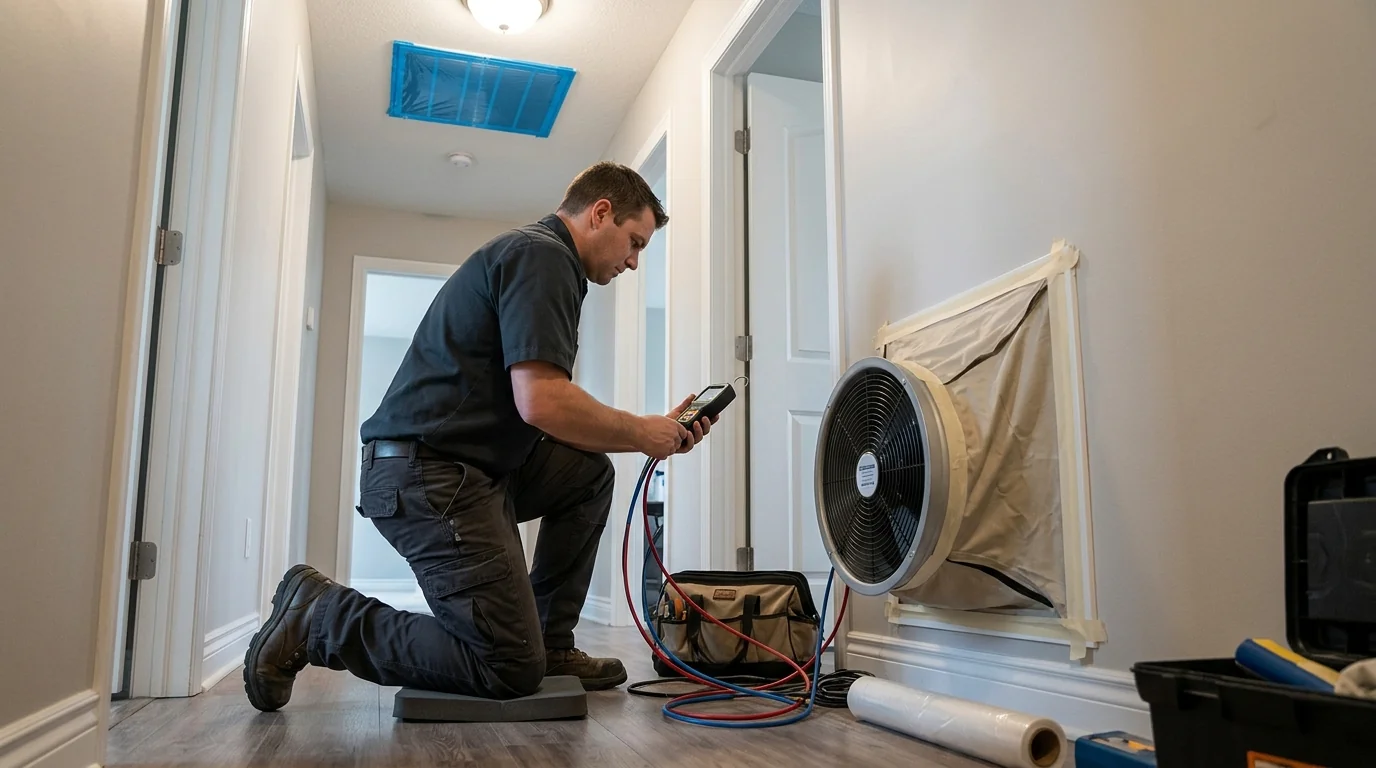
Duct sealing closes the gaps where cooled or heated air escapes into the attic and where dusty attic or garage air gets pulled in. In Pasadena we start with a duct leakage test using a calibrated fan that pressurizes the ducts and measures how much air escapes. Then we seal joints, boots and plenums with mastic and test again to show the result.
Duct Sealing & Leak Testing
Every duct system leaks somewhat. The question is how much, and where. A system that loses a large share of its airflow through gaps in the attic makes the AC work harder on the hottest Pasadena afternoons, and a leaky return can pull attic dust, insulation fibers and very hot air straight into the house. You cannot see most of these leaks from the hallway, and you often cannot find them by looking around the attic either, because they hide under insulation, behind plenums and inside wall cavities.
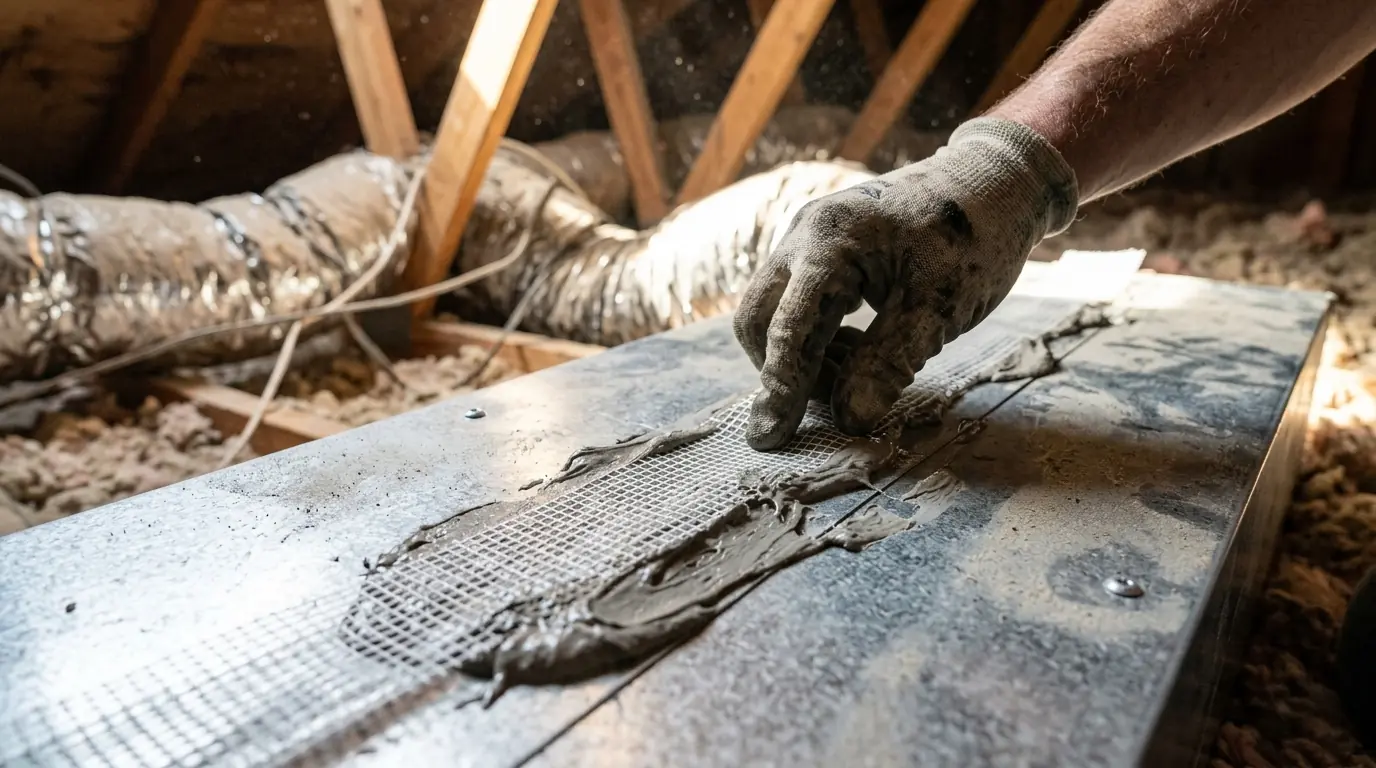
That is why Marco's measures before we seal. A duct leakage test tells us how leaky the system is in numbers, and a smoke pencil or fog test shows where the air is escaping. We then seal the leaks with water-based mastic and fiberglass mesh, fasten loose connections, seal boots to the drywall, and test again. You get both numbers, so you know exactly what the work accomplished. It is the same kind of test California's Title 24 code calls for on many equipment replacements.
Warning signs
Leaks add up along a run, so rooms at the end of long ducts get the least air. A comfortable hallway and a warm back bedroom is a classic pattern.
Dark dust outlines on the ceiling around supply registers usually mean the boot is not sealed to the drywall and air is moving through the gap.
If the air handler is in the garage and you smell car exhaust, paint or gasoline indoors, the return or cabinet may be leaking and pulling garage air in. This needs prompt attention.
When the AC runs nonstop through a 100 F afternoon and the house still drifts warmer, supply leaks in a very hot attic are a common cause worth testing.
If a recent equipment change failed its HERS duct leakage verification, the ducts need sealing before the permit can be closed out.
Cloth duct tape peeling off joints, gaps at the plenum, or flex runs barely hanging on to collars are visible leaks, and there are usually more you cannot see.
The test uses a calibrated fan, often called a duct blaster, connected to the return grille or the air handler. We seal off every supply register and return with tape and covers, then the fan pressurizes the duct system to 25 pascals, roughly the pressure the ducts see when the blower runs. The gauge reads how many cubic feet per minute the fan has to push to hold that pressure. That number is the leakage.
We compare the result with the system's airflow to see how leaky it is relative to its size. While the system is pressurized, we use a smoke pencil or theatrical fog at joints, boots and the air handler cabinet to find the specific leaks. That way the sealing work goes where it matters instead of everywhere at random.
Cloth duct tape is the worst material for sealing ducts, despite the name. Its rubber adhesive dries out in attic heat and lets go. Foil tape with a listed rating holds better on clean metal, but on a dusty or oily surface it can lift over time. Water-based mastic, brushed on thick and reinforced with fiberglass mesh over wider gaps, bonds to metal and duct board and stays flexible through years of heat.
Some ducts run where no one can crawl: inside walls in two-story homes, in tight soffits in a Spanish Revival house, or under a low-slope roof with almost no attic. For those runs we can use an interior aerosol sealing process that blows sealant particles through the pressurized ducts so they collect and build up at the leaks from the inside. It works on small and medium gaps, not on a duct that is disconnected or crushed, and we tell you after testing whether your system is a good fit.
Sealing also has a safety side. A leaky return in the same closet or garage as a gas furnace or water heater can depressurize that space and interfere with venting. After sealing, we check that gas appliances still draft properly with the blower running and that the return pulls only from the house.
Step by step
We seal all registers, connect the calibrated fan, pressurize the ducts to 25 pascals and record the leakage number before touching anything.
With the system still pressurized, we use smoke and a careful attic walk to locate leaks at the plenum, fittings, boots and the air handler cabinet.
You see the test result, photos of the main leaks and the price to seal them. We quote the price before we start the work.
Joints get mastic and mesh, flex connections get new straps and mastic, boots are sealed to drywall, and loose runs are reattached and supported.
We run the same test again and show you the before and after numbers, then confirm that gas appliances still vent properly with the system running.
Typical prices
Testing is a fixed amount of setup and measurement. Sealing depends on how many leaks there are and how hard they are to reach. A ranch house with an open attic is faster than a two-story home with ducts in walls. These are typical ranges, and the final price comes after the technician sees the system.
| Job | Typical range | What is included |
|---|---|---|
| Duct leakage test only | $238 to $415 | Calibrated fan test, leak location and written results for one system |
| Test plus hand sealing, open attic | $687 to $1,540 | Mastic at joints, boots and plenums, then a retest to confirm |
| Interior aerosol sealing | $1,865 to $3,290 | For ducts in walls or soffits that cannot be reached by hand |
| Sealing after a failed HERS test | $389 to $1,145 | Work to meet the Title 24 leakage target before the rater returns |
Price moves with the number of supply and return runs, attic or wall access, how many leaks the test finds, whether sections must be reattached or replaced, and whether more than one system is tested. Compare other jobs in our Pasadena HVAC price guide.
Attic ducts here work in some of the hardest conditions in Southern California. On a summer afternoon in the high 90s or over 100 F, the air in a Pasadena attic can be far hotter than outdoors, so every leak on the supply side throws away cooling right where the heat is worst. On the return side, a leak pulls that superheated air back into the system, along with dust. Sealing tends to pay off most in summer here, but it also helps the furnace on cold winter nights in the 30s and 40s.
Many Pasadena homes also put the air handler in the garage, especially postwar ranch homes in Hastings Ranch and Lamanda Park. A leaky return in a garage can draw in exhaust and fumes, so we treat garage installs carefully. When you replace an AC, furnace or heat pump, Title 24 typically requires a duct leakage test, and we handle the permit where the city requires one. Ask about current PWP, SCE or SoCalGas rebates for duct sealing when funding is open.
Related work
We find crushed, torn and disconnected attic ducts, fix them with mastic and new flex, and check airflow before we leave.
Learn moreNew attic ductwork sized for your rooms and equipment, sealed with mastic and leak tested before we call the job done.
Learn moreAir sealing first, then blown-in insulation to the right depth, so your ceilings stop radiating attic heat into the rooms.
Learn moreSwap a worn-out air conditioner for a correctly sized SEER2 system, with duct testing and permit work handled in one job.
Learn moreOur technicians handle this work all over Pasadena and the surrounding San Gabriel Valley. A few of the places we cover:
Questions
A duct blaster is a calibrated fan that pressurizes your sealed duct system to a set pressure and measures how much air leaks out. Testing first gives us a real number instead of a guess, shows where to focus the work, and lets us prove the improvement afterward. It is also the same type of test used for Title 24 verification on equipment replacements.
If the ducts are in decent shape and staying, sealing them as part of the AC replacement makes sense, and the code will usually call for a passing leakage test anyway. If they are old flex with crumbling jackets, replacing them may make more sense than sealing. We test, look at the condition, and tell you which route gets a better result for the money.
Mastic bonds to the duct surface and stays flexible through years of attic heat, so it keeps sealing as the ducts expand and contract. Cloth duct tape dries out and peels, often within a few summers in a hot attic. Foil tape has uses, but on dusty or uneven joints, mastic reinforced with fiberglass mesh is the more durable seal.
It can help. A leaky return or cabinet in a garage can pull in car exhaust, solvent fumes and dust, and a return leak in a closet with a gas furnace or water heater can interfere with venting. After sealing, we test that gas appliances still draft properly with the blower running. If we see any combustion concern, we explain it and address it before leaving.
A test alone takes about one to two hours, including covering the registers and setting up the fan. Testing plus hand sealing in an accessible attic usually takes a half day to a full day. Interior aerosol sealing takes most of a day, because the system is prepped, sealed from the inside, and tested several times during the process.
Call our Pasadena line any hour. A person answers, asks a few questions about the system, and gives you an arrival window.