HVAC Zoning Systems
Motorized dampers and a zone panel so upstairs bedrooms, downstairs rooms and additions each get their own thermostat.
Learn moreCooling
AC RepairAC InstallationAC ReplacementAC Tune-Up & MaintenanceRefrigerant Leak RepairAC Compressor ReplacementEvaporator Coil ReplacementAC Water Leak & Drain Line RepairHeating
Furnace RepairFurnace InstallationFurnace ReplacementFurnace Tune-Up & MaintenanceWall Furnace RepairFloor Furnace ReplacementBoiler & Radiant Heat RepairHeat Pumps & Ductless
Heat Pump RepairHeat Pump InstallationHeat Pump MaintenanceGas Furnace to Heat Pump ConversionDuctless Mini-Split InstallationDuctless Mini-Split RepairADU Heating & CoolingDucts & Attic
Duct RepairDuctwork ReplacementAir Duct CleaningDuct Sealing & Leak TestingWhole House Fan InstallationAttic InsulationIndoor Air
Indoor Air Quality TestingWhole-Home Air PurifiersUV Air SanitizersWhole-Home HumidifiersSystems & Commercial
Smart Thermostat InstallationHVAC Zoning SystemsFull HVAC System ReplacementHVAC InspectionHVAC Maintenance Plans24/7 Emergency HVAC RepairCommercial HVAC RepairCommercial HVAC MaintenanceRooftop & Package Unit RepairPasadena
Pasadena (all of the city)Bungalow HeavenMadison HeightsSan RafaelLinda VistaHastings RanchOak KnollAnnandaleProspect ParkHistoric HighlandsGarfield HeightsLamanda ParkSouth ArroyoChapman WoodsNearby cities
AltadenaSouth PasadenaSan MarinoArcadiaSierra MadreMonroviaDuarteGlendaleLa Canada FlintridgeLa CrescentaBurbankAlhambraSan GabrielTemple CityMonterey ParkRosemeadEl MonteAzusaGlendoraCovinaWest CovinaLos AngelesMontroseTujungaBaldwin ParkSouth El MonteMontebelloWhittierHacienda HeightsRowland HeightsLa PuenteWalnutDiamond BarSan DimasLa VerneClaremontPomonaUplandRancho CucamongaOntarioMontclairChino HillsBreaFullertonCounties
Los Angeles CountySan Bernardino CountyOrange CountySystems & Commercial in Pasadena, CA
Smart thermostats installed with a proper C-wire and the right heat pump or two-stage settings, tested in every mode.
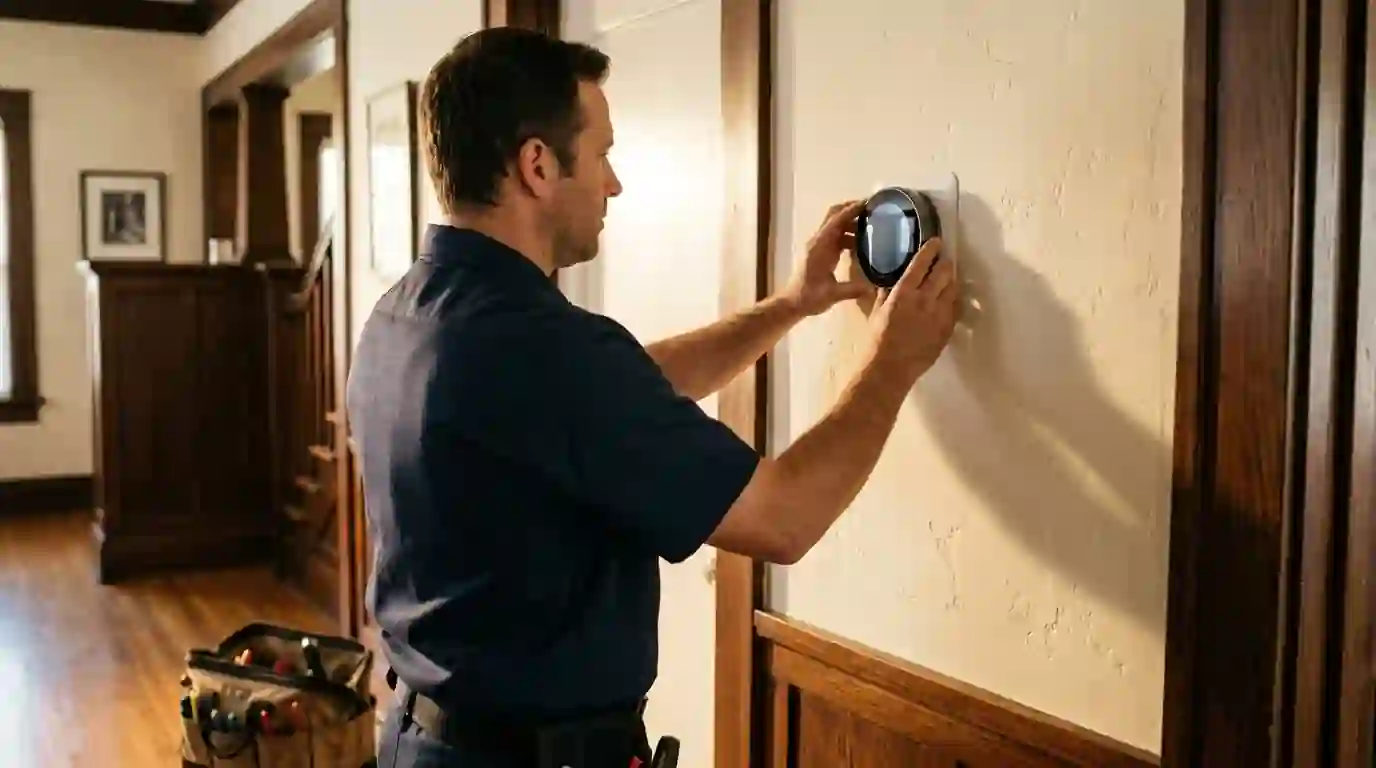
Most smart thermostats need steady 24-volt power from a common wire, called the C-wire, and many older Pasadena homes do not have one at the thermostat. Marco's technicians check your equipment, add a C-wire or power adapter when needed, wire heat pump and multi-stage systems correctly, and test every mode before leaving. A typical install runs $167 to $389 plus the thermostat. Call (626) 879-0711.
Smart Thermostat Installation
A smart thermostat looks like a simple swap: pull the old one off the wall, connect a few wires, download the app. In practice the wiring behind the wall decides whether it works. Older Craftsman and Spanish Revival homes in Pasadena often have a two-wire thermostat for a wall furnace, or a four-wire run added when central air went in decades later. Many of those runs have no spare conductor for constant power, and a thermostat that borrows power from the heating circuit can cause short cycling, chattering relays or a dead screen on hot afternoons.
Marco's handles the full job with our own technicians. We confirm the thermostat model is compatible with your furnace, air handler, heat pump or mini-split before installation, run or adapt the C-wire, set the right equipment profile, and walk you through schedules and app setup. If your system is a gas furnace with a separate AC, a heat pump with backup heat, or a zoned system with a control panel, we wire it to match. Call (626) 879-0711 any hour to set up a visit.
Warning signs
A blank or rebooting display on a smart thermostat usually means it is not getting steady power. Without a C-wire it charges its battery through the heating or cooling circuit, and that trick fails on many systems.
If the furnace or AC starts and stops every few minutes, the thermostat may sit near a supply register or in direct sun, or it may be set with the wrong cycle rate for your equipment type.
Round dial and lever thermostats from the 1960s through 1980s drift several degrees, and some contain a mercury switch. Replacing one gives accurate control, and the old unit needs proper disposal, not the trash can.
A heat pump thermostat wired as a plain furnace control can call the backup electric heat far too often, which drives up PWP or SCE bills on cool January mornings.
When the hallway reads 72 but bedrooms sit at 78, a smart thermostat with remote room sensors can average the readings or favor the rooms you actually use at night.
Remote access lets you check the house during a heat wave or turn the heat on before you return from a trip. It also sends alerts when the system stops reaching temperature.
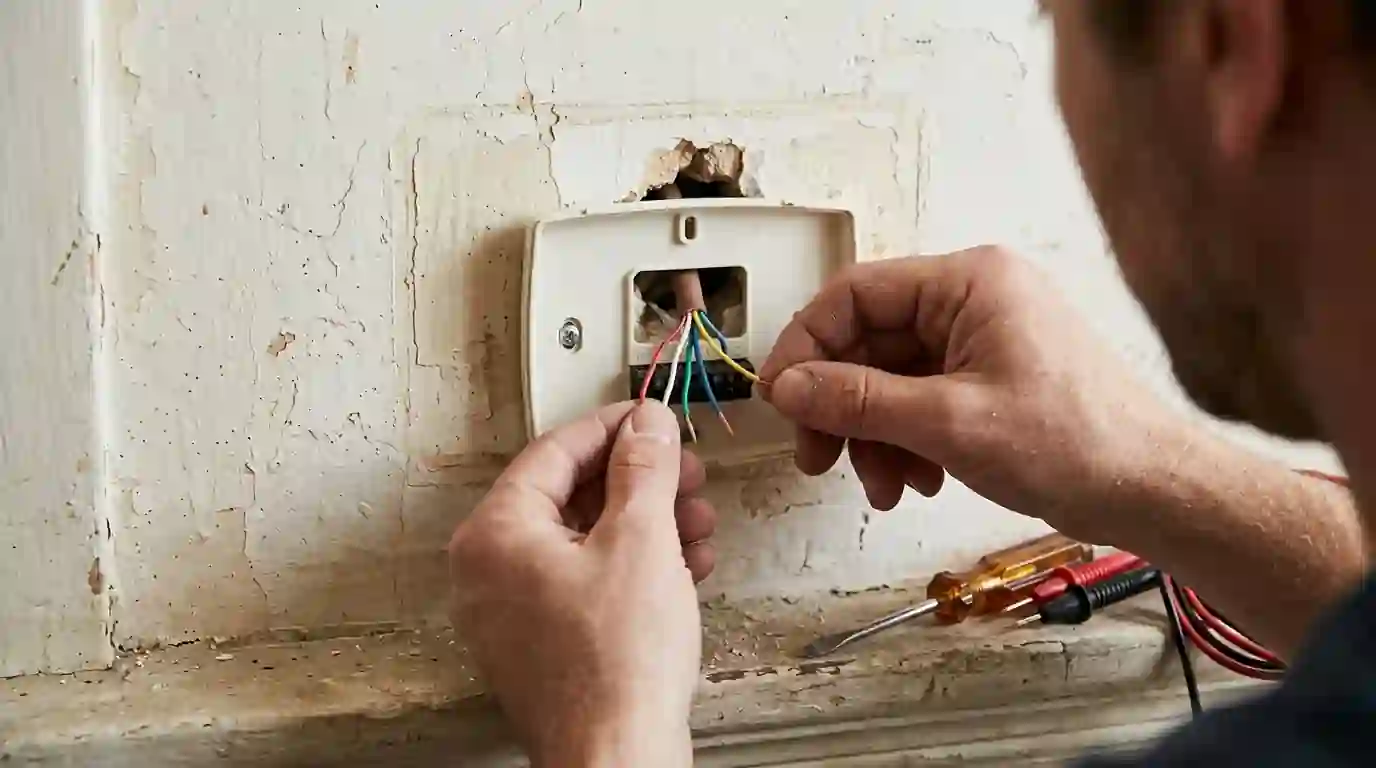
The C-wire, or common wire, completes the 24-volt circuit from the transformer in your furnace or air handler back to the thermostat. Older thermostats ran on batteries or needed no power at all, so installers only pulled the wires they needed: red for power, white for heat, yellow for cooling, green for the fan. A smart thermostat with a Wi-Fi radio and a lit screen needs current all the time. Without a common wire, some models pull small amounts through the heat or cooling wire, which can make relays click or equipment start on its own.
Our technician checks the cable behind the wall first. Many thermostat cables have an unused blue or black conductor folded back, and we connect it at both ends. When there is no spare, the options are a new cable run from the equipment (easier when the furnace is in a hall closet below the thermostat), a C-wire adapter mounted at the control board, or the thermostat maker's power kit. We pick the one that fits your house, not the quickest one.
Heat pump wiring is where most do-it-yourself installs go wrong. A heat pump uses a reversing valve, energized through an O or B terminal, to switch between cooling and heating. Most brands energize the valve in cooling (O), a few in heating (B), and setting it backward gives you cold air when you ask for heat. Then there is auxiliary heat, the electric strips or gas furnace that help on cold nights, and emergency heat for when the outdoor unit fails. Each one needs its own terminal and the right setting in the thermostat.
Two-stage and variable-speed equipment adds more. A two-stage furnace needs W1 and W2 so it can run low fire most of the time, and some communicating systems only work fully with the manufacturer's own control. We read the model numbers on your equipment before recommending a thermostat, so you do not buy one that turns a modern variable-speed system into a single-speed one.
A thermostat reads the air around it, so placement shapes comfort for the whole house. Common problems we see: a thermostat on an exterior wall that bakes in afternoon sun, one next to a kitchen doorway, or one in a hallway that gets no supply air at all. In two-story homes the upstairs often runs warmer than the downstairs thermostat thinks. Wireless room sensors solve much of this without moving the wall unit, and we place them away from lamps, TVs and drafty windows.
When the old thermostat leaves a painted outline or holes larger than the new base, we use a trim plate. If the wall location really is poor, we can relocate the thermostat and patch the cable path, and we tell you what that adds to the price before we start.
A smart thermostat only saves money if the schedule fits how you live. On inland days that reach the high 90s, letting a house float to 85 while you are at work and asking the AC to pull it down at 5 p.m. can mean the system runs flat out through the most expensive hours. If your SCE or PWP plan uses time-of-use pricing, cooling the house a little earlier in the afternoon and letting it coast through the peak often works better. We set a starting schedule with you and show you how to adjust it.
Step by step
We read the model plates on the furnace, air handler, heat pump or condenser and confirm the thermostat you chose supports every stage, then look at the existing cable and the transformer.
Power to the equipment is shut off at the switch or breaker. We photograph and mark the old wiring so the new connections match what each wire actually controls.
We connect a spare conductor, run new cable or install an adapter at the control board so the thermostat gets steady 24-volt power from the common side of the transformer.
The new base goes on level, with a trim plate if needed. We set equipment type, reversing valve, stages, aux heat lockout and cycle rates, then connect it to your Wi-Fi.
We run cooling, heating, fan and backup heat, watching the equipment respond to each call, then walk you through the app, the schedule and the alerts before we leave.
Typical prices
Much of the cost is the thermostat itself, which you can supply or we can provide. Labor depends on how much wiring the house needs. These are typical 2026 ranges for the Pasadena area. The final price is set after the technician sees the system, and we quote the price before we start the work.
| Job | Typical range | What is included |
|---|---|---|
| Standard install, C-wire already present | $167 to $239 | Swap, configuration, Wi-Fi setup and a full test on a single-stage system |
| Install with C-wire adapter or spare conductor | $219 to $389 | Adapter at the control board or an unused wire connected at both ends |
| New thermostat cable run | $343 to $687 | Depends on wall access, attic path and distance to the furnace or air handler |
| Thermostat supplied by Marco's | $129 to $329 | Mid to upper models, depending on features and equipment compatibility |
| Wireless room sensors | $39 to $97 each | Placed in bedrooms or upstairs rooms to balance what the thermostat reads |
Heat pump, dual fuel and zoned systems take longer to wire and configure. Plaster walls in older homes slow a new cable run. A trim plate, a relocation or a failed transformer found during the visit adds to the total, and we tell you before doing it. Compare other jobs in our Pasadena HVAC price guide.
Pasadena's older houses make thermostat work less predictable than newer tracts. A 1920s bungalow may have a wall furnace with a millivolt thermostat, which runs on a tiny current made by the pilot flame and cannot power most smart thermostats at all. Those homes need a compatible millivolt model or a system upgrade first. Postwar ranch homes in Hastings Ranch and Chapman Woods often have a furnace in a hall closet or garage with a short, easy cable run, while homes with an attic air handler need a longer path down through the walls.
Pasadena Water and Power serves electricity inside city limits, and Southern California Edison serves most surrounding cities. Utility programs have at times offered thermostat rebates or peak-day savings events, so ask about current PWP, SCE or SoCalGas rebates when you call. For families rebuilding in Altadena after the Eaton Fire, new homes often get variable-speed heat pumps whose matched controls are best planned during the rebuild, not after. On smoky days, a fan schedule with a good filter keeps indoor air moving through that filter.
Related work
Motorized dampers and a zone panel so upstairs bedrooms, downstairs rooms and additions each get their own thermostat.
Learn moreDiagnosis and repair for heat pumps that will not heat, will not cool, ice up, trip breakers or show inverter fault codes.
Learn moreNo heat on a cold night? We trace the ignition sequence, find the failed part and fix most furnaces in a single visit.
Learn moreTwo visits a year, cooling in spring and heating in fall, so small problems get caught before a heat wave or a cold night.
Learn moreOur technicians handle this work all over Pasadena and the surrounding San Gabriel Valley. A few of the places we cover:
Questions
Usually not a standard model. Most wall and floor furnaces use a millivolt control powered by the pilot flame, with no 24-volt transformer. A few thermostats are made for millivolt systems and offer basic scheduling, but Wi-Fi models generally need 24 volts. If you want full smart control, the real path is replacing the wall furnace with a ducted system, a heat pump or a ductless unit. We check your furnace model and explain the options.
Some models claim to work without one by drawing power through the heating or cooling wire. On many systems that causes clicking relays, a dying battery or equipment that turns on by itself, especially with heat pumps and high-efficiency furnaces. We prefer to give the thermostat a real common wire, either by using a spare conductor, running new cable or adding an adapter at the control board.
Yes, if the thermostat supports heat pump operation and it is configured correctly. The technician sets the reversing valve to O or B for your brand, connects auxiliary and emergency heat, and sets a lockout so the strips do not run on mild mornings when the compressor can handle the load. Wrong settings here are the most common reason heat pump bills jump after a new thermostat goes in.
Yes. Many homeowners buy their own, and we install and configure it. Before you buy, call (626) 879-0711 with the model numbers from your furnace, air handler or outdoor unit, and we can tell you whether the thermostat supports your stages and equipment. Some communicating systems only work fully with the manufacturer's control, and a generic thermostat would run them at a single speed.
A straight swap with a usable C-wire takes about an hour, including setup and testing. Adding an adapter at the furnace adds roughly half an hour. A new cable run through plaster walls in a Craftsman or Spanish Revival home can take most of a morning, because we fish the cable through the attic or crawlspace instead of cutting the walls open wherever possible.
Call our Pasadena line any hour. A person answers, asks a few questions about the system, and gives you an arrival window.