AC Tune-Up & Maintenance
A spring tune-up that cleans the coils, tests the capacitor and contactor, clears the drain and checks the charge before summer hits.
Learn moreCooling
AC RepairAC InstallationAC ReplacementAC Tune-Up & MaintenanceRefrigerant Leak RepairAC Compressor ReplacementEvaporator Coil ReplacementAC Water Leak & Drain Line RepairHeating
Furnace RepairFurnace InstallationFurnace ReplacementFurnace Tune-Up & MaintenanceWall Furnace RepairFloor Furnace ReplacementBoiler & Radiant Heat RepairHeat Pumps & Ductless
Heat Pump RepairHeat Pump InstallationHeat Pump MaintenanceGas Furnace to Heat Pump ConversionDuctless Mini-Split InstallationDuctless Mini-Split RepairADU Heating & CoolingDucts & Attic
Duct RepairDuctwork ReplacementAir Duct CleaningDuct Sealing & Leak TestingWhole House Fan InstallationAttic InsulationIndoor Air
Indoor Air Quality TestingWhole-Home Air PurifiersUV Air SanitizersWhole-Home HumidifiersSystems & Commercial
Smart Thermostat InstallationHVAC Zoning SystemsFull HVAC System ReplacementHVAC InspectionHVAC Maintenance Plans24/7 Emergency HVAC RepairCommercial HVAC RepairCommercial HVAC MaintenanceRooftop & Package Unit RepairPasadena
Pasadena (all of the city)Bungalow HeavenMadison HeightsSan RafaelLinda VistaHastings RanchOak KnollAnnandaleProspect ParkHistoric HighlandsGarfield HeightsLamanda ParkSouth ArroyoChapman WoodsNearby cities
AltadenaSouth PasadenaSan MarinoArcadiaSierra MadreMonroviaDuarteGlendaleLa Canada FlintridgeLa CrescentaBurbankAlhambraSan GabrielTemple CityMonterey ParkRosemeadEl MonteAzusaGlendoraCovinaWest CovinaLos AngelesMontroseTujungaBaldwin ParkSouth El MonteMontebelloWhittierHacienda HeightsRowland HeightsLa PuenteWalnutDiamond BarSan DimasLa VerneClaremontPomonaUplandRancho CucamongaOntarioMontclairChino HillsBreaFullertonCounties
Los Angeles CountySan Bernardino CountyOrange CountyBlog
By Odell Rankin, Comfort Blog EditorOctober 9, 20267 min read
Hot, dry Santa Ana winds push dust, leaves and grit into every gap. Here is what that does to filters, condenser coils and attic ducts, and a simple after-wind checklist for San Gabriel Valley homes.
Santa Ana winds usually show up in fall and early winter, though they can arrive at other times of year. In Pasadena, Altadena, Sierra Madre and the rest of the foothill cities, the wind drops down off the San Gabriel Mountains hot and very dry, often gusting hard enough to knock down palm fronds and strip leaves from sycamores. Humidity can fall into the single digits. It is the kind of day when your eyes sting and every windowsill picks up a film of fine dust.
Your heating and cooling system breathes that same air. The outdoor condenser pulls huge volumes of it across its coil, the return grille draws it in through every leak in the house, and the attic ducts sit in a space that fills with dust whenever the wind finds a gap. A few days of strong wind can do more to a filter and coil than weeks of normal weather.
On a calm day, a house exchanges air with the outside slowly. During a Santa Ana event, wind pressure pushes air in on the windward side and pulls it out on the other, through door gaps, window sashes, fireplace dampers and attic openings. That moving air carries fine dust, pollen and ash, and much of it ends up on the return side of the system. The filter catches what it can, and it fills faster than usual.
A loaded filter restricts airflow. Less air across the indoor coil means the system works longer to cool the house, and in cooling mode the coil can run cold enough to frost over. In heating mode, low airflow makes a furnace run hotter than it should, which can trip its high limit switch and cause it to shut off and restart repeatedly. Checking the filter after a wind event is the single most useful thing a homeowner can do.
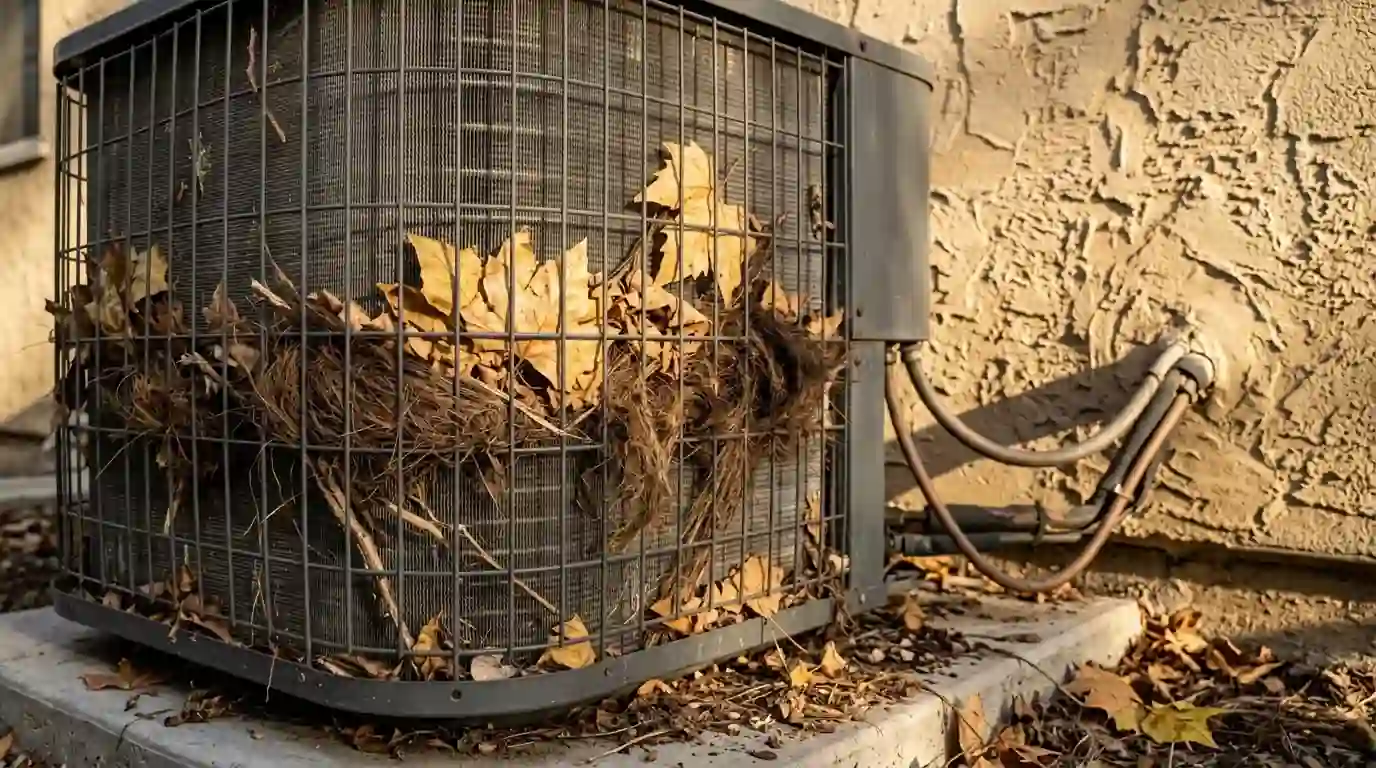
The outdoor unit is a large fan pulling air through a thin finned coil. In normal weather, the fins pick up a little dust and cottonwood fluff over a season. In a Santa Ana wind, leaves, seed pods, palm fiber and grit get pinned against the coil by the gusts and then pulled in further by the fan once it starts. A matted coil cannot shed heat well, so head pressure rises, the compressor works harder and cooling capacity drops.
Wind also moves things around the unit. Patio cushions, tarps and plastic bags can wrap the top grille. Branches from overhead trees can bend fins or crack the fan blade. If your condenser sits under a eucalyptus, pepper tree or palm, it is worth a look the morning after the wind dies down, before you turn the system on for the next warm stretch.
Many Pasadena homes, from postwar ranch houses in Hastings Ranch to 1920s Spanish Revival homes in the Historic Highlands, have ductwork in the attic. Attic vents exist to let air move, so on a wind day the attic fills with dust. If the return duct has a loose joint or a torn boot near the grille, the system pulls that attic dust straight into the house and onto the indoor coil, bypassing the filter entirely.
Signs of return leaks include dark streaks around ceiling registers, a dusty smell when the system starts, and a filter that looks clean while the house still gets dusty. A technician can check return connections, look for gaps where the return box meets the furnace or air handler, and test duct leakage. Sealing the return side is often a bigger air quality improvement than any filter upgrade.
A higher efficiency filter catches finer dust, but only if your system can move air through it. Thick media filters in a proper cabinet, often four or five inches deep, offer much more surface area than a one inch filter, so they can catch fine particles without choking airflow. Many older Pasadena systems have a one inch filter slot in a ceiling return grille, which limits options.
If you want better filtration, the safe path is to have a technician measure static pressure with the filter in place. That reading shows whether the blower can handle the filter you want. Where the existing slot is too small, adding a media filter cabinet at the air handler or an extra return can solve it. Avoid jamming the densest filter you can find into a small slot, since that can make the system run worse.
During high wind events, utilities in Southern California sometimes shut off power in high fire risk areas as a safety measure, and foothill neighborhoods can be affected. When power returns, give the system a few minutes before calling for cooling or heat. Many modern thermostats and outdoor units have a built-in delay that protects the compressor, so a short wait after power comes back is normal.
If the system does not restart, check the breaker panel and the outdoor disconnect before anything else. A brief surge or a branch on the line can trip a breaker. If the breaker trips again right away, leave it off and call (626) 879-0711. A breaker that will not hold can mean a shorted capacitor, a failing compressor or a wiring fault, and repeated resets can make the damage worse.
Once the wind settles, a ten minute walk around the house covers most of what matters. Start outside at the condenser, then the filter, then a quick look and listen when the system runs. If anything seems off, it is far cheaper to have a technician look at it before the next heat wave than to find out on a 100 degree afternoon in October, which does happen in the San Gabriel Valley.
Our technicians can clean the condenser coil properly, check refrigerant pressures, measure airflow and inspect the attic return as part of a maintenance visit. If the wind bent a large patch of fins or cracked the fan blade, they can straighten or replace those parts before the next warm spell. We answer 24/7 at (626) 879-0711, and we quote the price before we start the work.
Related services
A spring tune-up that cleans the coils, tests the capacitor and contactor, clears the drain and checks the charge before summer hits.
Learn moreWe measure duct leakage with a calibrated fan, seal joints with mastic, and test again so you see the actual improvement.
Learn moreWe measure particles, humidity, CO2, VOCs and carbon monoxide in your home, find the sources and explain what would actually help.
Learn moreQuestions
Check it after every strong wind event rather than on a fixed schedule. A filter that lasts two or three months in calm weather can load up within days of heavy wind, especially in foothill neighborhoods. Pull it out and hold it to a light. If you cannot see light through it or it looks gray across the whole surface, replace it. Keep a few spares on hand from September through January.
No, not while it might run. A cover blocks airflow and can damage the compressor if the system starts. It can also catch the wind and pull loose. A better approach is to move loose patio items away from the unit, trim branches that hang over it, and clear any debris once the wind dies down. If you are away and the system is off at the thermostat, a top-only mesh guard is the most that makes sense.
A short dusty smell can come from dust settling on the coil or in the ducts. If it lasts, or you see new dark streaks around ceiling registers, the return duct may be leaking and pulling attic air into the system. Wind days fill attics with fine dust, and a loose return joint draws it straight in past the filter. A technician can find and seal that leak, which usually fixes the smell.
Keep reading
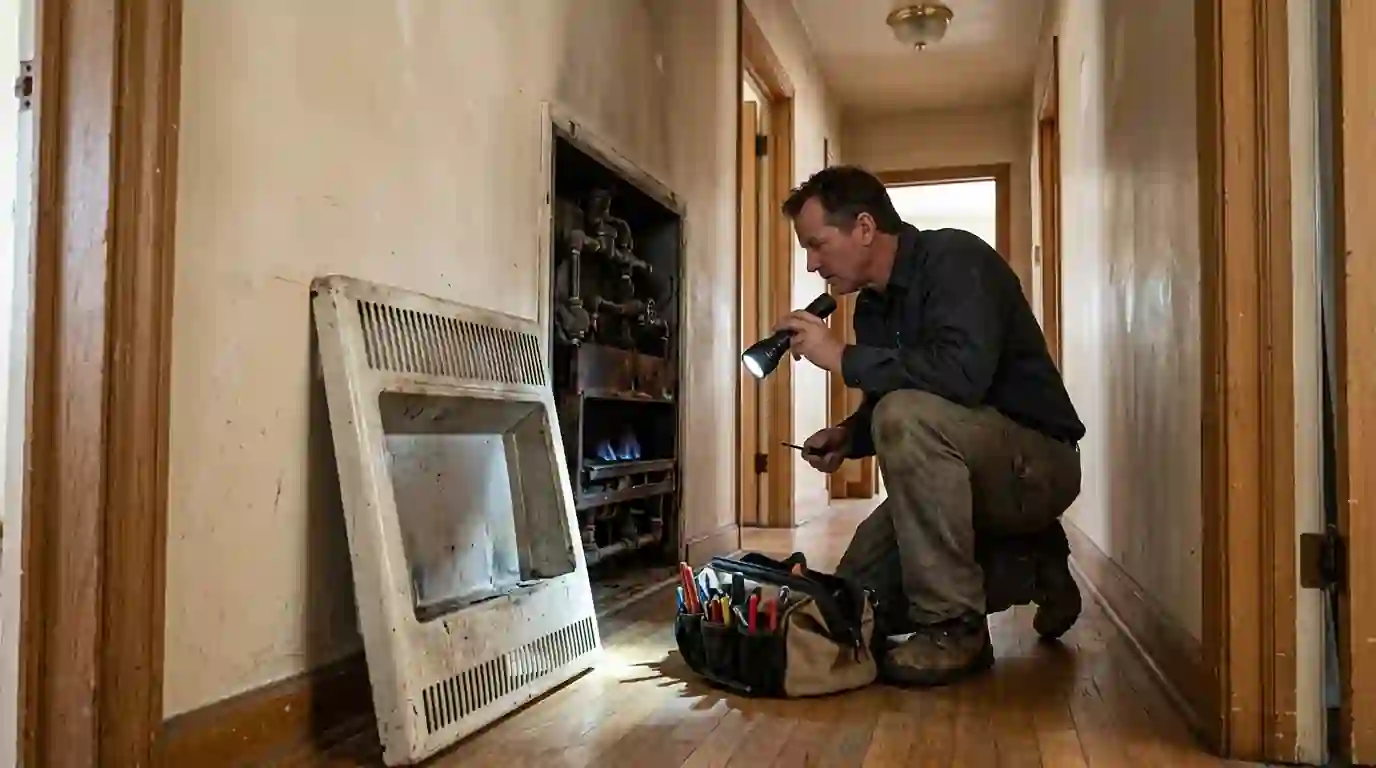
Thousands of older San Gabriel Valley homes still heat with a gas wall furnace. Here is what to look at before the first cold night, what a technician checks, and when repair stops making sense.
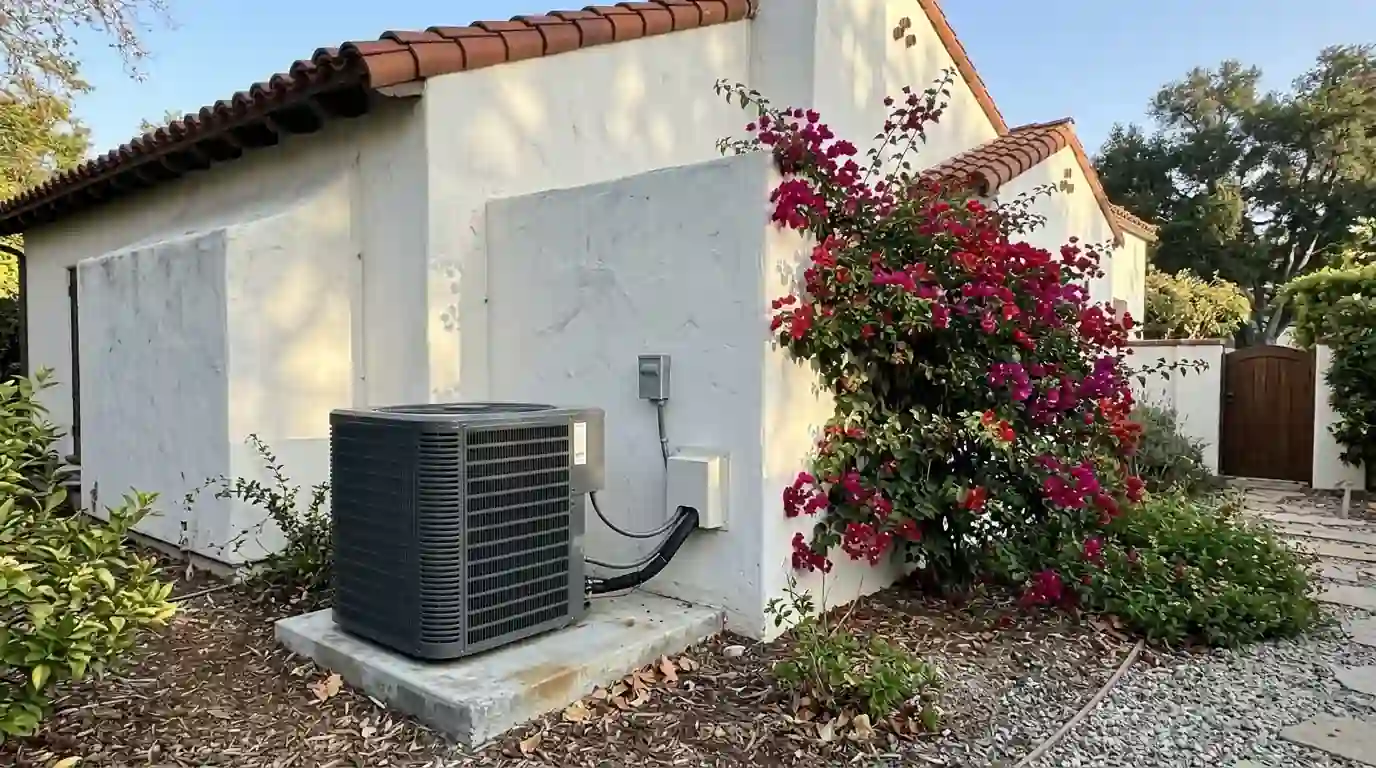
Pasadena's mild winters and hot summers make heat pumps a strong fit, but a gas furnace still makes sense in some homes. Here is how to weigh climate, electrical capacity, ducts and rebates.
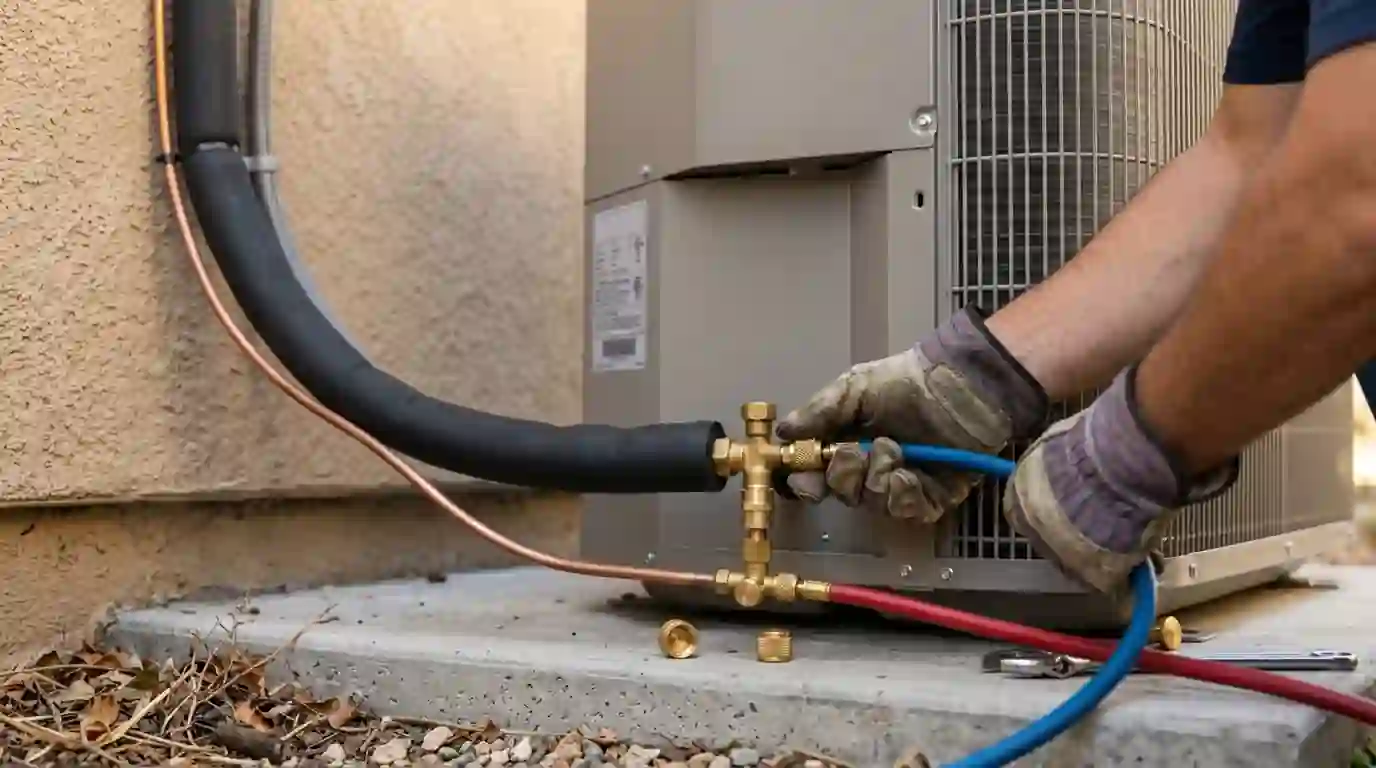
New residential AC and heat pump equipment now uses lower-GWP A2L refrigerants such as R-454B and R-32. Here is what changed, what it means for your existing R-410A system and what to expect at replacement.
Call our Pasadena line any hour. A person answers, asks a few questions about the system, and gives you an arrival window.