AC Repair
Warm air, a humming outdoor unit or a tripped breaker: we find the failed part and fix most AC problems in one visit.
Learn moreCooling
AC RepairAC InstallationAC ReplacementAC Tune-Up & MaintenanceRefrigerant Leak RepairAC Compressor ReplacementEvaporator Coil ReplacementAC Water Leak & Drain Line RepairHeating
Furnace RepairFurnace InstallationFurnace ReplacementFurnace Tune-Up & MaintenanceWall Furnace RepairFloor Furnace ReplacementBoiler & Radiant Heat RepairHeat Pumps & Ductless
Heat Pump RepairHeat Pump InstallationHeat Pump MaintenanceGas Furnace to Heat Pump ConversionDuctless Mini-Split InstallationDuctless Mini-Split RepairADU Heating & CoolingDucts & Attic
Duct RepairDuctwork ReplacementAir Duct CleaningDuct Sealing & Leak TestingWhole House Fan InstallationAttic InsulationIndoor Air
Indoor Air Quality TestingWhole-Home Air PurifiersUV Air SanitizersWhole-Home HumidifiersSystems & Commercial
Smart Thermostat InstallationHVAC Zoning SystemsFull HVAC System ReplacementHVAC InspectionHVAC Maintenance Plans24/7 Emergency HVAC RepairCommercial HVAC RepairCommercial HVAC MaintenanceRooftop & Package Unit RepairPasadena
Pasadena (all of the city)Bungalow HeavenMadison HeightsSan RafaelLinda VistaHastings RanchOak KnollAnnandaleProspect ParkHistoric HighlandsGarfield HeightsLamanda ParkSouth ArroyoChapman WoodsNearby cities
AltadenaSouth PasadenaSan MarinoArcadiaSierra MadreMonroviaDuarteGlendaleLa Canada FlintridgeLa CrescentaBurbankAlhambraSan GabrielTemple CityMonterey ParkRosemeadEl MonteAzusaGlendoraCovinaWest CovinaLos AngelesMontroseTujungaBaldwin ParkSouth El MonteMontebelloWhittierHacienda HeightsRowland HeightsLa PuenteWalnutDiamond BarSan DimasLa VerneClaremontPomonaUplandRancho CucamongaOntarioMontclairChino HillsBreaFullertonCounties
Los Angeles CountySan Bernardino CountyOrange CountyBlog
By Odell Rankin, Comfort Blog EditorJune 9, 20268 min read
On the hottest San Gabriel Valley afternoons, even a healthy AC can creep a few degrees behind. Here is why it happens, what is normal, and which problems turn a hot day into a breakdown.
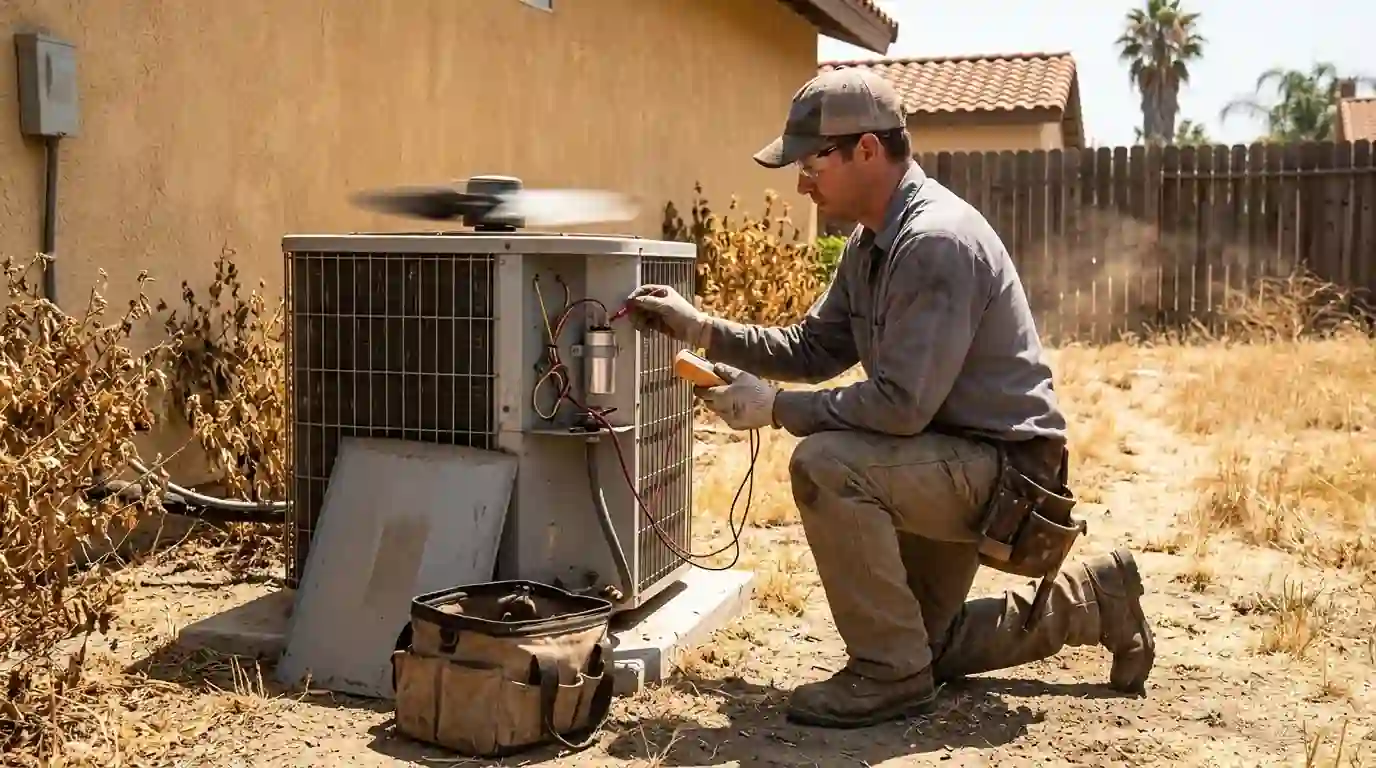
Every summer, Pasadena and the surrounding valley cities get a run of afternoons in the high 90s and over 100 degrees. On those days the phone rings with the same question: the AC is running nonstop, but the house is still 80 inside. Is it broken? Sometimes it is. Often, though, the system is doing exactly what it was designed to do, and the gap comes from how residential AC is sized and how heat builds in a home through the afternoon.
Knowing the difference saves money and stress. This post explains why systems fall behind on extreme days, what you can do to help, and the warning signs that mean it is time to call a technician instead of waiting for evening. It also covers the small habits that help a system hold its ground in the late afternoon, and the maintenance that keeps a weak part from failing on the one day you need cooling most. Most of it applies whether you live in a 1920s bungalow or a newer two-story home.
Residential AC systems are sized with a load calculation that uses a design outdoor temperature for the area. That design temperature is hot, but it is not the single hottest afternoon of the year. Sizing a system for the absolute peak would mean a unit that is oversized most of the summer, which leads to short cycles, poor humidity control and more wear. So on the hottest days, a properly sized system runs continuously and may let the indoor temperature drift up a few degrees.
That drift is normal. If the system runs all afternoon, keeps the house around 78 to 80 when it is 104 outside, and catches up after sunset, it is likely working fine. The trouble starts when the gap keeps growing, the system never catches up overnight, or the air coming out of the registers feels barely cool. A simple test helps: hold a kitchen thermometer in a supply register near the air handler and another at the return grille. A healthy system usually shows a clear drop between the two, and a technician can tell you what that number should be for your equipment.
A house soaks up heat all day. The roof heats the attic, the attic heats the ceiling, and west-facing walls and windows take direct sun from mid-afternoon on. By four or five o'clock, the house is carrying heat stored in its walls, furniture and ceiling drywall or plaster, on top of what is coming in from outside. That stored heat is why many homes feel warmest in the early evening even after the outdoor temperature starts to fall.
Attic ducts add to the problem. In many Pasadena homes, ducts run through an attic that can get far hotter than the outdoor air. Cool air loses some of its chill on the way to the rooms, especially through leaky joints or thinly insulated runs. On a mild day the loss is small. On a 102 degree day it can be the difference between a comfortable house and a warm one.
The condenser outside rejects heat from the house into the outdoor air. The hotter that air, the harder the job. As the temperature climbs, refrigerant pressures rise, the compressor draws more current and cooling capacity drops. A clean coil, good airflow and the correct refrigerant charge all matter more on a 100 degree day than on an 85 degree one.
This is also when weak parts give out. A capacitor that has been slowly failing for months often quits on the hottest afternoon. A condenser fan motor with worn bearings overheats. A dirty coil pushes head pressure high enough to trip a safety. Many of the emergency calls we take on heat wave days trace back to a part that would have shown up during routine maintenance.
The best thing you can do on a heat wave day is help the system start ahead. Lower the thermostat a degree or two in the morning while it is cooler outside, then leave it alone. Big setbacks during the day force the system to fight from behind in the hottest hours. Close blinds on west and south windows, avoid running the oven and dryer in the afternoon, and keep interior doors open so air can return to the system.
Outside, make sure the condenser has clear space around it and the coil is not matted with dust or leaves. A clean filter matters too. If the system has a smart thermostat, check that it is not running an aggressive schedule that lets the house heat up and then asks for a big recovery at five o'clock. Ceiling fans help people feel cooler at the same setting, though they do not lower the room temperature, so turn them off in empty rooms.
Some symptoms point to a fault that will not fix itself in the evening. Ice on the copper line at the outdoor unit or on the indoor coil means low airflow or low refrigerant. A condenser that hums but the fan does not spin often means a failed capacitor or motor. Warm air from the registers while the outdoor unit is running is another red flag. So is water around the indoor unit, which can mean a frozen coil thawing or a clogged condensate line.
If you see ice, turn the system to Off and set the fan to On to thaw the coil, then call. Running a frozen system can damage the compressor. If the outdoor unit is not running at all, check the breaker and the outdoor disconnect once. If the breaker trips again, leave it off. A breaker that will not hold points to an electrical fault or a struggling compressor, and repeated resets can turn a modest repair into a much larger one. We answer 24/7 at (626) 879-0711, so there is no need to wait until morning.
A spring maintenance visit is the cheapest way to avoid a heat wave breakdown. Our technicians clean the condenser coil, test the capacitor and contactor, check refrigerant pressures, measure airflow and look at the condensate drain. Small parts that are wearing out can be replaced before they fail on a weekend in August. The visit also gives you a baseline. If the technician records pressures and temperature drop in April, it is much easier to spot a slow refrigerant leak or a weakening part when the numbers change later in the season.
If the system falls behind every summer, it may be undersized, the ducts may be leaking, or the attic may need insulation. Those are bigger fixes, but they can make a lasting difference. We quote the price before we start the work, and you can reach us at (626) 879-0711 around the clock, including on the hottest day of the year. If you are replacing equipment, ask about current PWP, SCE or SoCalGas rebates and state heat pump incentives when funding is open.
Related services
Warm air, a humming outdoor unit or a tripped breaker: we find the failed part and fix most AC problems in one visit.
Learn moreA spring tune-up that cleans the coils, tests the capacitor and contactor, clears the drain and checks the charge before summer hits.
Learn moreNight, weekend and holiday repairs for a dead AC in a heat wave or a furnace that quits on a cold night, any hour.
Learn moreQuestions
Yes, a properly sized system often runs continuously on the hottest Pasadena afternoons. Systems are sized for a typical hot day rather than the single hottest one, so a few degrees of drift indoors is expected. What is not normal is warm air from the registers, ice on the lines, or a house that never catches up overnight. Those signs point to a fault such as low refrigerant, a dirty coil or a failing part.
Pick a comfortable setting, often 76 to 78, and leave it there through the afternoon. Lower it a degree or two in the morning to pre-cool the house while the outdoor air is cooler. Avoid big setbacks while you are out, because the system then has to recover in the hottest hours, which it may not manage. Steady settings let the system keep up instead of chasing a growing gap.
It is better not to spray it while it runs. A gentle rinse of a dirty coil with the power off is fine maintenance, but spraying a running unit to cool it can push dirt deeper into the fins and wet the electrical parts. If the coil is clean and the system still struggles, the problem is more likely refrigerant charge, airflow or a weak part, which a technician can check with gauges and meters.
Keep reading
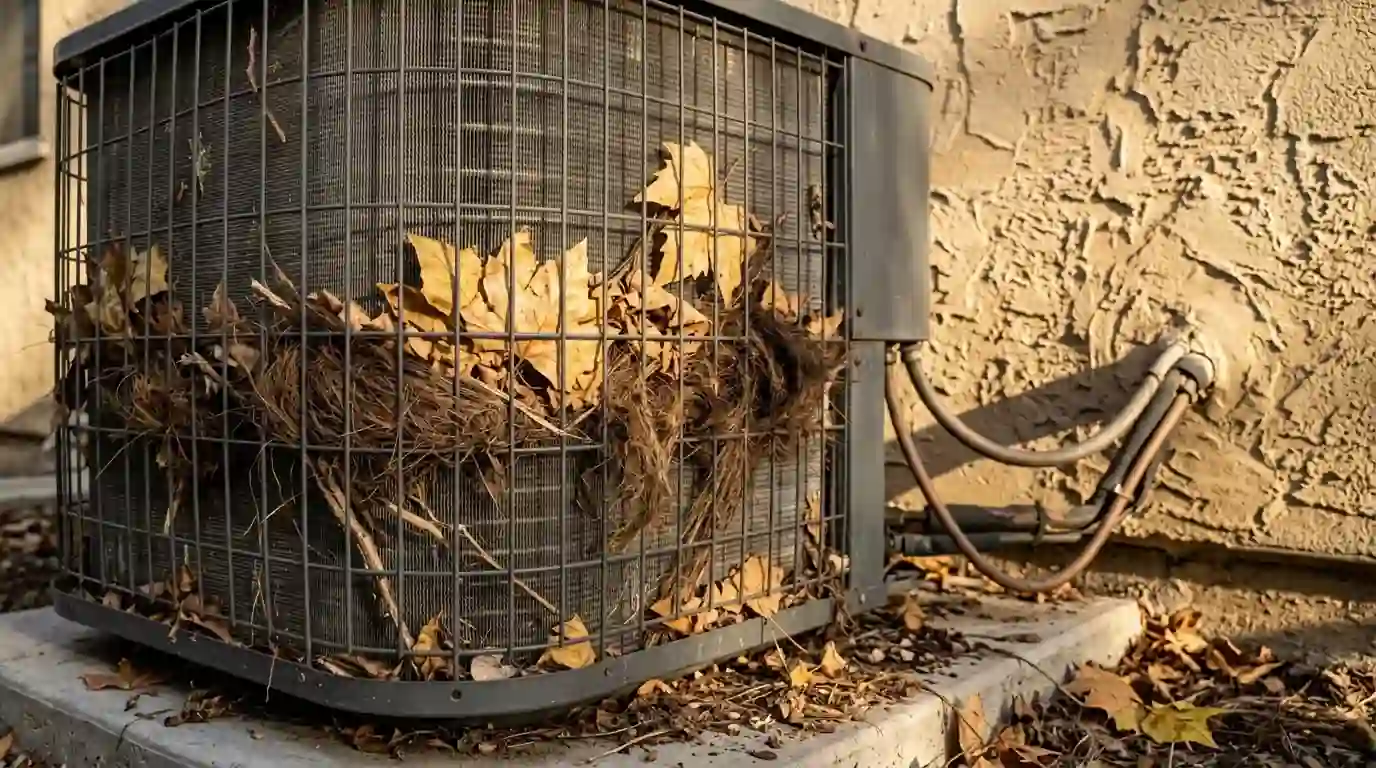
Hot, dry Santa Ana winds push dust, leaves and grit into every gap. Here is what that does to filters, condenser coils and attic ducts, and a simple after-wind checklist for San Gabriel Valley homes.
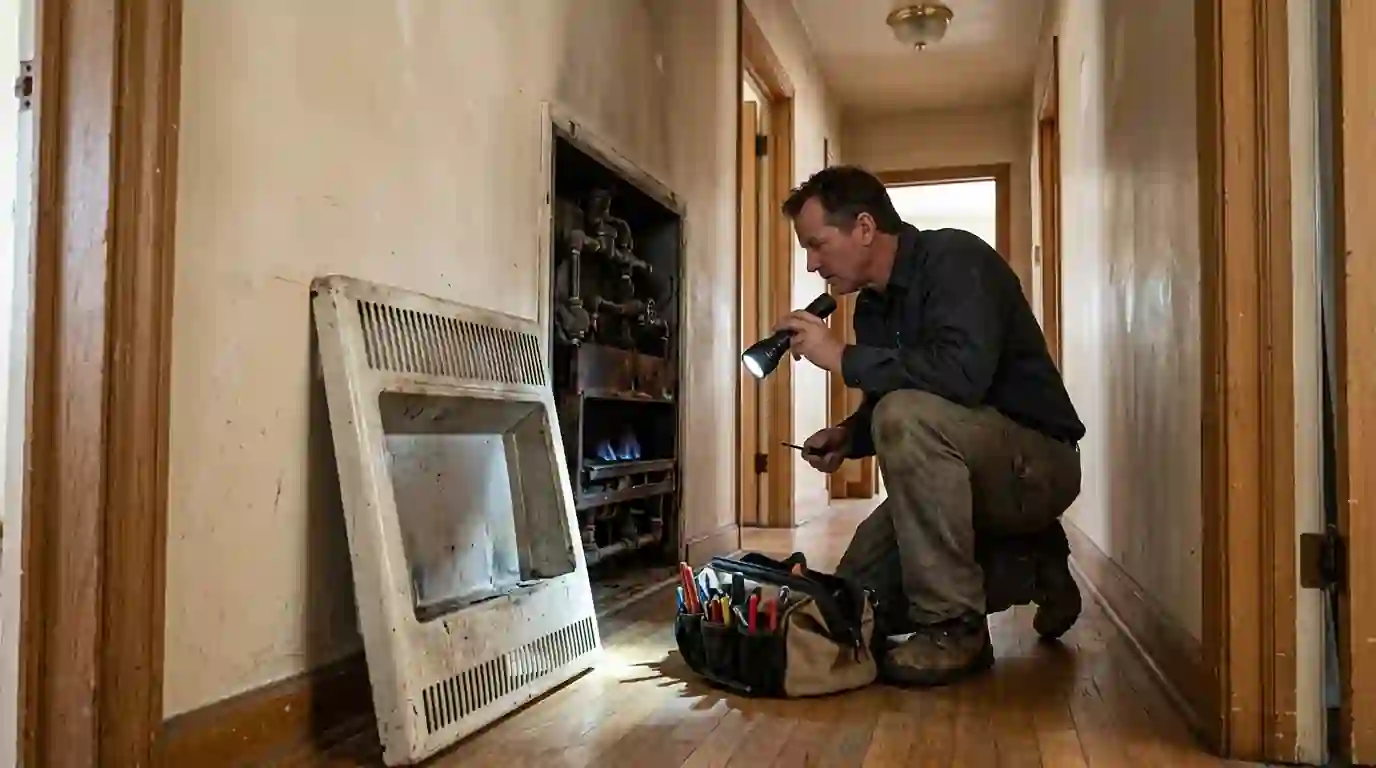
Thousands of older San Gabriel Valley homes still heat with a gas wall furnace. Here is what to look at before the first cold night, what a technician checks, and when repair stops making sense.
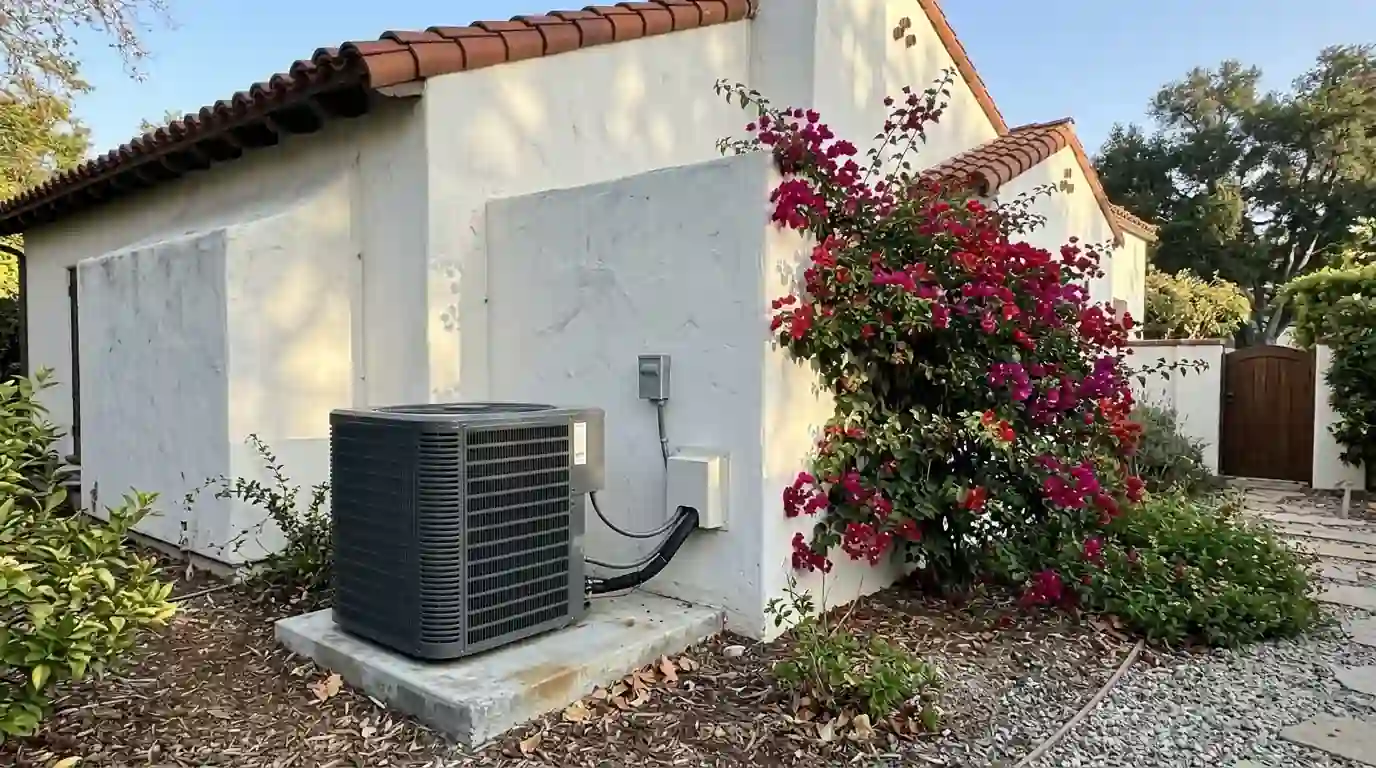
Pasadena's mild winters and hot summers make heat pumps a strong fit, but a gas furnace still makes sense in some homes. Here is how to weigh climate, electrical capacity, ducts and rebates.
Call our Pasadena line any hour. A person answers, asks a few questions about the system, and gives you an arrival window.