Whole House Fan Installation
Quiet, insulated whole house fans that pull cool evening air through your home and flush the hot attic, with venting sized right.
Learn moreCooling
AC RepairAC InstallationAC ReplacementAC Tune-Up & MaintenanceRefrigerant Leak RepairAC Compressor ReplacementEvaporator Coil ReplacementAC Water Leak & Drain Line RepairHeating
Furnace RepairFurnace InstallationFurnace ReplacementFurnace Tune-Up & MaintenanceWall Furnace RepairFloor Furnace ReplacementBoiler & Radiant Heat RepairHeat Pumps & Ductless
Heat Pump RepairHeat Pump InstallationHeat Pump MaintenanceGas Furnace to Heat Pump ConversionDuctless Mini-Split InstallationDuctless Mini-Split RepairADU Heating & CoolingDucts & Attic
Duct RepairDuctwork ReplacementAir Duct CleaningDuct Sealing & Leak TestingWhole House Fan InstallationAttic InsulationIndoor Air
Indoor Air Quality TestingWhole-Home Air PurifiersUV Air SanitizersWhole-Home HumidifiersSystems & Commercial
Smart Thermostat InstallationHVAC Zoning SystemsFull HVAC System ReplacementHVAC InspectionHVAC Maintenance Plans24/7 Emergency HVAC RepairCommercial HVAC RepairCommercial HVAC MaintenanceRooftop & Package Unit RepairPasadena
Pasadena (all of the city)Bungalow HeavenMadison HeightsSan RafaelLinda VistaHastings RanchOak KnollAnnandaleProspect ParkHistoric HighlandsGarfield HeightsLamanda ParkSouth ArroyoChapman WoodsNearby cities
AltadenaSouth PasadenaSan MarinoArcadiaSierra MadreMonroviaDuarteGlendaleLa Canada FlintridgeLa CrescentaBurbankAlhambraSan GabrielTemple CityMonterey ParkRosemeadEl MonteAzusaGlendoraCovinaWest CovinaLos AngelesMontroseTujungaBaldwin ParkSouth El MonteMontebelloWhittierHacienda HeightsRowland HeightsLa PuenteWalnutDiamond BarSan DimasLa VerneClaremontPomonaUplandRancho CucamongaOntarioMontclairChino HillsBreaFullertonCounties
Los Angeles CountySan Bernardino CountyOrange CountyBlog
By Odell Rankin, Comfort Blog EditorAugust 25, 20267 min read
Pasadena often cools off fast after sunset. A whole house fan can flush the day's heat out cheaply, but it is not a substitute for AC on every night. Here is how to choose and how to use both.
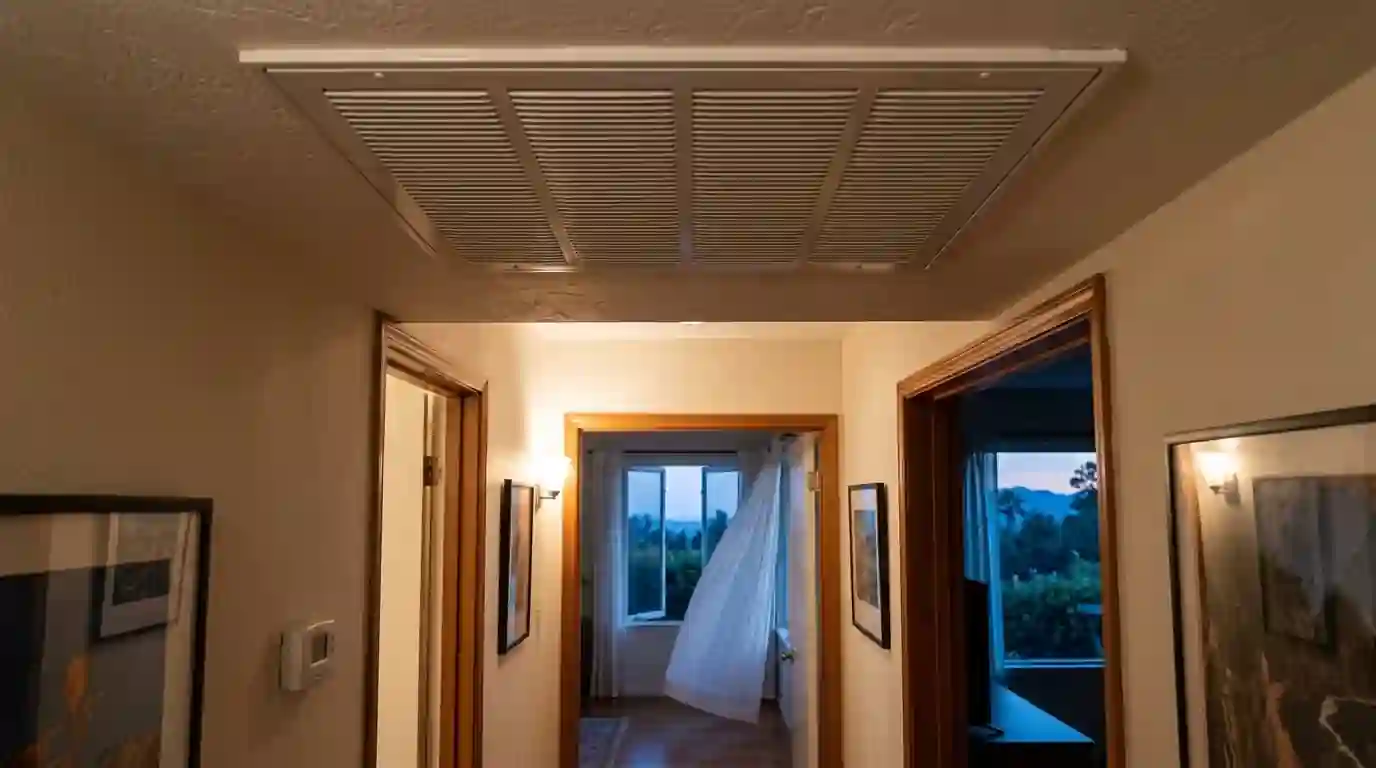
One of the best things about summer in Pasadena is how quickly the evening air can cool after a hot day, especially in foothill neighborhoods where air drains down from the San Gabriel Mountains. The house, though, does not cool as fast. Walls, ceilings and furniture hold the day's heat, so many homeowners run the AC well past sunset even when it is cooler outside than inside.
A whole house fan is one way to use that cool evening air. Another is to add AC capacity or improve the existing system. They solve different problems. Here is how each works, when each makes sense, and how many homeowners end up using both together. We also cover the attic and gas appliance checks that should happen before any fan goes in, and what a typical installation costs in the San Gabriel Valley, so you can weigh the fan against spending the same money on the AC.
A whole house fan is a large fan mounted in the ceiling, usually in a central hallway, that pulls air from the living space up into the attic. That air then leaves through the attic vents. With windows open, the fan draws cooler outdoor air through the house, replacing warm indoor air in a matter of minutes and flushing hot air out of the attic at the same time.
Modern units are much quieter than the old belt-driven fans many people remember. They use insulated dampers that close when the fan is off, so the ceiling opening does not leak heated or cooled air the rest of the year. Many have multiple speeds and timers. Running cost is low compared with an AC, since the fan only moves air.
The fan works when the outdoor air is meaningfully cooler than the indoor air, which in the San Gabriel Valley often means evenings and early mornings in late spring, early summer and fall. It is a good fit for homes that heat up during the day but sit in an area where nights cool off reliably. Foothill homes in Altadena, Sierra Madre and La Canada Flintridge often see bigger evening temperature drops than homes farther from the mountains.
It also helps the attic. Flushing hot attic air at night lowers ceiling temperatures, so the house starts the next day cooler. That can shorten AC run time the following afternoon. For a home with an AC that is adequate but runs long into the evening, a fan can take over the late shift. Homes under mature tree cover, such as parts of Madison Heights or Oak Knoll, tend to cool off faster after dark and often get the most out of a fan.
A whole house fan cannot cool a house below the outdoor temperature. On nights when it stays in the 80s after a 105 degree day, it will not help much. It should never run on smoke days or high pollen days, because it pulls outdoor air straight through the house. It also needs open windows, which some homeowners are not comfortable with at night, and it does nothing during the heat of the afternoon.
Attic venting matters too. If the attic does not have enough vent area for the air the fan moves, the fan can push hot attic air back into the house or create pressure that pulls air down from places it should not. Homes with atmospherically vented gas appliances such as an older water heater need care, because strong depressurization could interfere with venting if windows are not open enough. A technician checks this before installing one.
If the AC cannot keep the house comfortable in the late afternoon, a whole house fan will not solve that, because the outdoor air is hot at that hour. The issue then is the cooling system or the house itself. Common causes include an undersized system, leaky or undersized attic ducts, low refrigerant, a dirty coil or an attic with little insulation. Some homes have additions or converted rooms that were never connected to the original system.
A technician can measure airflow, refrigerant pressures and temperature drop across the coil, check the ducts and run a load calculation. Sometimes repairs or duct sealing fix the problem. Sometimes a larger or variable speed system is the answer, or a ductless head for one room that always runs hot. Attic insulation is often part of the answer too, since a hot attic adds load right when the system is working hardest.
Many Pasadena homes do well with both. On a hot day, the AC handles the afternoon. Once the outdoor air drops below the indoor temperature in the evening, turn the AC off, open windows in the rooms you want to cool, and run the fan for an hour or two, or overnight on a low setting. In the morning, close the windows and shades before the day heats up, and let the AC take over later if needed.
Never run the fan and AC at the same time, since the fan would simply pull the cooled air into the attic. A simple routine and a fan with a timer make the switch easy. The result is often fewer hours of AC each day during spring, early summer and fall. A smart thermostat cannot control most fans directly, so a simple wall timer on the fan is the easiest way to make sure it shuts off before morning.
Installing a whole house fan involves cutting a ceiling opening, framing it, mounting the fan and damper in the attic, and running a dedicated electrical circuit with a wall control. The attic vent area is checked and added to if needed. It is a good moment to look at attic insulation too, since the same attic access serves both jobs.
Typical installed costs for a quality insulated whole house fan in the San Gabriel Valley run about $1,640 to $3,280, with added attic venting extra when needed. We quote the price before we start the work and handle the permit where the city requires one. Call (626) 879-0711 to talk through whether a fan, more AC or both fit your home; we answer 24/7.
Related services
Quiet, insulated whole house fans that pull cool evening air through your home and flush the hot attic, with venting sized right.
Learn moreAir sealing first, then blown-in insulation to the right depth, so your ceilings stop radiating attic heat into the rooms.
Learn moreFirst-time central air for older Pasadena homes, sized by a room-by-room load calculation and fitted to your attic and floor plan.
Learn moreQuestions
It works well on evenings when the outdoor air cools below the indoor temperature, which is common in Pasadena during late spring, early summer and fall, and in foothill neighborhoods in particular. On nights that stay hot after a heat wave, it helps less. It does not replace AC during hot afternoons. Many homeowners use it to take over from the AC after sunset and to flush heat out of the attic overnight.
Often yes, but it needs care. An older atmospherically vented water heater or furnace relies on natural draft, and a powerful fan with too few windows open can pull exhaust back into the house. The fix is to always open enough windows before running the fan and make sure attic venting is adequate. Our technician checks gas appliance venting and attic vent area before recommending a fan size.
Yes, a whole house fan uses far less electricity than a central AC because it only moves air rather than running a compressor. How much you save depends on how many evenings the outdoor air is cool enough to use it and how you set up your routine. It saves the most in spring and fall, when the AC would otherwise run just to bring the indoor temperature down after sunset.
Keep reading
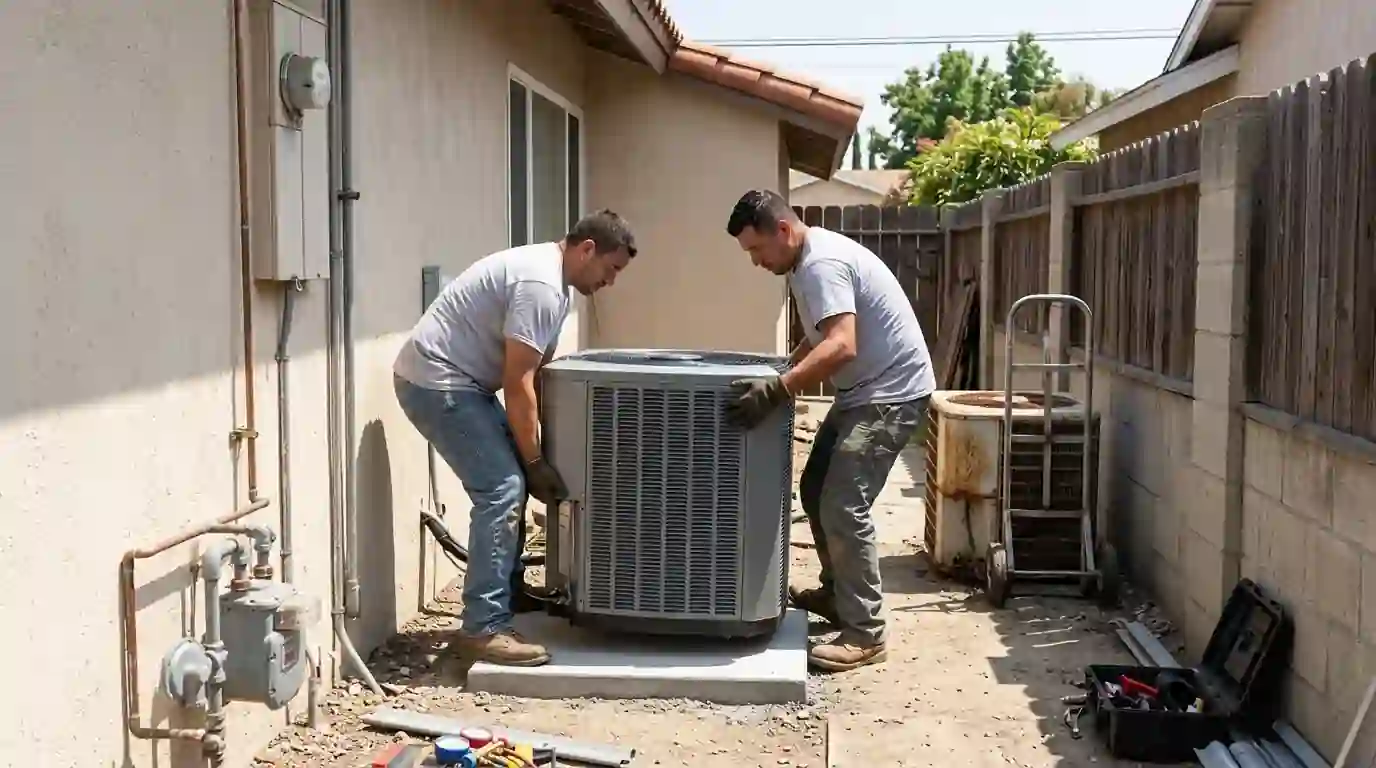
Typical 2026 price ranges for replacing central AC, heat pumps and ductless systems in Pasadena and nearby cities, with a plain look at the ducts, panels, permits and access issues that move the number.
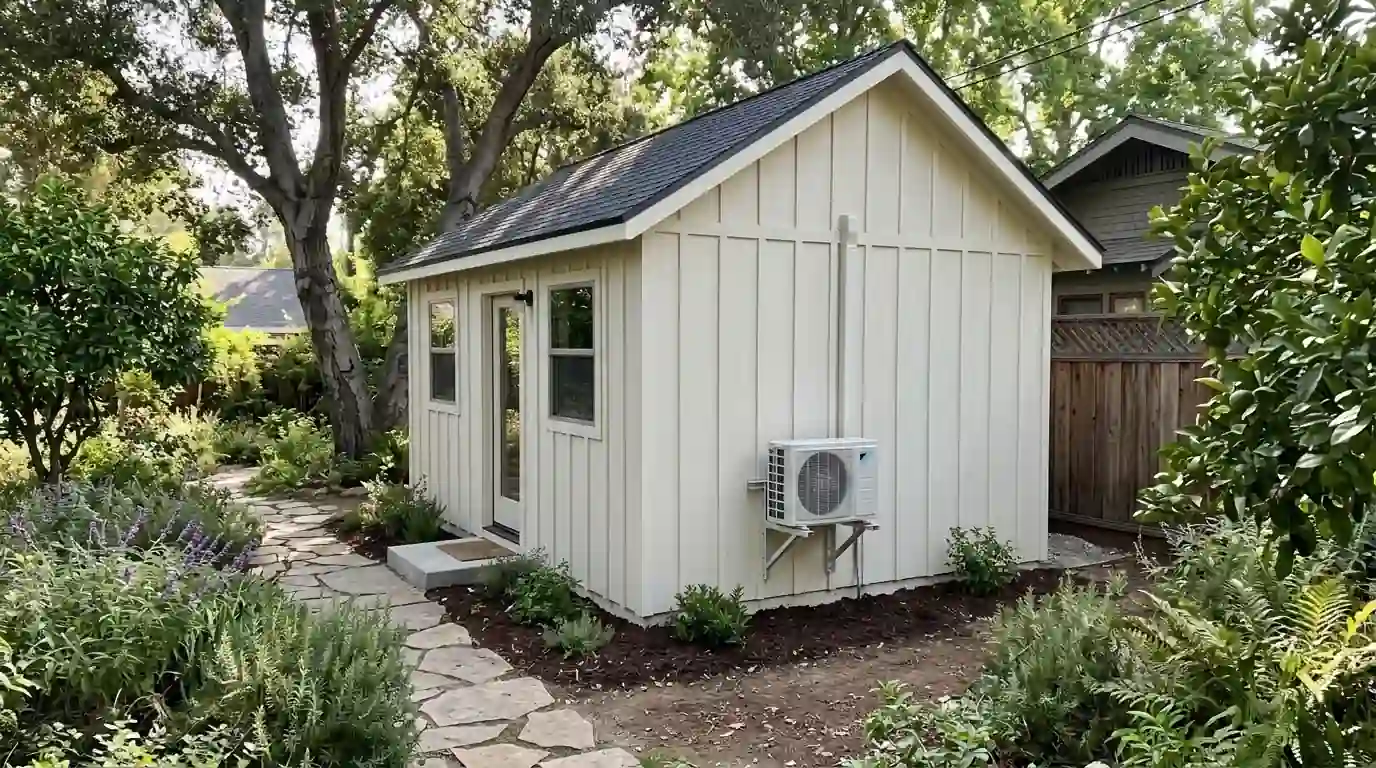
Backyard ADUs are small, but they still need real heating and cooling. Here is how to choose between ductless and ducted systems, size them right and plan the work alongside your builder.
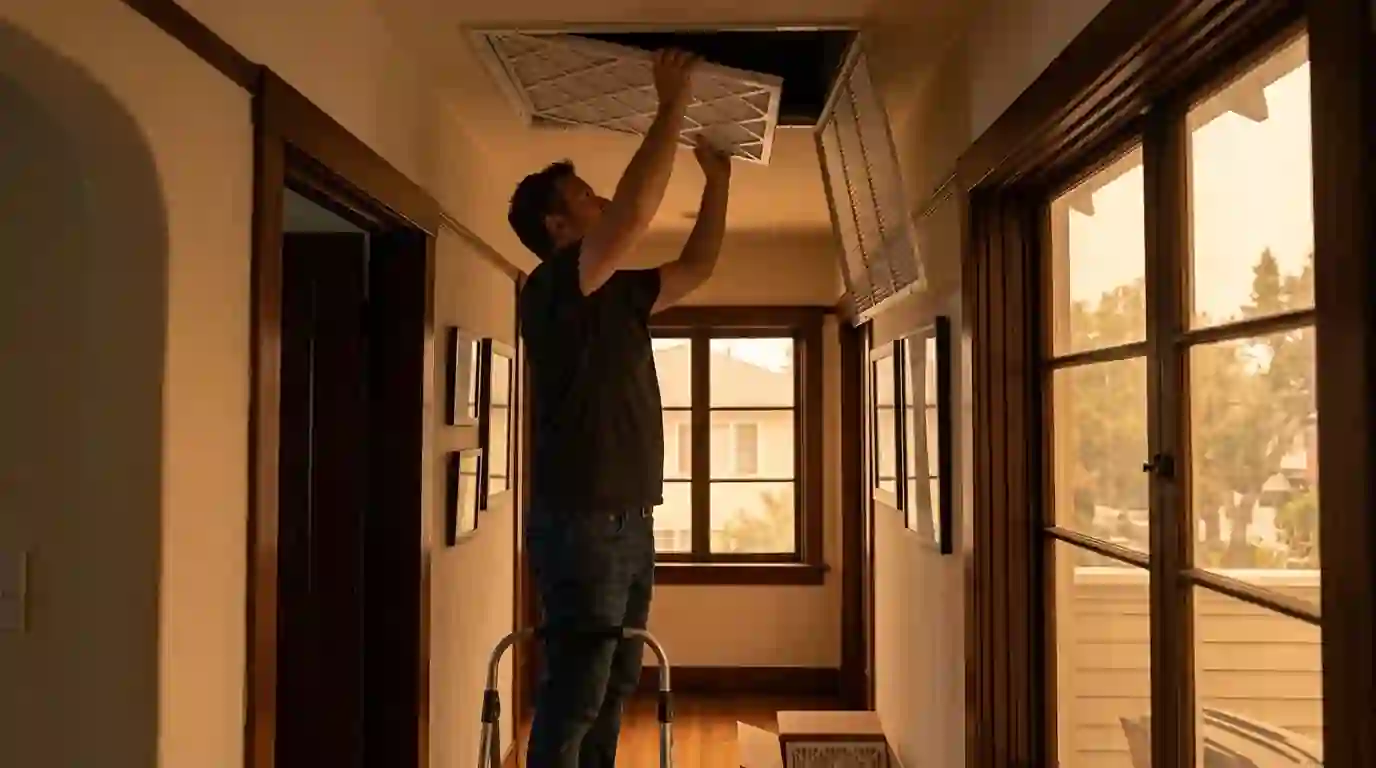
Smoke days are part of life in the San Gabriel Valley. A simple plan for filters, fresh air intakes, recirculation and duct cleaning helps keep indoor air cleaner when the sky turns orange.
Call our Pasadena line any hour. A person answers, asks a few questions about the system, and gives you an arrival window.